Noordi Journal · 23 October 2026 · 6 min read
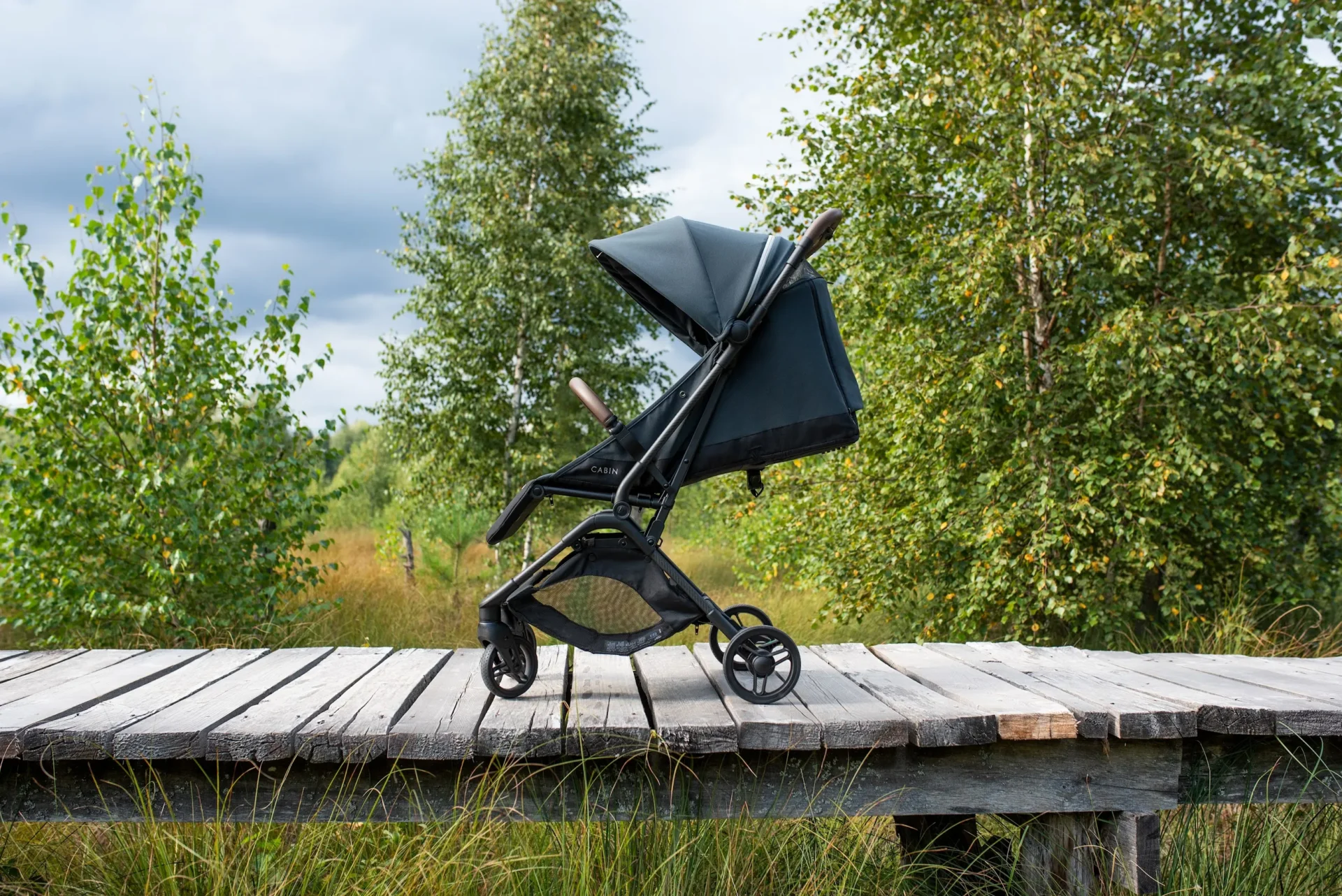
Short answer: Pram tyres come in three main types. Air-filled tyres give the softest ride but can puncture; foam-filled and solid puncture-free tyres never go flat and need almost no care, but cushion a little less. How comfortable a pram feels depends just as much on wheel size and suspension as on the tyre itself.
Tyres are the first part of a pram to meet the path. Every root, gravel stone and cobble edge passes through them before it reaches the frame, the suspension and, finally, your baby. Yet on a spec sheet they often get a single line. Here is what the words mean, how each type feels on a real walk, and what to look for if many of your walks happen beyond the pavement.
The three main types of pram tyre
Most prams use one of three constructions. Each is a trade-off between softness, weight and how much attention it asks of you.
| Tyre type | How it rides | What it asks of you |
|---|---|---|
| Air-filled (pneumatic) | Softest over small bumps; rolls lightly on grass and gravel | A pressure check now and then; a thorn or sharp stone can cause a flat |
| Foam-filled | Close to air in feel, a little firmer; never goes flat | Almost nothing; can be slightly heavier |
| Solid puncture-free (e.g. PU) | Firmer; leans more on suspension for comfort | Nothing; well suited to travel and city days |
Why wheel size matters as much as the tyre
A larger wheel meets a stone, root or kerb at a gentler angle, so it tends to roll over it instead of knocking into it. That is why all-terrain prams use big wheels, and why small city wheels feel every gap between paving stones. Width matters too: a wider wheel spreads the weight on sand, snow and soft forest ground, so the pram sinks less and pushing takes less effort.
Then comes suspension. Tyres soften small, quick ripples; springs and shock absorbers deal with the bigger knocks. On a pram with good suspension, a firmer puncture-free tyre can still give a calm ride, because the springs do much of the work. Read how pram suspension works.
Which tyre for which kind of walk?
- Forest paths, gravel and roots: large wheels and real suspension come first. The tyre then fine-tunes how the ride feels.
- Cobblestones and old towns: big wheels to bridge the gaps, suspension to take the edge off the vibration. See our guide to prams for cobblestones.
- Snow and sand: wide, large wheels that stay on top rather than dig in. More in pushing a pram in snow.
- Trains, cafés and travel: small, light, puncture-free wheels that never need a pump, on a stroller that folds small.
How Noordi wheels are made for real walks
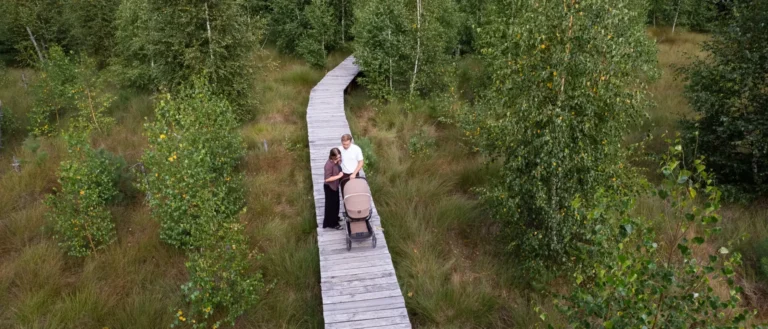
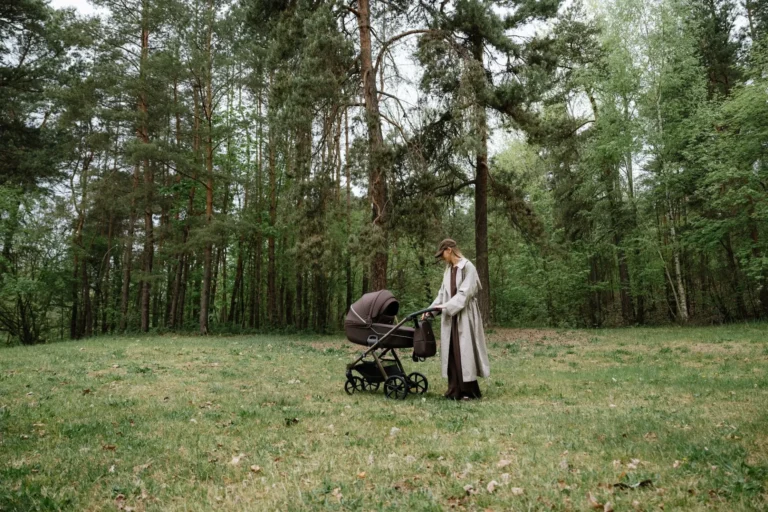
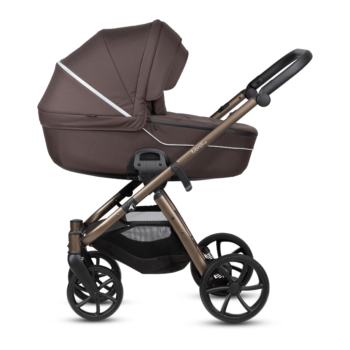
On Fjordi V.2, we start with the path. Large, durable All-Road™ wheels roll steadily over gravel, sand and snow, and the front wheels turn 360° for tight corners or lock straight for rough ground. Above them, a shock-absorbing front fork and independent suspension soften bumps before they reach the THERMOCOT carrycot. On a forest walk, that means fewer small jolts for a sleeping baby when the path turns to roots.
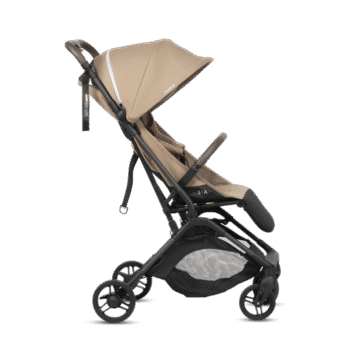
Sia is made for the other half of family life: buses, trains and narrow café doors. Its 7.5″ PU wheels are puncture-free, so there is nothing to pump or patch on a trip, and front and rear suspension keep the ride calm on pavements. At 5.9 kg with a one-hand fold, it is the one that comes along when space is tight.
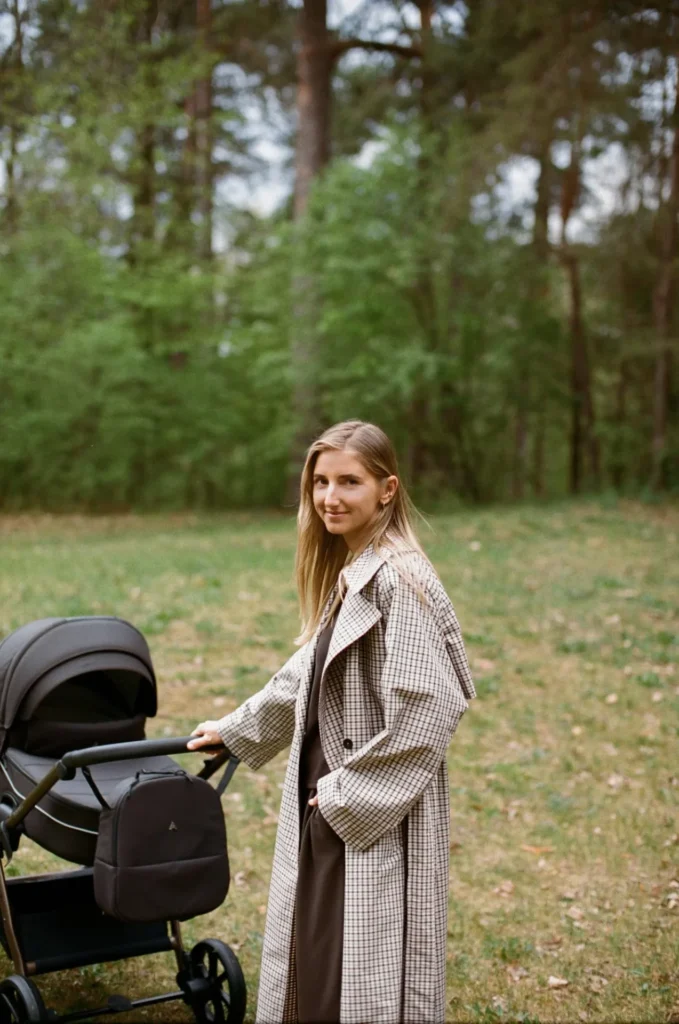
Fjordi V.2 · 2-in-1 all-terrain
For forest paths, coastlines and cobbles
Our all-terrain pram for long walks on uneven ground.
- Independent suspension and a shock-absorbing front fork
- THERMOCOT insulated carrycot, inner 81 × 37 cm
- Reversible seat, lies flat to 100 cm, up to 22 kg
- One-click fold, about 11 kg with carrycot
€815 · 3-in-1 €893
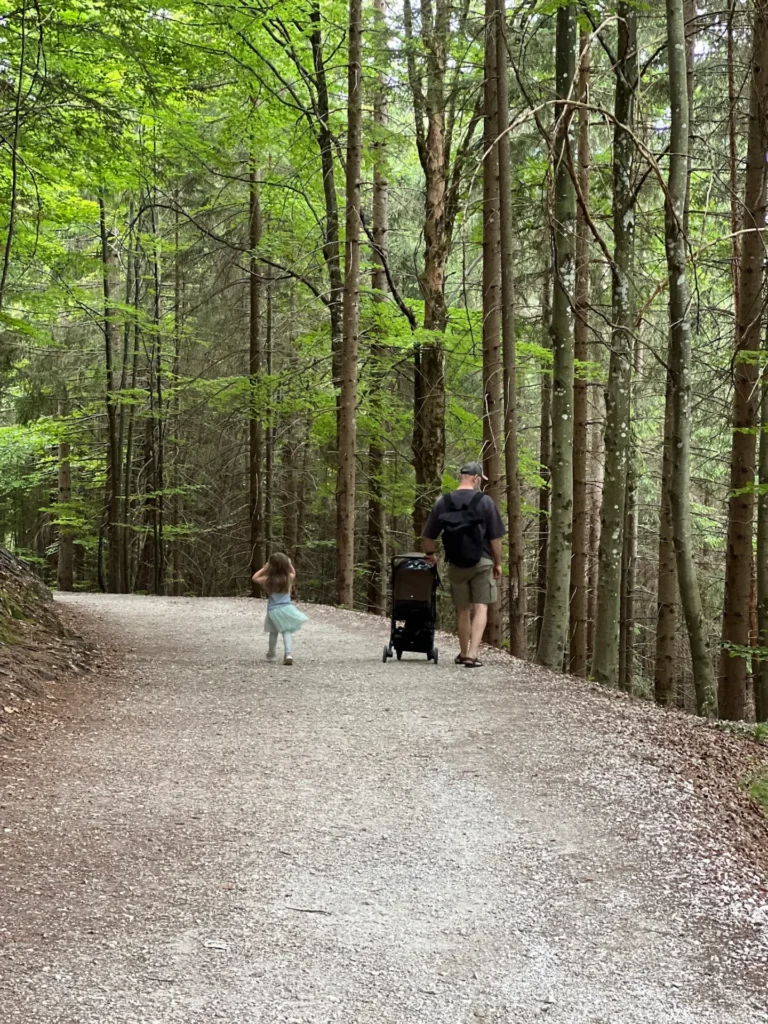
Sia · compact from birth
The light one for trains, cafés and travel
A 5.9 kg stroller that folds with one hand.
- Carbon frame, 5.9 kg
- Folds to 62.5 × 48.5 × 27 cm
- From birth to 4 years (22 kg), 80 cm bed
- Leg cover and travel bag included
€269
Simple wheel care that keeps the ride quiet
- Rinse off sand and grit after the beach or a muddy path, so it does not work its way into the wheel bearings.
- Wipe the wheels dry before folding the pram indoors.
- Look for stones or thorns caught in the tread once in a while.
- Listen. A new squeak or rattle usually means grit somewhere, and a clean often fixes it.
A full routine is in how to clean a pram.
Frequently asked questions
Are puncture-free pram tyres comfortable?
Yes, when they sit on a well-sprung frame. Solid and foam tyres are firmer than air, so the suspension does more of the work. On a pram with front and rear suspension, a puncture-free tyre rides calmly on pavements and park paths.
Are air-filled tyres better for forest paths?
They cushion small bumps well, but large wheels and real suspension matter more off-road. An all-terrain pram that combines big, durable wheels with springs and shock absorbers keeps the ride soft without the worry of a flat.
What wheels does Fjordi V.2 have?
Large All-Road™ wheels for gravel, sand and snow. The front wheels swivel 360° or lock straight, and the pram has a shock-absorbing front fork and independent suspension.
Does Sia have puncture-free wheels?
Yes. Sia has 7.5″ puncture-free PU wheels with front and rear suspension, so there is nothing to pump on a trip.
How often should I clean pram wheels?
Rinse them after sand, salt or mud and wipe them dry before folding. A quick look for stuck stones every few weeks keeps the ride quiet.
Made for the way you wander.
Big wheels for the forest, light ones for the train. Choose the ride that fits your days.
More from the Journal