
Noordi Journal · 28 September 2026 · 6 min read
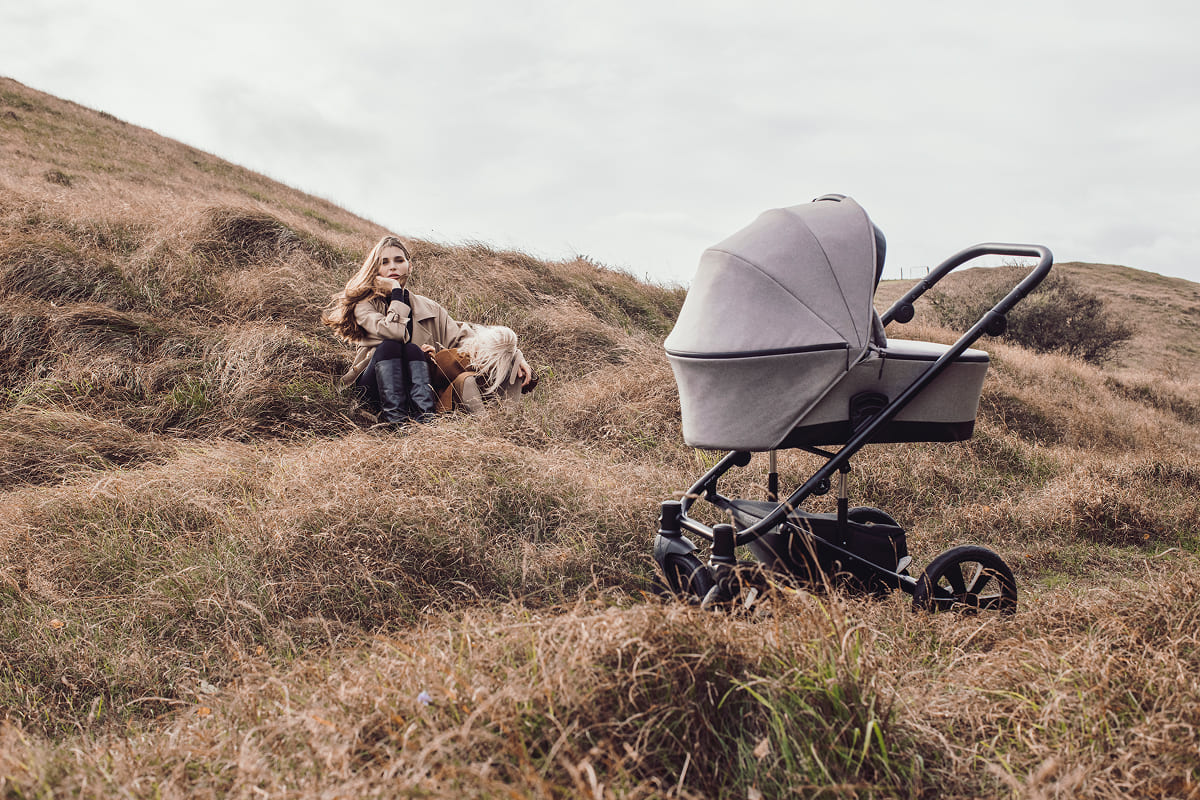
Short answer: Care for a pram little and often. Brush off dried mud and wipe the frame after messy walks, spot-clean fabrics with lukewarm water and a mild soap, and let everything dry completely before you fold or store it. Wash removable fabrics only as the care label and your instruction manual allow. Every few weeks, check the brakes, fold locks, harness and wheels.
A pram lives an outdoor life. It rolls through puddles and forest sand, waits in the hallway with wet wheels, collects crumbs, milk and the occasional leaf. A little care keeps it feeling calm to push, fresh for your baby, and in good shape for a younger sibling one day. None of it takes long.
What do you need to clean a pram?
Nothing special. Most of the work is done with things you already have at home:
- A soft brush and an old toothbrush for wheels, seams and buckles.
- Two or three soft microfibre cloths – one damp, one dry.
- Lukewarm water and a mild, gentle soap or baby-friendly detergent.
- A towel, and somewhere airy for things to dry.
Leave out bleach, solvents, abrasive pads and pressure washers. They can fade fabrics, strip protective finishes and push water and grit into the places where the pram folds and turns.
How do you clean pram fabrics?
Start with the care label. Its symbols – a tub for washing, a triangle for bleaching, a square for drying, an iron and a circle for professional care – are standardised internationally and tell you what each fabric can take. Then check your manual before removing anything: it shows which parts come off and how they go back on.
- Everyday marks: blot spills straight away, then spot-clean with a damp cloth and a little mild soap. Rinse with a clean damp cloth so no soap stays where your baby rests.
- Removable covers and liners: wash only if the label allows, exactly as it says. If the label and manual say hand-wash or wipe-clean only, trust them.
- Drying: air-dry at room temperature, away from radiators and direct heat, unless the label says otherwise. Make sure padding is fully dry inside before it goes back.
- Putting it back: refit covers exactly as the manual shows, especially where the harness passes through. A harness routed through the wrong slot is a safety issue, not a cosmetic one.

How do you clean the frame and wheels?
Let mud dry, then brush it off – wet mud only smears. Wipe the frame and handlebar with a damp cloth and dry them straight away, paying attention to joints and the fold mechanism. After winter walks, wipe off road salt and grit on the same day, as they are what wears parts fastest.
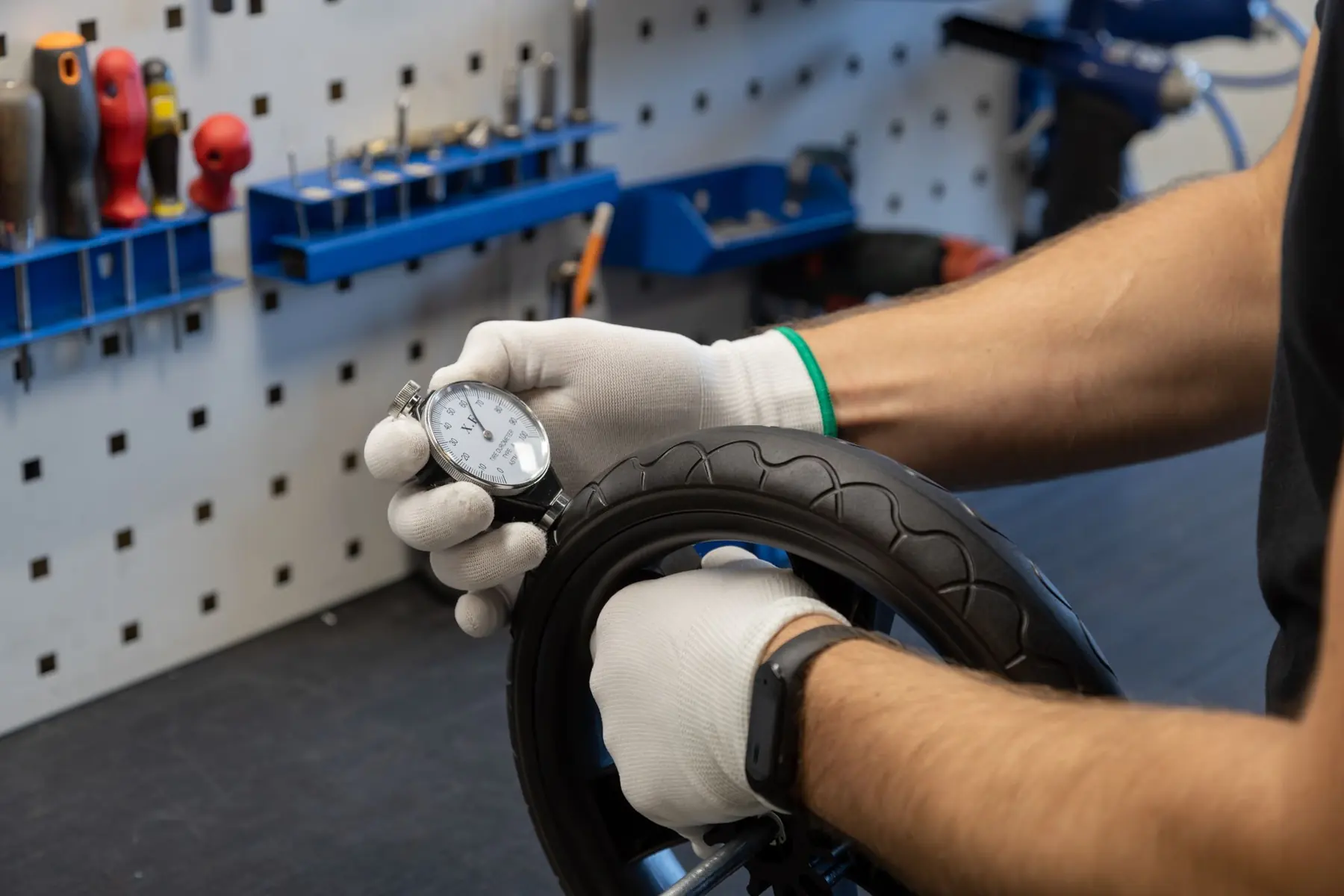
Wheels collect hair, threads and grass around the axles, which makes a pram feel heavy and noisy. Take the wheels off if your manual shows how, pull out anything wrapped around the axle, brush the treads, and click everything back in firmly. Only use a lubricant if your manual recommends one – and only the type it names.
A simple rhythm turns all of this into habit rather than a chore:
| When | Fabrics | Frame and wheels | Checks |
|---|---|---|---|
| After a muddy or wet walk | Shake off, open the hood, let it air-dry | Brush off dried mud, wipe and dry the frame | Fold only when dry |
| Every week or two | Spot-clean marks, crumbs out of seams | Wipe handlebar and joints | Brakes hold, wheels click in |
| Every month or so | Wash removable parts if the label allows | Clear hair and threads from axles | Fold locks, harness, buckles, stitching |
| Before storing | Clean and fully dry, including the rain cover | Clean, dry, no salt or grit left | Keep the manual with the pram |
Which safety checks should you do regularly?
Cleaning is the perfect moment to look closely. Which? recommends a few checks for any pushchair, new or second-hand:
- Brakes: they should hold firmly, especially on a slope.
- Fold and locks: the pram should fold and unfold smoothly and lock with a clear click, with nothing catching.
- Harness: look for loose stitching or fraying, and make sure buckles close and release properly.
- Wheels: no wobble, and steering that tracks straight.
- Frame: look closely at the joints for hairline cracks.
If something does not feel right, stop using that part and contact the manufacturer. It is also worth checking official recall lists now and then: GOV.UK in the UK and the EU’s Safety Gate, linked from Your Europe.
The prams that last are the ones that come home, dry off, and get ready for the next walk.
How should you store a pram between seasons or babies?
Clean everything, then let it dry completely – including the rain cover, which Which? advises air-drying before you pack it away. Store the pram somewhere dry and ventilated rather than a damp shed, garage or loft, and choose a breathable cover rather than a sealed plastic bag, which can trap moisture. Keep the manual, the rain cover and any adapters together, so everything is ready when you need it again.
Where Noordi fits
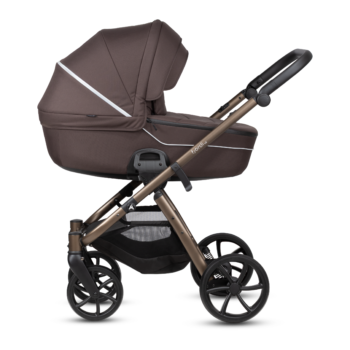
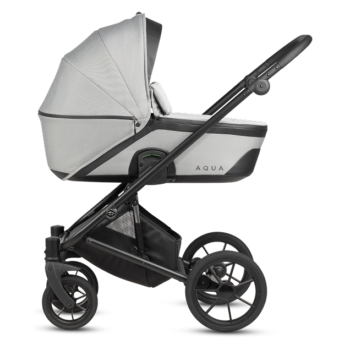
Noordi Fjordi V.2 and Aqua V.2
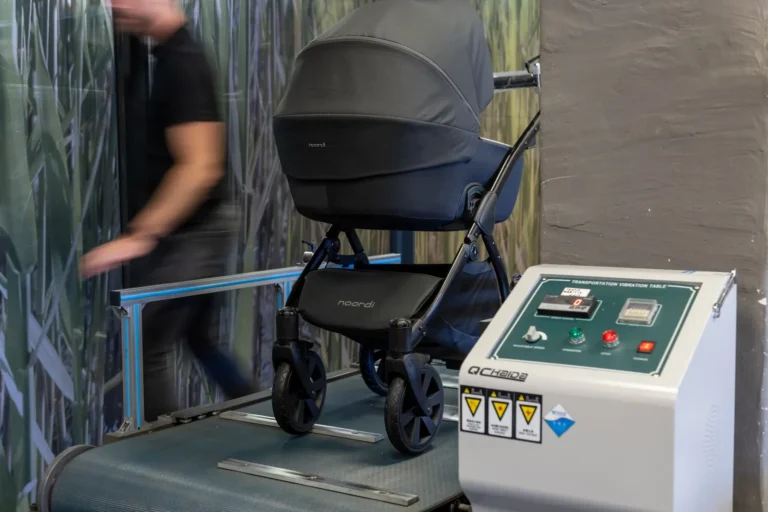
Fjordi V.2 and Aqua V.2 are made in our own factory in Kaunas, Lithuania, where we bend the frame tubes, sew the fabrics, assemble every pram and run vibration and wheel tests. Their inner fabrics – ION-SILVER™ in Fjordi V.2, Silver-ION in Aqua V.2 – are treated with silver ions that help the lining stay fresher between washes.
Every Noordi comes with a 2-year warranty on manufacturing defects. It does not cover normal wear and tear, misuse, or problems caused by not following the user manual – one more reason to keep your manual close.
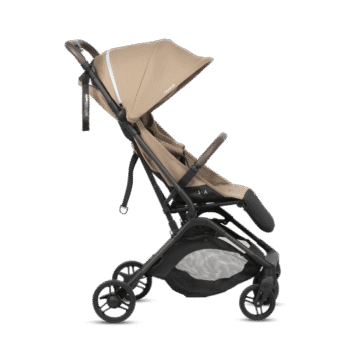
Our lightweight Sia has wipe-clean fabrics, and its transport bag keeps it clean on the way. You can read the full terms on our warranty page, and see how our prams are made in Kaunas.
Frequently asked questions
Can I put pram fabrics in the washing machine?
Only if the care label and your manual say so, and only at the setting they give. Some parts contain padding or shaped inserts that are meant to be wiped or hand-washed.
How do I get rid of mould spots on a pram?
Clean the area as the care label allows and let it dry completely in fresh air. If marks keep coming back on fabric your baby touches, ask the manufacturer about a replacement part. Storing the pram fully dry is the best prevention.
Should I oil the wheels?
Only if your manual recommends it, and only with the product it names. Often, removing hair and grit from the axles is all a squeaky wheel needs.
How often should I clean my pram?
A quick wipe after messy walks, a spot-clean every week or two, and a deeper clean and safety check every month or so – more often in winter, when salt and grit build up.
Does cleaning affect my warranty?
Cleaning as the manual describes is exactly what keeps you covered. Our warranty does not cover damage from misuse or from not following the user manual.
A pram that is looked after keeps its quiet glide for years. A soft brush, a dry cloth, a few minutes after the walk – and it is ready for wherever you wander next. For wet days in particular, see our guide to rainy-day walks with a baby.
Sources: Which?: weather-proofing a pushchair, Which?: pushchair safety checks, GINETEX care symbols, GOV.UK product safety alerts and recalls, Your Europe: product safety. Checked September 2026.
Made for the way you wander.
Three strollers, one calm way of getting outside. Find the one that fits your family’s days.
More from the Journal
Second-Hand or New Pram? What to Check Before You Buy
A second-hand pram can be a good choice – if you know what to check. Brakes, frame, locks, harness, recalls and the manual, plus when new is simply calmer.
Rainy-Day Walks With a Baby: A Practical Guide
Rain cover on for rain, off for everything else – a calm, practical guide to wet-weather walks with a baby, from what to wear to drying the pram.
EN 1888 Explained: What the European Pram Safety Standard Means
EN 1888 is on almost every pram box in Europe. Here is what the standard covers, what labs actually test, and what it cannot tell you about a pram.