
Noordi Journal · 28 September 2026 · 6 min read
Short answer: A second-hand pram can be a good, sustainable choice – if you see it in person, check the brakes, frame, folding locks, harness and wheels, search for recalls and get the instruction manual. Buy a new carrycot mattress if you can, and avoid a second-hand car seat unless you know its full history. A new pram adds a warranty and returns; note that the Noordi 2-year warranty is valid for the original purchaser only.

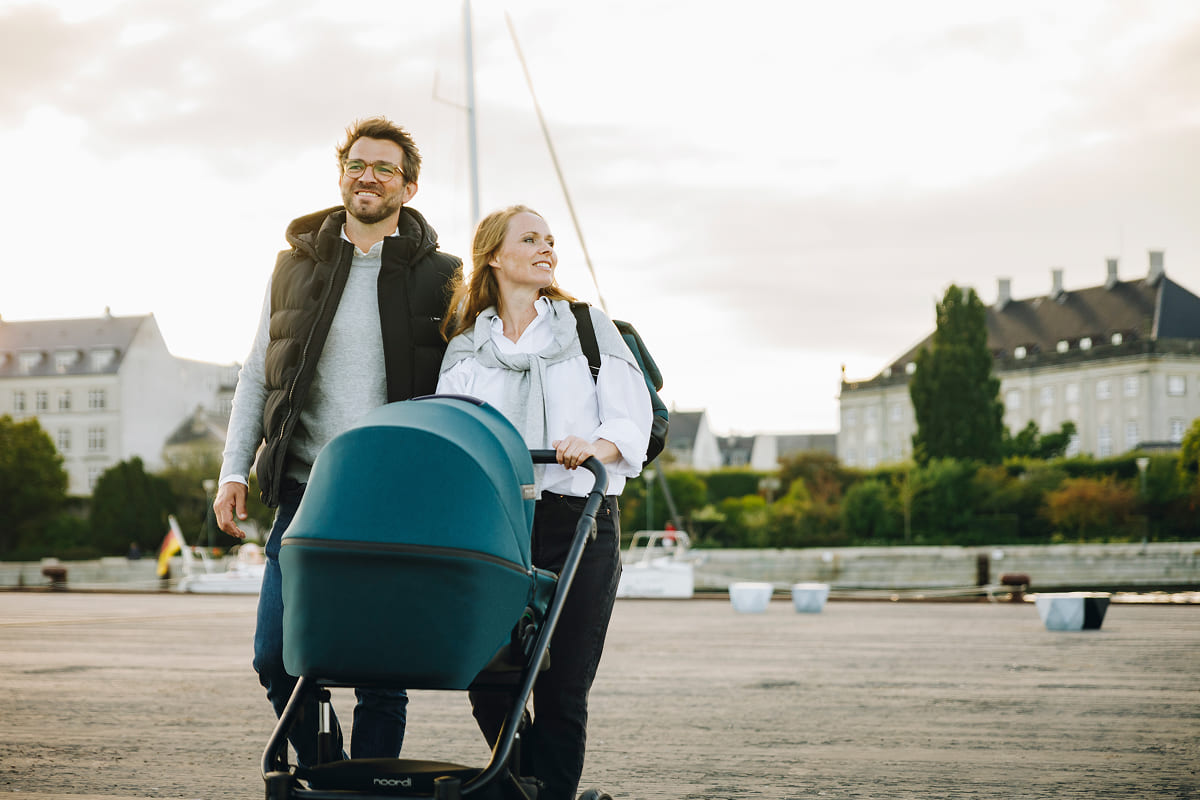
Prams are made to be pushed for years, and many find a second family long before they wear out. Buying one second-hand can be kind to your budget and to the planet. It just asks for a slower look than buying new – because you are buying the pram and its history. Here is what to check, what to ask and when new is simply the calmer choice.
Is a second-hand pram a good idea?
Often, yes. A well-made pram that has been looked after can have plenty of walks left in it, and the Lullaby Trust notes that second-hand products can help families save money and reduce waste. The same organisation asks parents to make sure a product has its instructions, has not been recalled and is complete and undamaged.
What you cannot see is how it was used. A pram may have been dropped, stored in a damp shed or missing a part that someone replaced with something that “nearly fits”. That is why the in-person check matters more than the photos.
What should you check on a used pram?
Take ten unhurried minutes. Ask to fold and unfold it yourself, and bring something with a little weight – a bag of shopping works – to put in the seat.
| Part | How to check | Walk away if… |
|---|---|---|
| Brakes | Apply the brake and push firmly, on flat ground and on a slight slope | The pram rolls, or the pedal feels loose |
| Frame and joints | Look closely at hinges, welds and tubes; run a hand along them | You find cracks, bends, deep dents or rust at a joint |
| Folding locks | Fold and unfold several times; press down on the handlebar | A lock does not click in, or the frame gives under pressure |
| Harness | Check every strap, the buckle and each anchor point; tug firmly | Straps are frayed or the buckle opens when pulled |
| Wheels | Spin, swivel and, if possible, lock the front wheels | Wheels wobble or grind, tyres are cracked, the swivel lock does not hold |
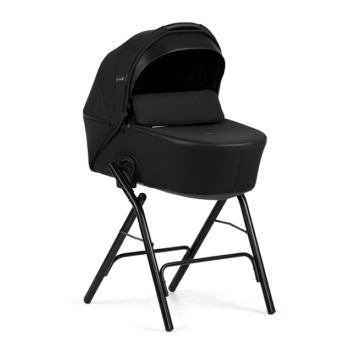
| Carrycot and seat | Click them on and off the chassis; lift the carrycot by its handle | An attachment does not lock on both sides, or a handle feels loose |
| Fabrics | Check seams, canopy and lining, and smell them | There is mould, or tears near the harness points |
| Label | Find the model name, serial number and safety standard | There is no label and no way to identify the model |
Then ask the seller a few quiet questions: when was it bought, where was it stored, has it been dropped or repaired, and are all the parts and the manual included? A receipt helps too.
How do you check a pram for recalls?
RoSPA suggests checking online for a recall before you buy anything second-hand. It takes a few minutes:
- Search the brand and exact model name with the word “recall”.
- Look at the manufacturer’s own website and news pages.
- Search the EU Safety Gate database of dangerous products. In the UK, Trading Standards lists recalls and safety notices.
If a recall exists, ask whether the fix was carried out – and if the seller does not know, contact the manufacturer with the serial number before you pay.
What about the mattress and the car seat?
These are the two items where second-hand is hardest to recommend.
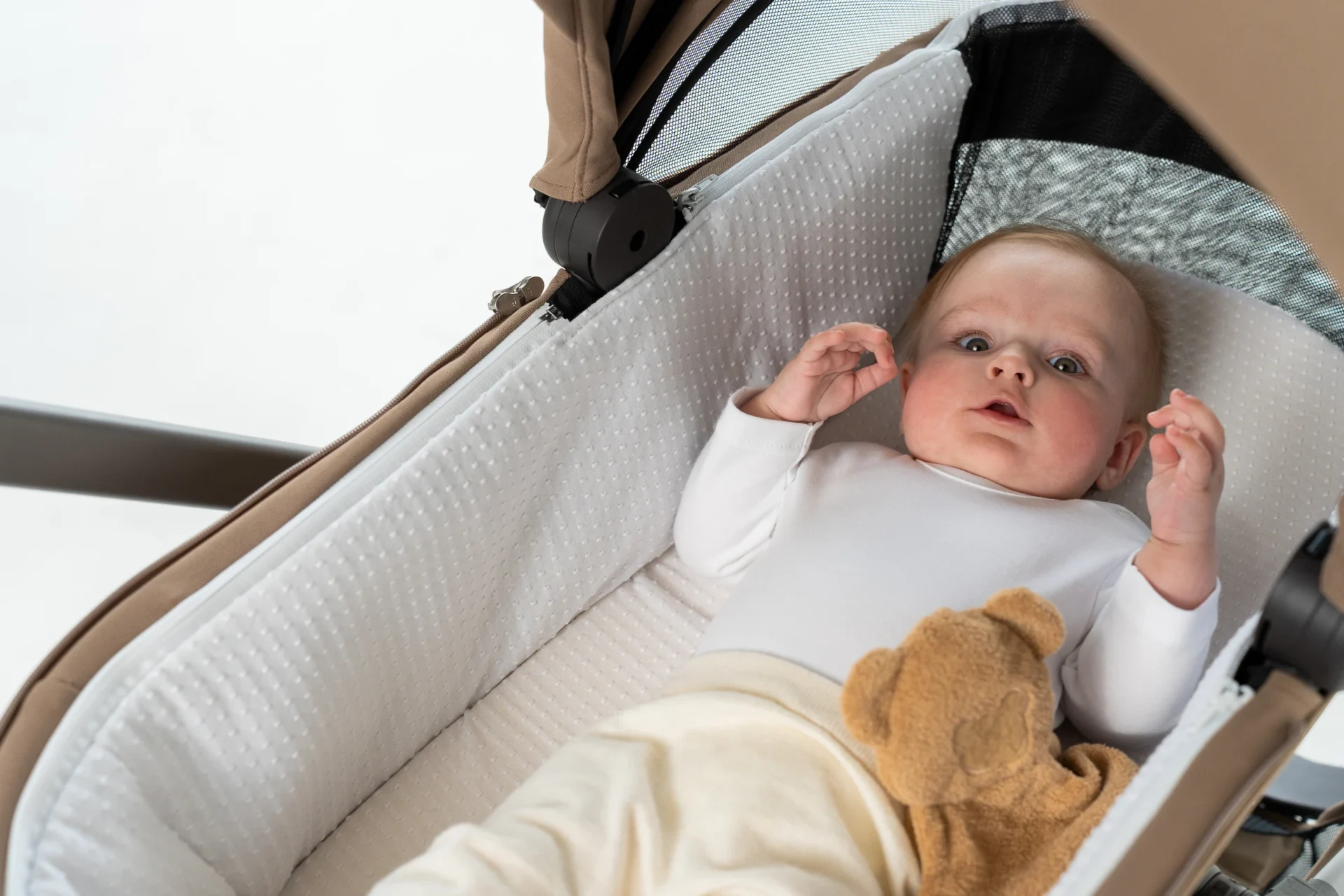
- Mattress: the Lullaby Trust advises against second-hand mattresses. If you do reuse one, it should be firm, fit the carrycot well and have a 100% waterproof cover with no tears – and, in the UK, a fire-safety label. The Lullaby Trust also names BS EN 1466 as the standard for carrycots and Moses baskets.
- Car seat: RoSPA’s advice is not to buy a second-hand child car seat. A seat that has been in a crash may be damaged in ways you cannot see. Only accept one from family or close friends if you are certain of its history, have its instructions and can check it fits your car.
If you are buying a car seat new, our guide to i-Size (R129) car seats explains what to look for.
What if the manual is missing?
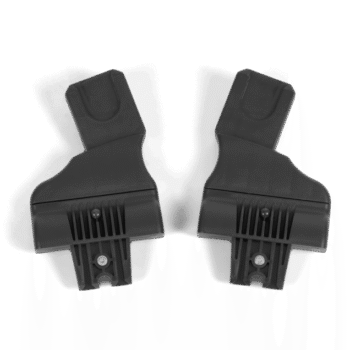
The manual is not paperwork – it is where the limits live: the age and weight range, how the carrycot and seat attach, how the fold locks, and which car seats fit with which adapters. Without it, you are guessing.
Ask the seller for the exact model and year, then look for the manual on the manufacturer’s website. Noordi manuals are on our instruction manuals page. For care, our guide on cleaning a pram so it lasts is a good next read.
Good things can have a second journey. Let it begin with a careful look.
Second-hand or new: how do they compare?
| Second-hand | New | |
|---|---|---|
| Price | Lower | Higher |
| History | Depends on the seller’s word | Yours from the first day |
| Manufacturer’s warranty | Often not transferable – check the terms | Full warranty (Noordi: 2 years for manufacturing defects) |
| Returns | Rare in a private sale | Noordi: 14 days if unused, return shipping covered |
| Manual and parts | May be missing | Complete, in the box |
| Footprint | Gives a pram a second life | Can later be passed on to a sibling or another family |
There is no wrong answer. If a trusted friend is passing on a pram you know well, that can be a lovely start. If the history is a mystery, or the checks above leave you uneasy, new is the calmer choice.
Where Noordi fits
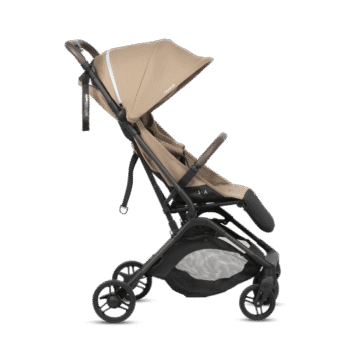
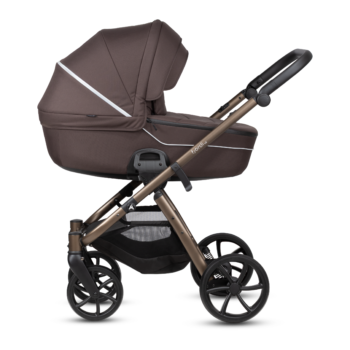
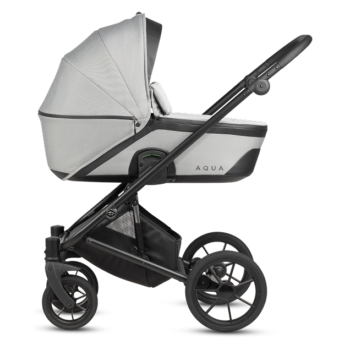
Noordi Fjordi V.2 · Aqua V.2 · Sia
Fjordi V.2 and Aqua V.2 are made in our own factory in Kaunas, Lithuania. Every Noordi comes with free delivery across the EU in 2–5 business days, 14-day returns if unused, and a 2-year warranty covering manufacturing defects in the frame, wheels and mechanical parts – so the first months are simply about the walks.
The Noordi warranty is valid for the original purchaser only and is not transferable, and it does not affect your statutory rights. If you buy a used Noordi from another family, the online manuals still help you check and use it correctly.
Frequently asked questions
Is it safe to buy a second-hand pram?
Generally yes, if you check it in person – brakes, frame, folding locks, harness and wheels – confirm it has not been recalled, and get the manual.
Does the Noordi warranty transfer to a second owner?
No. The Noordi 2-year warranty is valid for the original purchaser only and is not transferable. It does not affect statutory rights.
Should I buy a used car seat?
RoSPA advises against it, because crash damage is not always visible. Only consider one from family or friends if you are certain of its full history.
Can I reuse the carrycot mattress?
The Lullaby Trust recommends a new mattress if you can. If you reuse one, it should be firm, well-fitting and have an intact, fully waterproof cover.
What should I ask the seller?
When it was bought, how it was stored, whether it has been dropped or repaired, and whether all parts, the manual and a receipt are included.
Whether your pram is new or has walked a few paths already, what matters is the same: a steady frame, a brake you trust, and a small person warm inside, heading out to see what the day holds.
Sources: The Lullaby Trust, RoSPA Child Car Seats, RoSPA, Trading Standards, EU Safety Gate. Checked September 2026.
Made for the way you wander.
Three strollers, one calm way of getting outside. Find the one that fits your family’s days.
More from the Journal
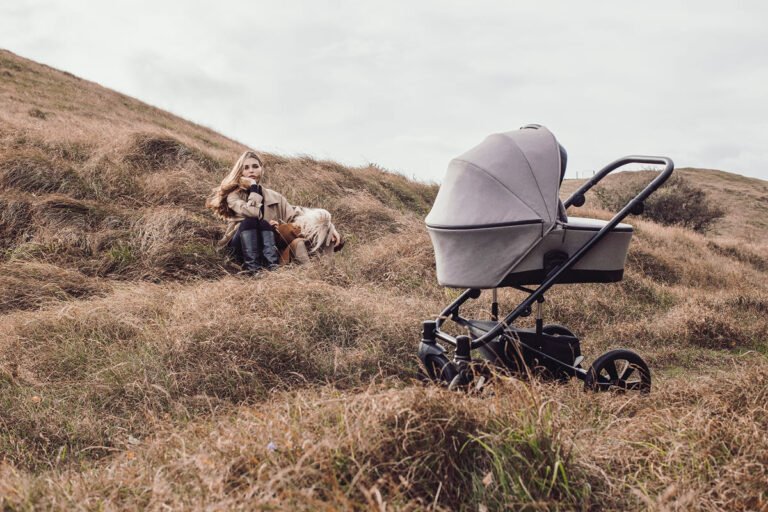
How to Clean and Care for Your Pram So It Lasts
A soft brush, a dry cloth and a few minutes after the walk – a calm guide to cleaning pram fabrics, frame and wheels, with safety checks and storage tips.
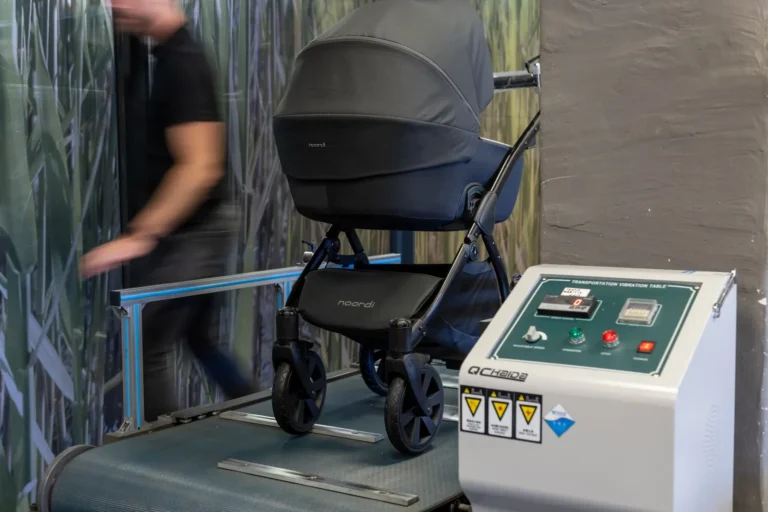
EN 1888 Explained: What the European Pram Safety Standard Means
EN 1888 is on almost every pram box in Europe. Here is what the standard covers, what labs actually test, and what it cannot tell you about a pram.
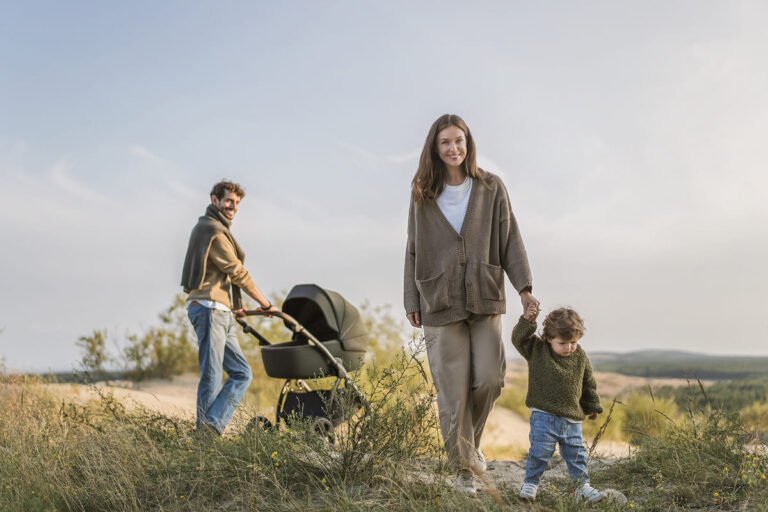
How to Choose Your First Pram: A Calm 10-Point Checklist
Ten calm questions to ask before buying your first pram, from lie-flat comfort and everyday terrain to weight, fold, car seats and the EN 1888 standard.