
Noordi Journal · 28 September 2026 · 6 min read
Short answer: Pram suspension is the set of springs and shock absorbers between the wheels and your baby. It softens the bumps and the fine, constant vibration that uneven ground sends up through the frame. It matters most on cobbles, gravel and forest roots, where studies measure many times more vibration than on smooth tarmac. Suspension works together with wheel size, tyres and a well-made carrycot — no single part does the job alone.
Most of us only think about suspension when it is missing: the rattle over paving stones, the jolt at a kerb, the moment a sleeping baby stirs on a gravel track. Understanding what suspension does — and what it cannot do — helps you choose a pram for the paths you really walk, and use it more gently.
What does pram suspension actually do?
A spring takes the energy of a bump and releases it more slowly. A shock absorber, or damper, calms the bounce that follows, so the pram settles instead of rocking. Together they turn a sharp knock into a softer, rounder movement.
On a pram, suspension is only one link in a chain. The tyre meets the ground first, then the wheel, the springs, the frame, the carrycot shell and finally the mattress. Researchers at the University of Padova, who measured vibration directly on infants in prams, found that the carrycot and mattress act as a filter too, taking out part of what the frame passes on. That is why good design looks at the whole chain, not just the springs.
How much does the ground change the ride?
A lot — and it is not only forest paths. Two recent studies give a clear picture of how the surface under the wheels shapes what reaches the baby.
| Study | Surfaces | What they found |
|---|---|---|
| TU Delft, five strollers, walking pace around 5 km/h | Tarmac, bricks, pavers, cobblestones, slabs, a small bump | About 0.4 m/s² on average on tarmac; up to 5.0 m/s² on cobblestones. An older design with generous springs and larger wheels passed on the least. |
| University of Padova, 18 babies aged 0–6 months | Smooth indoor floor, asphalt, porphyry paving, gravel | Lowest vibration indoors, highest on gravel. Vibration measured at the baby’s chest stayed below the ISO 2631-1 guidance limit on every surface. |
The two studies point the same way. Everyday walks in a pram are considered safe, and the Padova team saw no significant difference in the babies’ comfort scores between surfaces. But rough ground multiplies vibration, and the Delft authors suggest avoiding long stretches on surfaces rougher than tarmac. Where that is not possible — an old town, a gravel forest road — suspension, wheels and a calm pace all help.
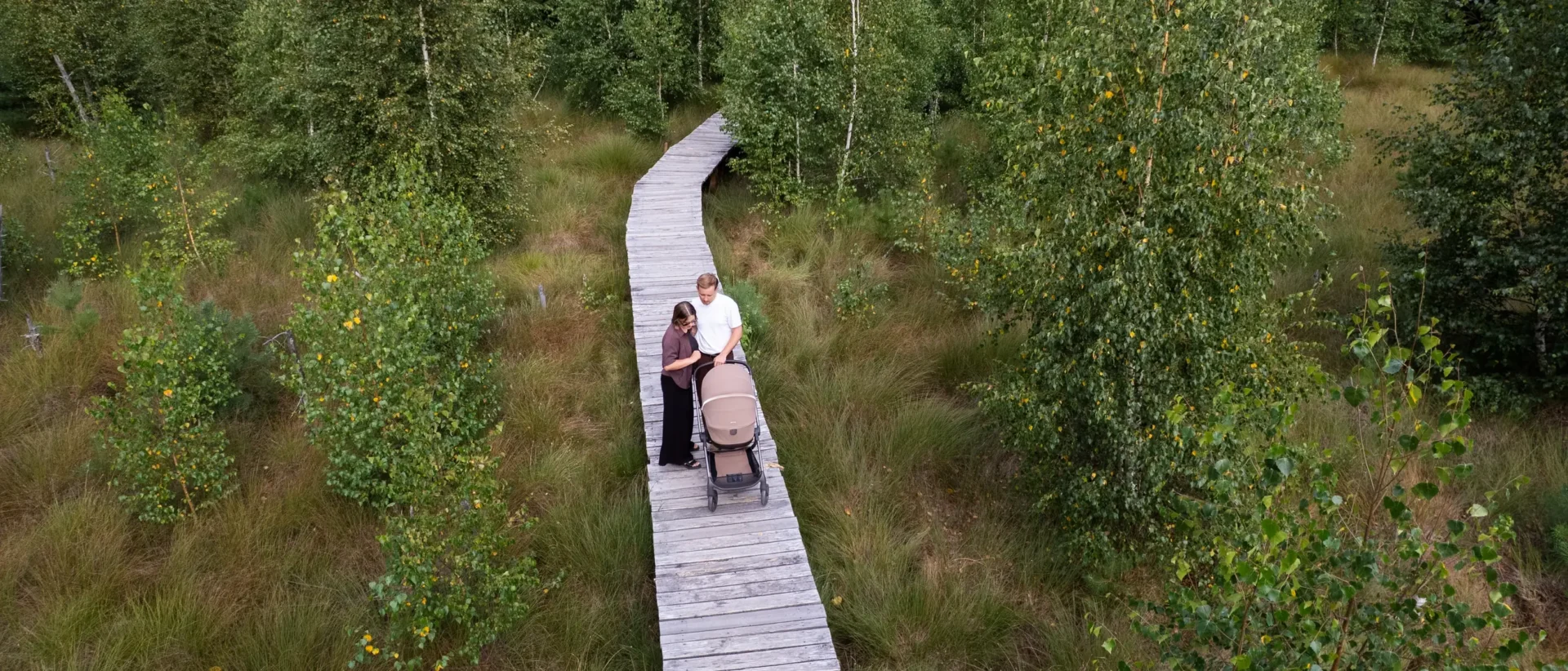
A calmer ride starts long before the carrycot: at the wheel, on the path.
What types of pram suspension are there?
Prams combine a few basic ideas. Knowing the words makes spec sheets easier to read.
- Front-fork shock absorber: a spring in the front wheel fork takes the first knock from kerbs and roots, before the rest of the pram meets them.
- Independent suspension on each wheel: every wheel has its own spring, so one stone under one wheel does not rock the whole carrycot.
- Rear-wheel springs: springs above the rear wheels, where most of the weight sits.
- Mid-frame shock absorbers: absorbers in the middle of the frame calm what the wheels pass on.
- Tyres: soft or air-filled tyres cushion small ripples; solid puncture-free tyres trade a little softness for no flats.
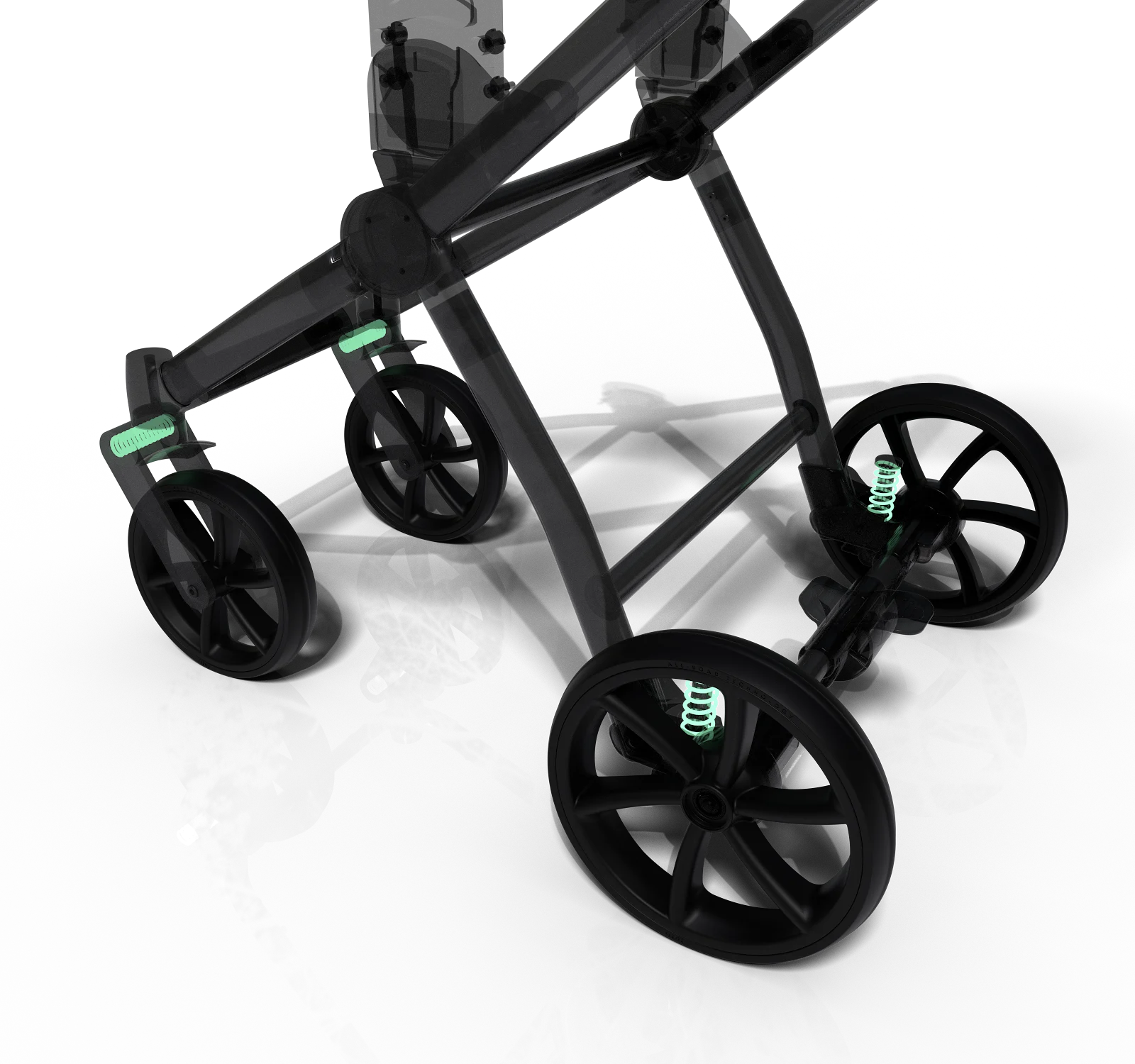
Here is how our own models combine them:
| Suspension | Wheels | Most at home on | |
|---|---|---|---|
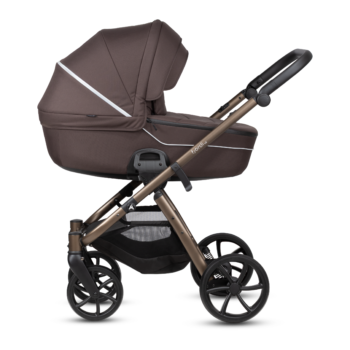
| Fjordi V.2 | Front-fork shock absorber + independent suspension on each wheel | All-Road™, front 360° lockable | Forest paths, gravel, sand, snow |
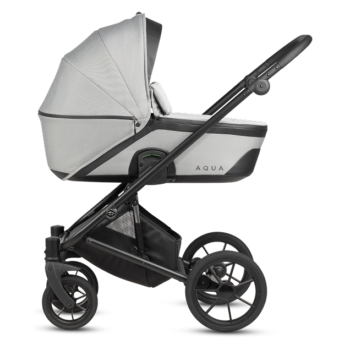
| Aqua V.2 | Rear-wheel springs + mid-frame shock absorbers | 8″ front, 12″ rear, soft tyres, front lockable | Mixed city and outdoor routes |
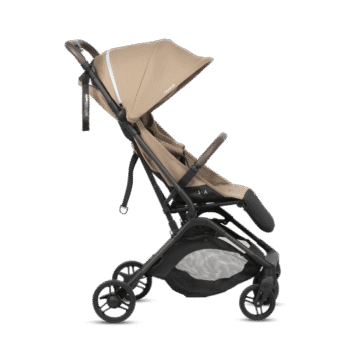
| Sia | Front and rear suspension | 7.5″ PU, puncture-free | Travel, transport, compact city life |
Why do wheels, tyres and pace matter as much as springs?
A larger wheel meets a stone or a gap at a gentler angle, so it tends to roll over rather than knock into it. That is simple geometry, and it is why prams made for rough ground usually have bigger wheels. Soft tyres absorb the small, fast ripples that springs are too slow to notice.
Front wheels matter too. Swivelling wheels make town corners easy, but on gravel they can wobble. If your pram lets you lock them straight, do it on rough ground: the pram tracks more calmly and you steer less.
And then there is your own pace. The Delft researchers found that on cargo bikes, vibration rose clearly with speed. Walking is far gentler, but the lesson carries over: on cobbles or roots, slowing down is the simplest suspension you have.
How can you check a pram’s suspension before you buy?
- Press the handlebar down firmly and let go. The pram should sink and return smoothly, without bouncing on or clunking.
- Push it over a doorstep or a kerb, with some weight in the carrycot or seat. Listen for rattles.
- Check whether the front wheels lock straight, and try it on gravel if you can.
- Look at where the springs sit: at the front, the back, on every wheel, in the frame?
- Ask which surfaces the pram is designed for, and check the weight limit of the seat unit.
Good suspension is not only for the baby. A pram that rolls smoothly asks less of your wrists and shoulders on a long walk, and that counts for something on the fifth kilometre.
Where Noordi fits
Noordi Fjordi V.2 · our softest ride
Fjordi V.2 has a front-fork shock absorber and independent suspension on each wheel, so a root under one wheel does not rock the whole carrycot. All-Road™ wheels roll steadily over gravel, sand and snow, and the front wheels lock straight for rough ground. It is the pram we suggest when forest paths are part of most weeks.
Noordi Aqua V.2 · town and trail
Aqua V.2 softens bumps in two places: springs at the rear wheels take the knock from kerbs and cobbles, and shock absorbers in the middle of the frame calm what is left. Soft tyres on 8″ front and 12″ rear wheels add their own cushioning, and the memory mattress follows your baby’s shape.
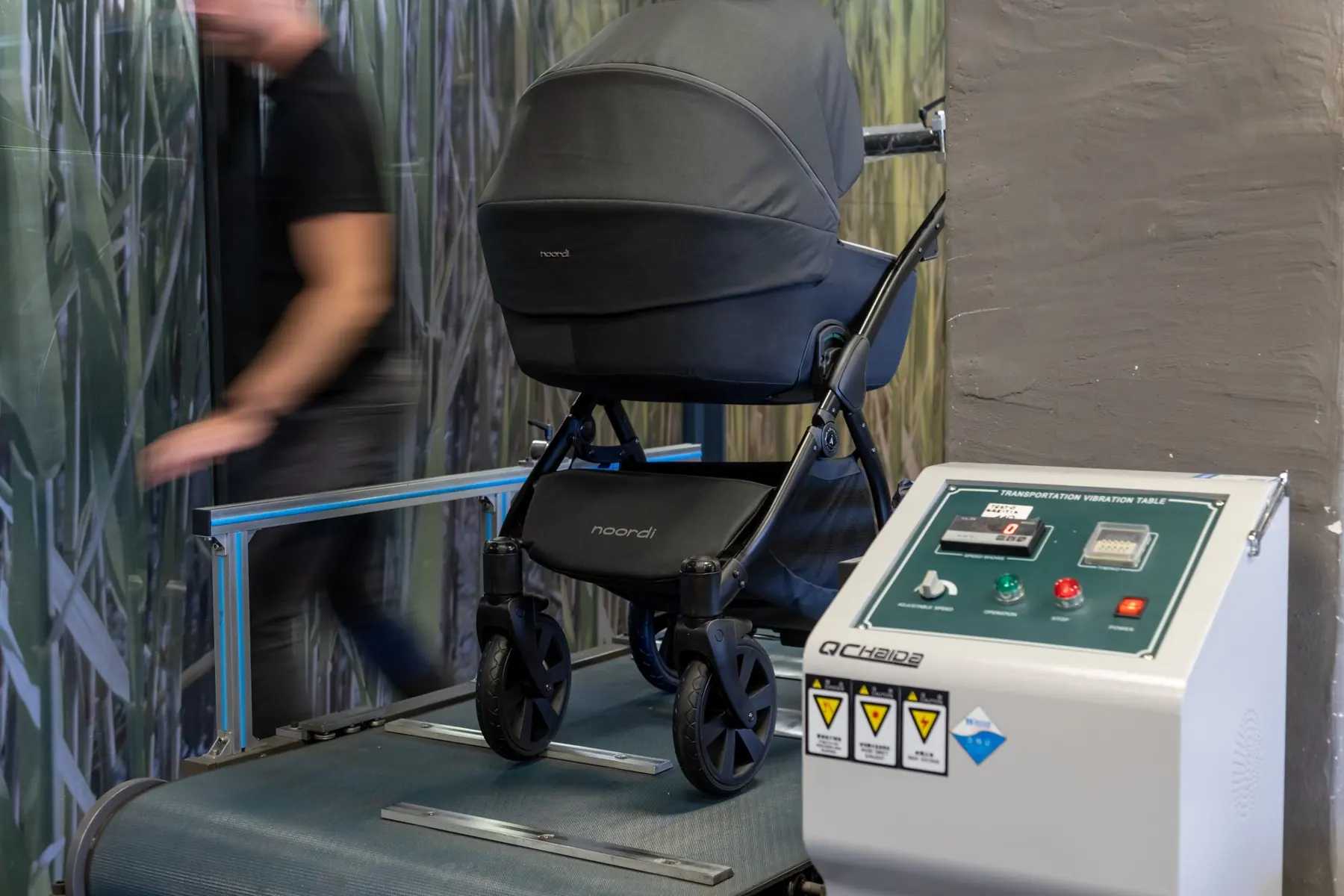
Both are made in our factory in Kaunas, where prams go through vibration and wheel tests. Read more about where Noordi prams are made, see all models on the compare page, or read All-terrain pram vs city stroller.
Read also: Soft ride, calm nap: why a smooth pram helps babies sleep outside
Frequently asked questions
Do newborns need a pram with suspension?
Newborns lie flat in a carrycot, and on smooth pavement almost any pram rides quietly. Suspension starts to matter when your routes include cobbles, gravel or forest paths, where vibration rises sharply.
Is walking on cobbles bad for my baby?
Studies suggest ordinary pram walks are safe, and in the Padova study vibration at the baby’s chest stayed below the guidance limit on all surfaces tested. Still, rough ground adds vibration, so slow down and avoid long stretches where you can.
Is softer suspension always better?
Not always. Springs need damping so the pram settles instead of bouncing. What you want is a ride that absorbs a bump and then comes to rest quickly.
Can I run with my pram?
Only if the manufacturer says the pram is designed for running. Most prams, including the suspension, are designed for walking pace.
How do I look after the suspension?
Keep wheels and joints free of sand and grit, listen for new rattles, and follow the care steps in your instruction manual.
The best suspension is the one you never notice: the path changes, the nap goes on, and you keep walking a little further than planned.
Sources: TU Delft, Moore et al., Ergonomics (2026), University of Padova, Rubega et al., Scientific Reports (2025). Checked September 2026.
Made for the way you wander.
Three strollers, one calm way of getting outside. Find the one that fits your family’s days.
More from the Journal
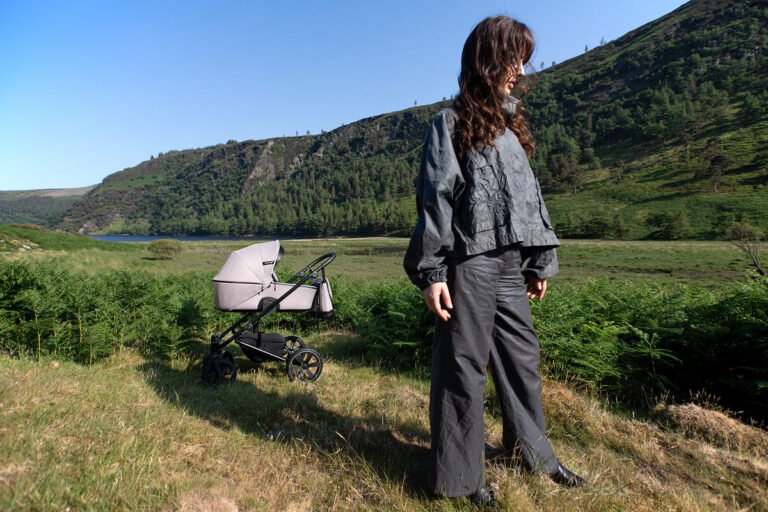
All-Terrain Pram vs City Stroller: Which Do You Actually Need?
Wheels, suspension, weight and fold: a calm way to choose between an all-terrain pram and a city stroller, starting from the paths you walk every week.
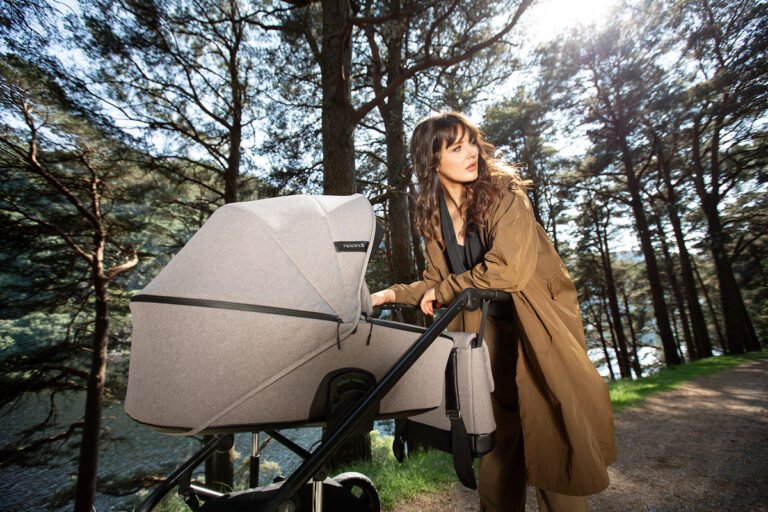
Walking Forest Trails With a Pram: 8 Tips for Family Hikes
Eight calm, practical tips for walking forest trails with a pram: choosing the path, handling roots and slopes, sun, cold and ticks, and what to pack.
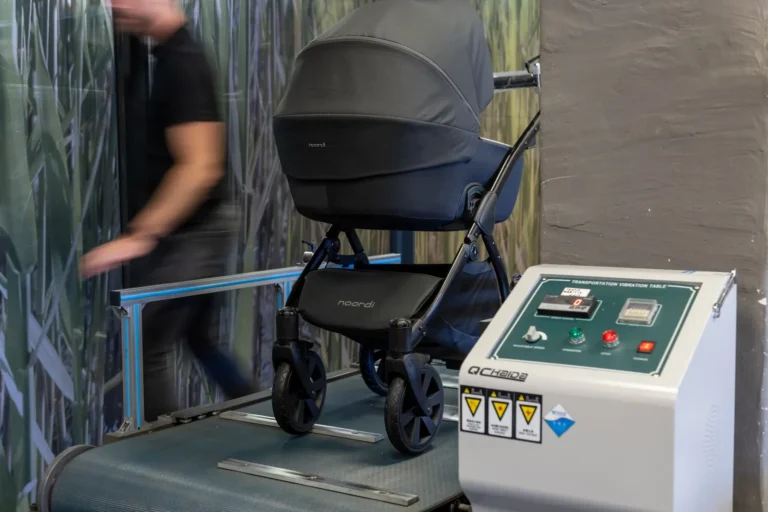
EN 1888 Explained: What the European Pram Safety Standard Means
EN 1888 is on almost every pram box in Europe. Here is what the standard covers, what labs actually test, and what it cannot tell you about a pram.