
Noordi Journal · 28 September 2026 · 7 min read
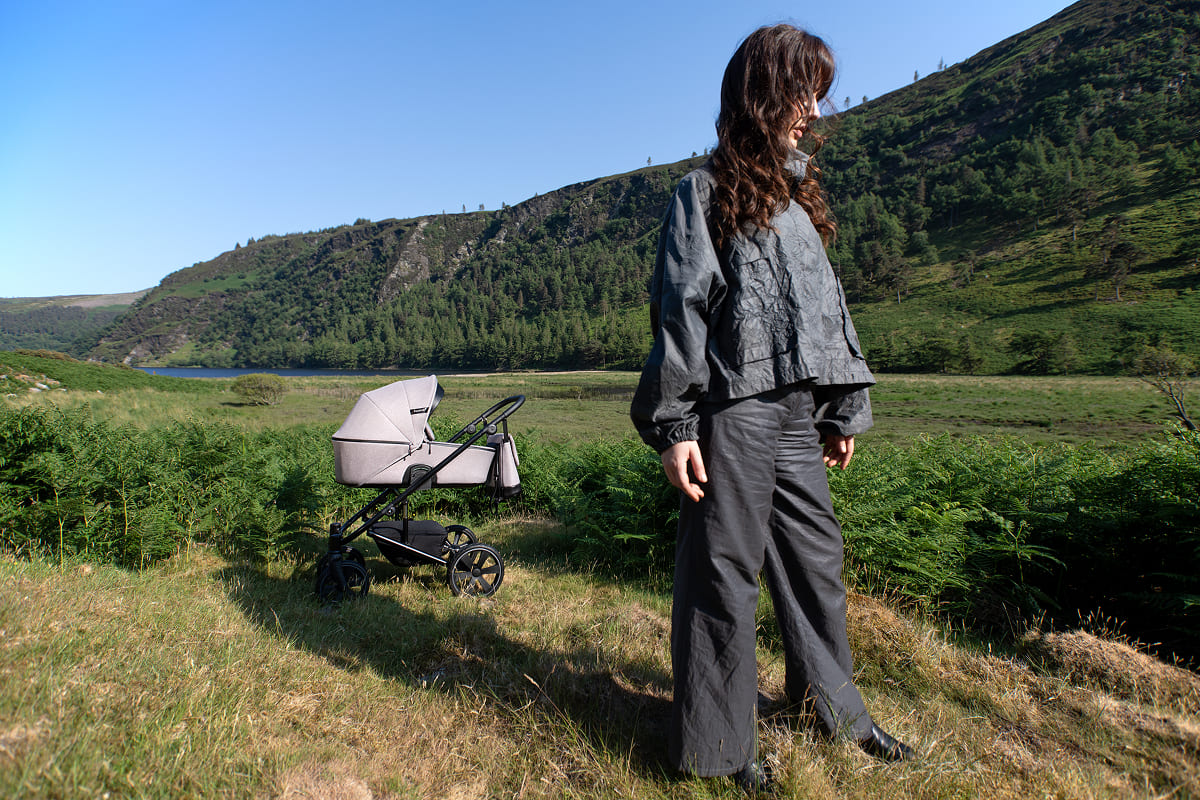
Short answer: Choose for the ground you walk most often, not the one you dream about. If gravel, forest paths, sand or snowy pavements are part of most weeks, an all-terrain pram with larger wheels and suspension on every wheel will make those walks calmer. If your days are mostly smooth pavements, buses and a narrow hallway, a lighter city stroller is easier to live with. Many families land in between, with a versatile 2-in-1 pram or a second, lighter stroller for travel.
The names suggest two different worlds: one pram for the wild, one for the pavement. In practice the difference comes down to a handful of design choices — wheel size, suspension, frame and weight — and each one is a trade-off. Knowing what you gain and what you carry makes the choice much quieter.
What is the difference between an all-terrain pram and a city stroller?
An all-terrain pram is built to keep rolling when the ground stops being smooth. It usually has larger wheels, suspension working at more than one point, a sturdier frame and front wheels that lock straight so they do not wobble on gravel. The price for that steadiness is size and weight.
A city stroller is designed around the other parts of the day: kerbs, lifts, café doors, the bus and the car boot. Smaller wheels turn quickly, the frame is lighter and the fold is usually more compact. On a long gravel track it has to work harder — and so do you.
| All-terrain pram | City stroller | |
|---|---|---|
| Wheels | Larger, front wheels often lock straight | Smaller, swivelling, quick to turn |
| Suspension | Usually on every wheel or at several points | Lighter, often front and rear only |
| Weight | Heavier, steadier on rough ground | Lighter to lift onto a bus or up stairs |
| Fold | Larger package; wheels may come off | Compact, sometimes one-handed |
| From birth | Flat carrycot | Carrycot, or a seat that reclines flat |
| Happiest on | Gravel, forest paths, sand, snow | Pavements, parks, public transport |
Where will you actually walk?
Before comparing models, picture an ordinary week — not the holiday, the Tuesday. Where do you go, how do you get there, and what is under the wheels?
- The surface: smooth pavement, cobbles, park gravel, forest roots, sand or snow?
- The distance: ten minutes to the shop, or an hour-long loop at the weekend?
- The transport: car boot, bus, tram, train, or mostly on foot?
- The home: a lift or stairs, a narrow hallway, somewhere to park the pram?
- The weather: wind off the sea, rain most weeks, snow in winter?
If most of your answers point outdoors — gravel, long walks, snow, a drive to the trailhead — an all-terrain pram will feel right. If most point to stairs, buses and tight spaces, lightness will matter more than wheel size.
Does the ground really make a difference to your baby?
It does, and cobbles count as much as forest paths. Researchers at TU Delft measured vibration in five strollers on six surfaces at a walking pace of around 5 km/h. On smooth tarmac the average was about 0.4 m/s²; on cobblestones it rose to as much as 5.0 m/s². The pram that passed on the least was an older design with generous spring suspension and larger wheels, and the authors suggest avoiding long stretches on surfaces rougher than tarmac.
That does not make a city stroller wrong for an old town street. It means that if rough ground is part of your routine, good suspension and larger wheels are less a luxury than a quieter ride. We go deeper in Pram suspension explained.
The right pram is the one that suits the path outside your own front door.
What does a newborn need, whichever you choose?
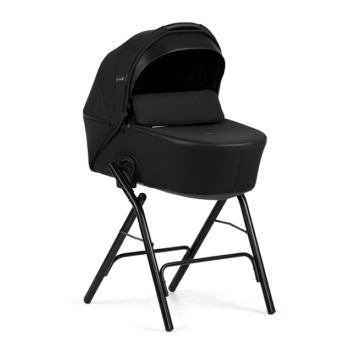
Newborns should lie flat. The Lullaby Trust advises a firm, flat surface for sleep and reminds parents that car seats are for travelling, not a main place to sleep. So whether you lean towards an all-terrain pram or a city stroller, check how your baby will lie in the first months: a carrycot, or a seat that reclines fully flat, with a firm mattress and a hood you can fold back.
On warm days, use the canopy or a clip-on sunshade and keep the air moving. Never drape a blanket or muslin over the pram — it can trap heat around your baby.

Weight, fold and space at home: what are you happy to carry?
Numbers help here. A few kilograms feel like nothing in a shop and like a lot on the third flight of stairs. Measure your car boot and hallway, and ask how the pram folds: does the seat have to come off, do the wheels come off, can you fold it with a baby on your hip?
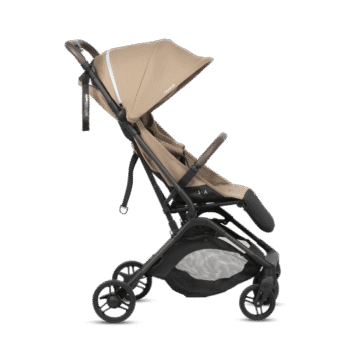
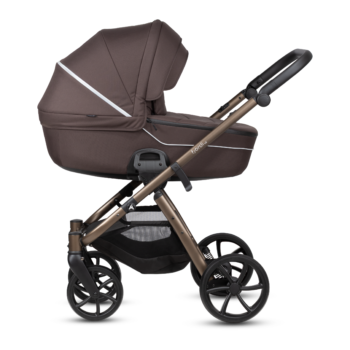
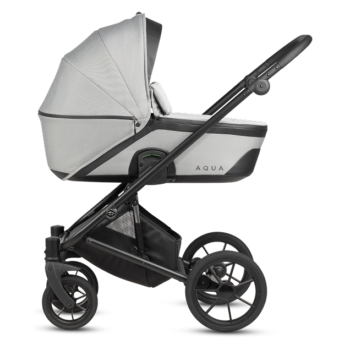
As an example, this is how our own three models compare. Fjordi V.2 is built for rough ground, Aqua V.2 sits between town and trail, and Sia is our light, compact stroller.
| Fjordi V.2 | Aqua V.2 | Sia | |
|---|---|---|---|
| Made for | Forest paths, gravel, sand, snow | Mixed city and outdoor routes | Travel, transport, compact city life |
| Suspension | Front-fork shock absorber + independent suspension on each wheel | Rear-wheel springs + mid-frame shock absorbers | Front and rear |
| Wheels | All-Road™, front 360° lockable | 8″ front, 12″ rear, soft tyres | 7.5″ PU, puncture-free |
| Weight with seat unit | 12.1 kg | 13.6 kg | 5.9 kg |
| Chassis, open (L × W × H) | 97 × 61 × 106 cm | 97 × 60 × 103 cm | 76 × 48.5 × 100 cm |
| From birth | Carrycot, 81 × 37 cm inside | Carrycot, 81 × 37 cm inside | Seat reclined, 80 cm lying length |
Can one pram do both, or do you need two?
Often one is enough. A pram with good suspension and lockable front wheels copes with town perfectly well; it is simply bigger to fold and lift. A light stroller can manage a firm park path or a packed forest road, especially with front and rear suspension — it just is not made for roots and deep gravel every day.
If your life splits clearly — weekday buses and weekend trails, or a lot of flying — a sturdy pram plus a light second stroller can be simpler than one compromise. We look at that choice in Pram and travel stroller: do you need both?, and if forest walks are what you have in mind, our tips for walking forest trails with a pram may help.
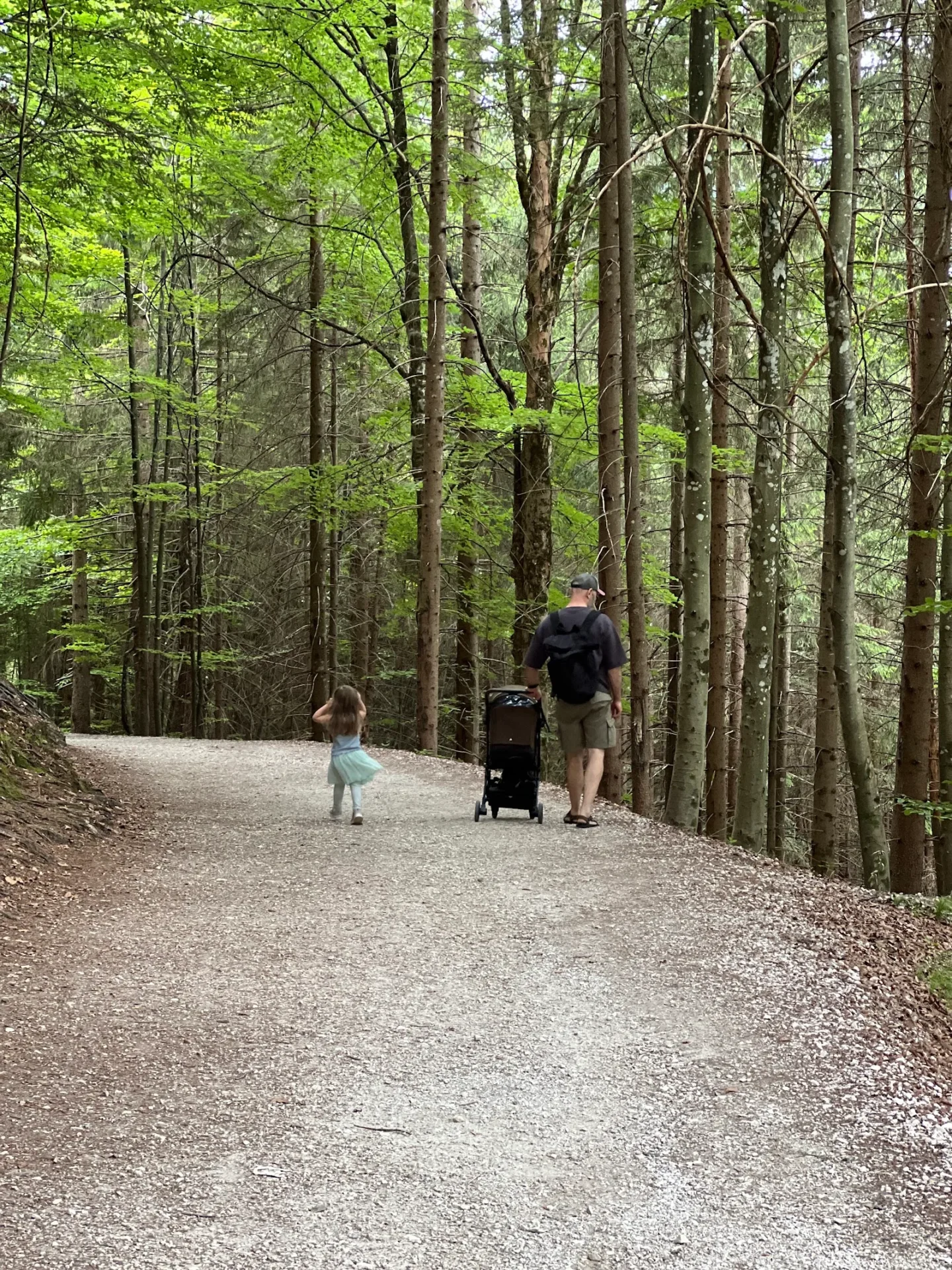
Where Noordi fits
Noordi Fjordi V.2 · all-terrain 2-in-1
Fjordi V.2 is our pram for days when the path matters most. A front-fork shock absorber and independent suspension on each wheel soften roots and gravel before they reach the carrycot, and All-Road™ wheels roll steadily over gravel, sand and snow — front wheels free for tight corners in town, or locked straight on rough ground. The 7.8 kg chassis folds with the seat unit on, facing either way, and 81 cm of carrycot length leaves room for a winter suit. Fjordi won Gold in the All-Terrain category of the MadeForMums Awards 2021.
If your weeks are more town than trail, Aqua V.2 pairs rear and mid-frame suspension with large soft tyres, and Sia weighs 5.9 kg with a one-hand fold. The compare page shows all three side by side.
Frequently asked questions
Is an all-terrain pram too big for the city?
Not necessarily. Swivelling front wheels make it easy to steer on pavements; the real difference is the size of the fold and the weight you lift. Measure your boot, lift and hallway before you decide.
Can I use a city stroller from birth?
Yes, if it has a carrycot or a seat that reclines fully flat and the manufacturer says it is suitable from birth. Newborns need a firm, flat place to lie.
Are bigger wheels always better?
On rough ground, larger wheels roll over stones and gaps more easily. In small shops and on buses, smaller wheels are nimbler. It depends on where you walk most.
Do I need suspension if I only walk in town?
Cobbles, kerbs and paving joints add up. A TU Delft study measured far more vibration on cobblestones than on smooth tarmac, so some suspension is worth having even in the city.
What if I still cannot decide?
Start with your ordinary week, not the rare adventure. A few questions in Find your Noordi can help narrow it down.
Whichever you choose, the aim is the same: more mornings outside and fewer reasons to stay in. Pick the pram that makes your own path feel easy, and let the week unfold from there.
Sources: TU Delft, Moore et al., Ergonomics (2026), The Lullaby Trust: safer sleep on holiday, The Lullaby Trust: keeping babies cool. Checked September 2026.
Made for the way you wander.
Three strollers, one calm way of getting outside. Find the one that fits your family’s days.
More from the Journal
Pram Suspension Explained: Why It Matters on Forest Paths and Cobbles
Springs, shock absorbers, wheels and tyres: what pram suspension really does, what research says about vibration on cobbles and gravel, and how to check it before you buy.
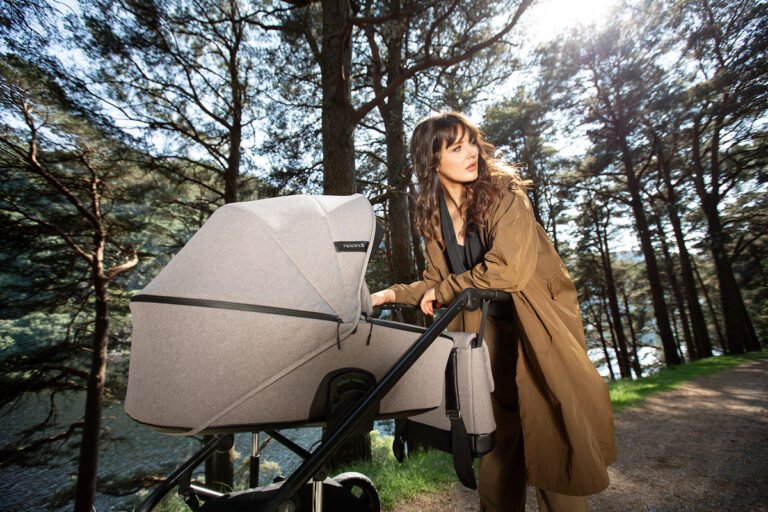
Walking Forest Trails With a Pram: 8 Tips for Family Hikes
Eight calm, practical tips for walking forest trails with a pram: choosing the path, handling roots and slopes, sun, cold and ticks, and what to pack.
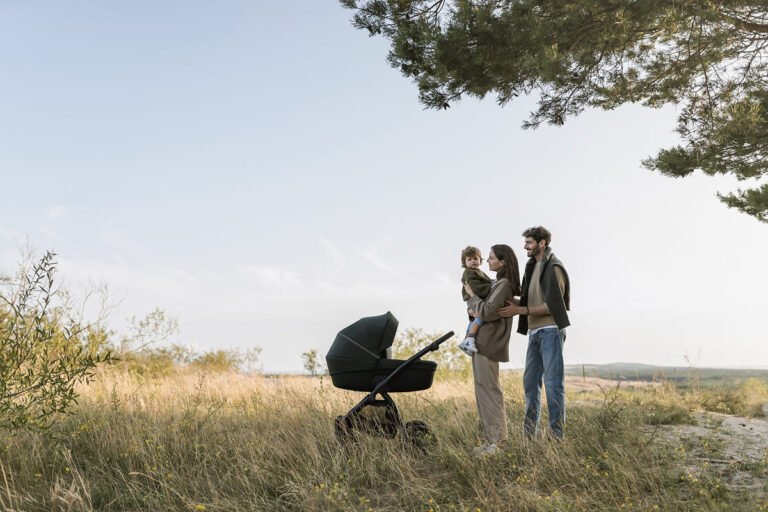
Pram and Travel Stroller: Do You Need Both?
One pram is often enough. Here is when a lighter travel stroller really earns its place, and when it is worth waiting.