
Noordi Journal · 28 September 2026 · 6 min read

Short answer: Many families manage well with one good pram, especially in the first months, when a flat carrycot matters most. A second, lighter travel stroller earns its place if you fly, rely on buses and trains, climb stairs every day or have a small car boot. If most of your days start and end at your own front door, one 2-in-1 pram is usually enough.
What is the difference between a pram and a travel stroller?
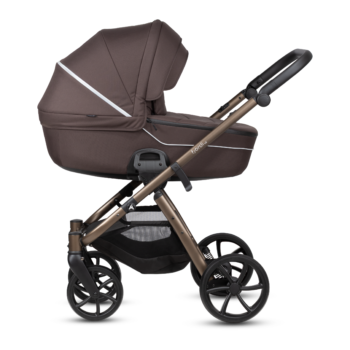
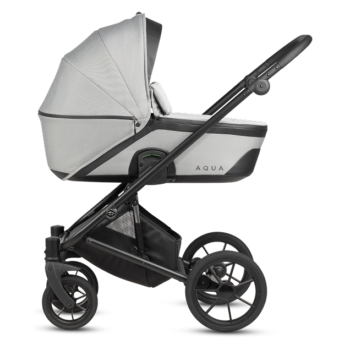
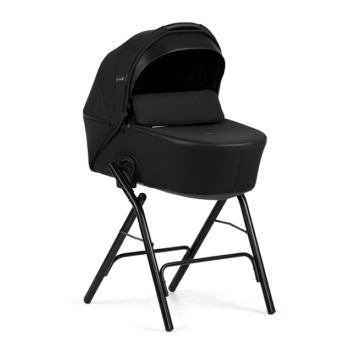
A 2-in-1 pram is built for the long everyday: a carrycot where a newborn lies flat, a seat unit for later, larger wheels and suspension that keep the ride calm on cobbles, roots and gravel. It is the one you nap in, walk in and take into the weather.
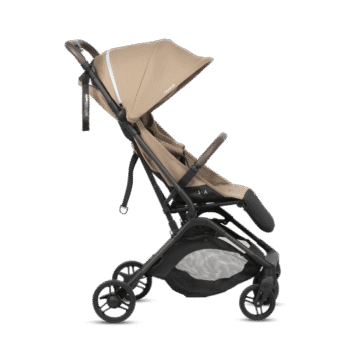
A travel stroller is built for moments of transition: lifting it onto a bus, folding it at an airport gate, fitting it next to the suitcase in a small boot. It gives up some comfort and space in exchange for weight and size. Neither is better in general. They simply solve different parts of the day.
| 2-in-1 pram (e.g. Fjordi V.2 / Aqua V.2) | Travel stroller (e.g. Sia) | |
|---|---|---|
| Weight with seat | 12.1 kg / 13.6 kg | 5.9 kg |
| For a newborn | Flat carrycot, 81 × 37 cm inside | Seat reclined to 150° or more, 80 cm lying length |
| Wheels | All-Road™ wheels / 8″ and 12″ soft tyres | 7.5″ puncture-free PU wheels |
| Fold | Chassis folds, 7.8 kg / 9 kg | One hand, 62.5 × 48.5 × 27 cm, stands on its own |
| Feels most at home | Forest paths, long walks, naps outside | Buses, trains, flights, small boots |
When is one pram enough?
For many families the honest answer is: for quite a long time. One pram is usually enough if:
- You mostly walk from home, and the car boot takes the folded chassis without a struggle.
- You travel by plane once a year or less, and you are happy to check the pram in.
- Your baby is still in the carrycot stage, when a flat, roomy bed on the move matters most.
- You have a lift or step-free access where you live.
If that sounds like your life, put your budget and your thinking into one pram you love pushing. Our calm 10-point checklist can help you choose it.
When does a second, lighter stroller make life easier?
A travel stroller tends to earn its keep when the pram starts to feel like more than the moment needs:
- You fly. Many European airlines carry a pushchair free of charge for a baby or small child, often as one of two baby items, and let you use it close to the aircraft (Ryanair, easyJet). A light, bagged stroller is simply easier to hand over and get back.
- You live by public transport. Stepping onto a tram with 5.9 kg is a different feeling from stepping on with a full pram.
- There are stairs. A third-floor flat without a lift, a train station with steps, a café up a short flight.
- The boot is small or shared. Holidays, a second car, grandparents who help out.
- Your toddler walks half the way. Once children want to get out and explore, a stroller that is light to push one-handed while they hold the other hand makes sense.
Is a travel stroller suitable for a newborn?
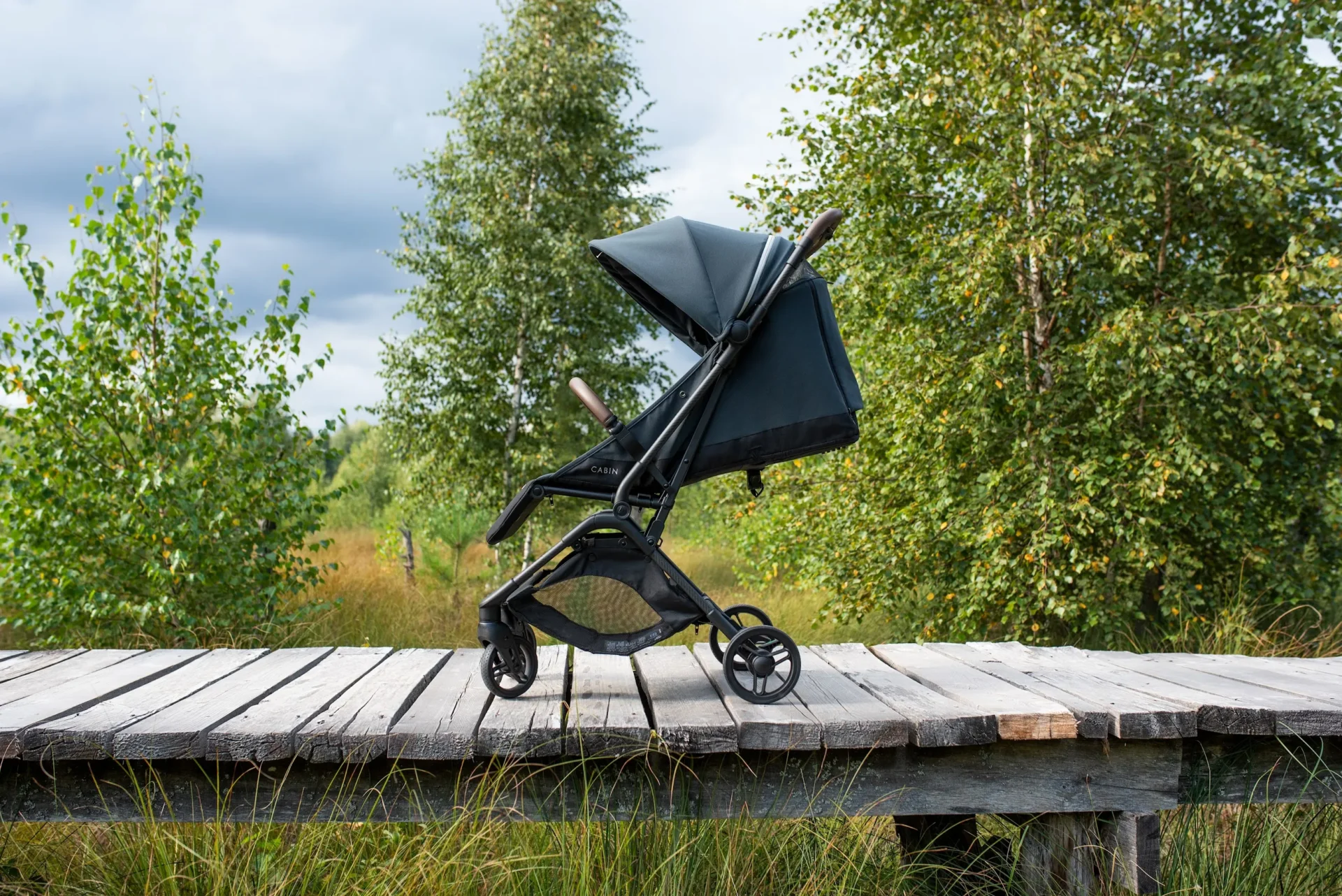
Only if it is made for it. Check that the manual says “from birth” and that the backrest reclines to an almost flat position, with a harness that fits a very small baby. Sia is used from birth with the backrest fully reclined, and it is tested to the European pushchair standard EN 1888-2:2018.
For long naps in the first months, a carrycot is still the calmer place. The Lullaby Trust advises that a pram carrycot can be a sleep space if it is completely flat and the manufacturer says it is suitable for sleep, and reminds parents to keep an eye on temperature, since carrycot sides can hold heat. It also advises that car seats are for travelling, not for sleeping in for long periods once you have arrived.
The right stroller is the one that makes leaving the house feel lighter.
When is the right time to buy the second one?
There is no need to buy both before the birth. Many families wait until one of two moments: the first trip that involves a plane or a train, or the point when the baby moves from the carrycot to the seat unit. That usually happens when your child can sit up unaided, and we explain the signs in when to switch from the carrycot to the seat unit.
Waiting also lets you learn how you really move. After a few months you will know whether the pram lives in the car, in the hallway or at the foot of a staircase, and whether a lighter stroller would change your week or simply sit in a cupboard.
Where Noordi fits
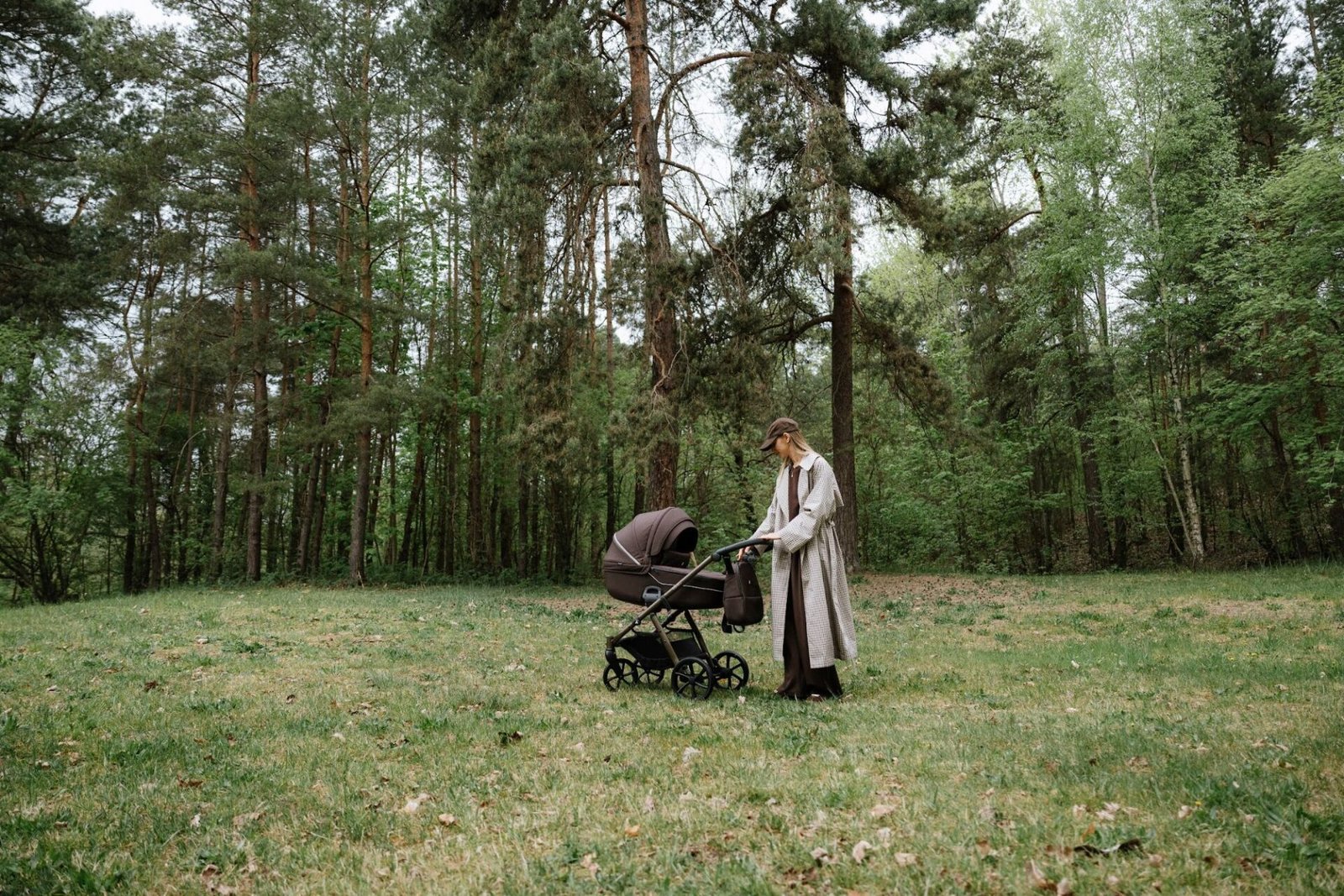
Noordi Fjordi V.2
The everyday pram for families who walk outside in all weather. Suspension on every wheel and All-Road™ wheels keep naps going on gravel and forest paths, and the THERMOCOT™ carrycot (81 × 37 cm inside, room for a winter suit) helps keep a steady climate in wind and sun. If your routes are more town than trail, Aqua V.2 pairs a memory mattress with soft 8″ and 12″ tyres.
Noordi Sia
The lighter companion: 5.9 kg with a carbon frame, a one-hand fold to 62.5 × 48.5 × 27 cm, and a transport bag included. It is used from birth with the backrest fully reclined and suits children up to 4 years or 22 kg. Sia does not take a car seat, so it complements a travel system rather than replacing one.
Still weighing it up? See all three side by side in the Noordi model comparison, or read more about a lightweight stroller from birth.
Frequently asked questions
Do I need a pram and a stroller?
Not necessarily. One 2-in-1 pram covers birth to toddler years for many families. A second, lighter stroller helps most if you fly, use public transport, climb stairs daily or have limited boot space.
Can a travel stroller replace a pram from birth?
Some can be used from birth if the backrest reclines almost flat, like Sia. For long naps in the first months, a flat carrycot is usually more comfortable and roomier.
When should I buy a travel stroller?
Many parents buy one before their first flight or city trip, or when the baby moves to the seat unit. There is no need to buy both before the birth.
Can I take my big pram on a plane instead?
Usually yes. Many airlines carry a pushchair free for a baby or small child, but a full pram is heavier to handle and rules on how it travels differ, so check with your airline.
Can I click a car seat onto a travel stroller?
It depends on the model. Sia does not take a car seat. Fjordi V.2 takes one with adapters, and Aqua V.2 has memory adapters for a car seat.
One pram or two, the aim is the same: fewer reasons to stay in, and more mornings that begin with the door open and the path ahead.
Sources: The Lullaby Trust, Ryanair, easyJet. Checked September 2026.
Made for the way you wander.
Three strollers, one calm way of getting outside. Find the one that fits your family’s days.
More from the Journal
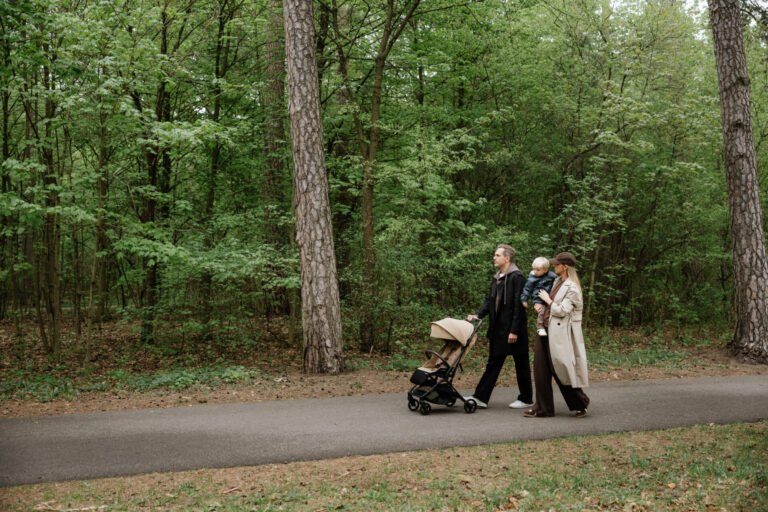
Flying With a Baby and a Stroller: What to Know Before You Go
Free allowances, gate check, cabin sizes and a calm checklist: what to know before you fly with a baby and a stroller.
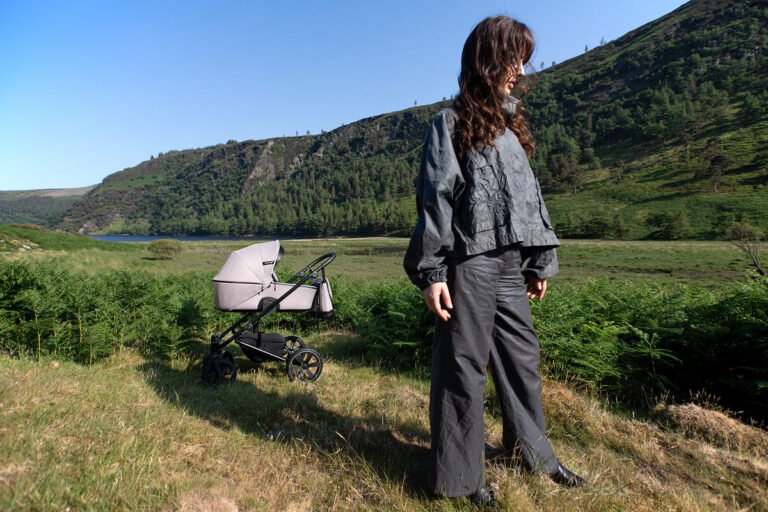
All-Terrain Pram vs City Stroller: Which Do You Actually Need?
Wheels, suspension, weight and fold: a calm way to choose between an all-terrain pram and a city stroller, starting from the paths you walk every week.

How to Choose Your First Pram: A Calm 10-Point Checklist
Ten calm questions to ask before buying your first pram, from lie-flat comfort and everyday terrain to weight, fold, car seats and the EN 1888 standard.