
Noordi Journal · 28 September 2026 · 6 min read
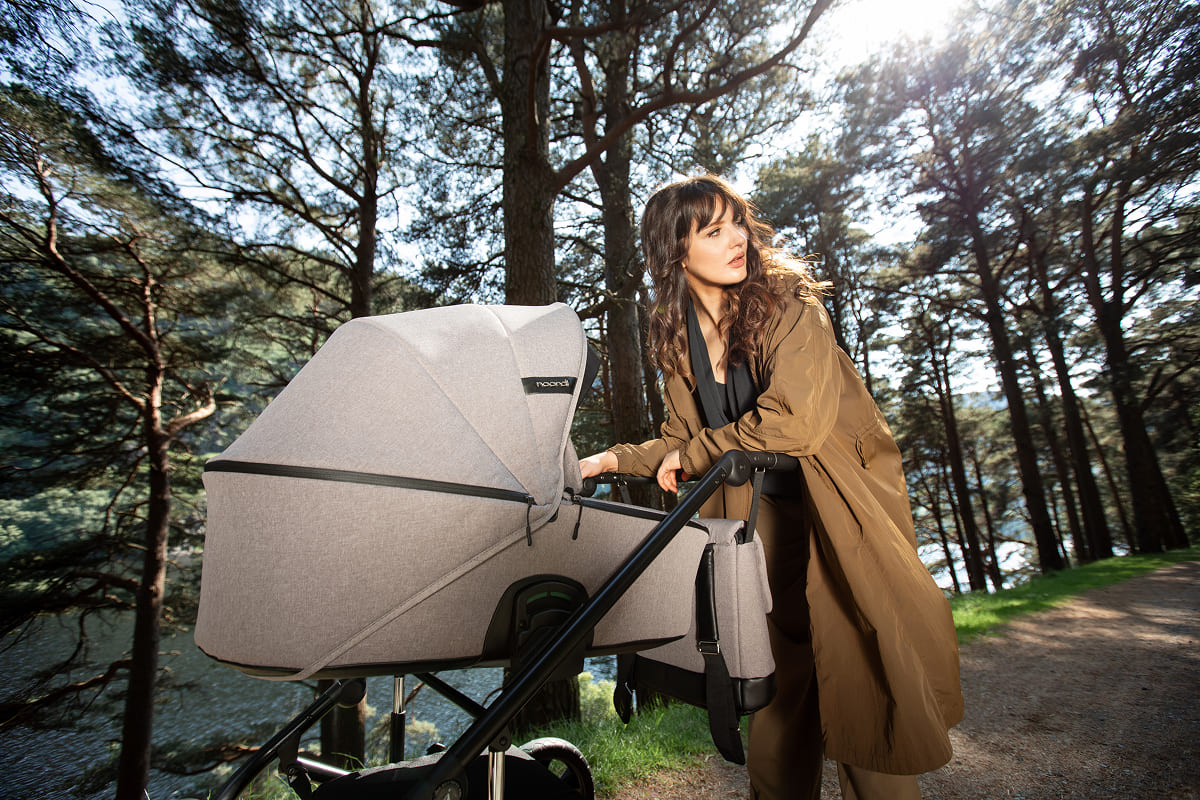
Short answer: Yes, you can walk forest trails with a pram — choose firm, wide paths such as forest roads, packed gravel and boardwalks, and leave steps, stiles and steep rocky ground to a baby carrier. Plan the walk around your baby’s naps and feeds, lock the front wheels straight on rough ground and take roots slowly. Dress everyone in layers, never cover the pram with a blanket, and check yourselves for ticks when you get home.
There is a particular quiet in a pine forest early in the day: the soft ground, the smell of resin, a baby asleep under the canopy. A pram can take you there, and a little further than you might think. These eight tips come from the same place as the walks themselves — keep it simple, stay safe, and let the forest do the rest.
How do you choose a pram-friendly forest trail?
1. Choose a firm, wide trail. Forest roads, packed gravel, park trails and boardwalks suit a pram well. Before you go, read the route description for surface, gradient, steps and stiles, and start with a loop shorter than you think you need. You can always come back for the longer one.
| Surface | How it rolls | What helps |
|---|---|---|
| Paved forest road | Smooth and quiet | A good first outing |
| Packed gravel | Firm, with more vibration | Lock front wheels straight, slow down |
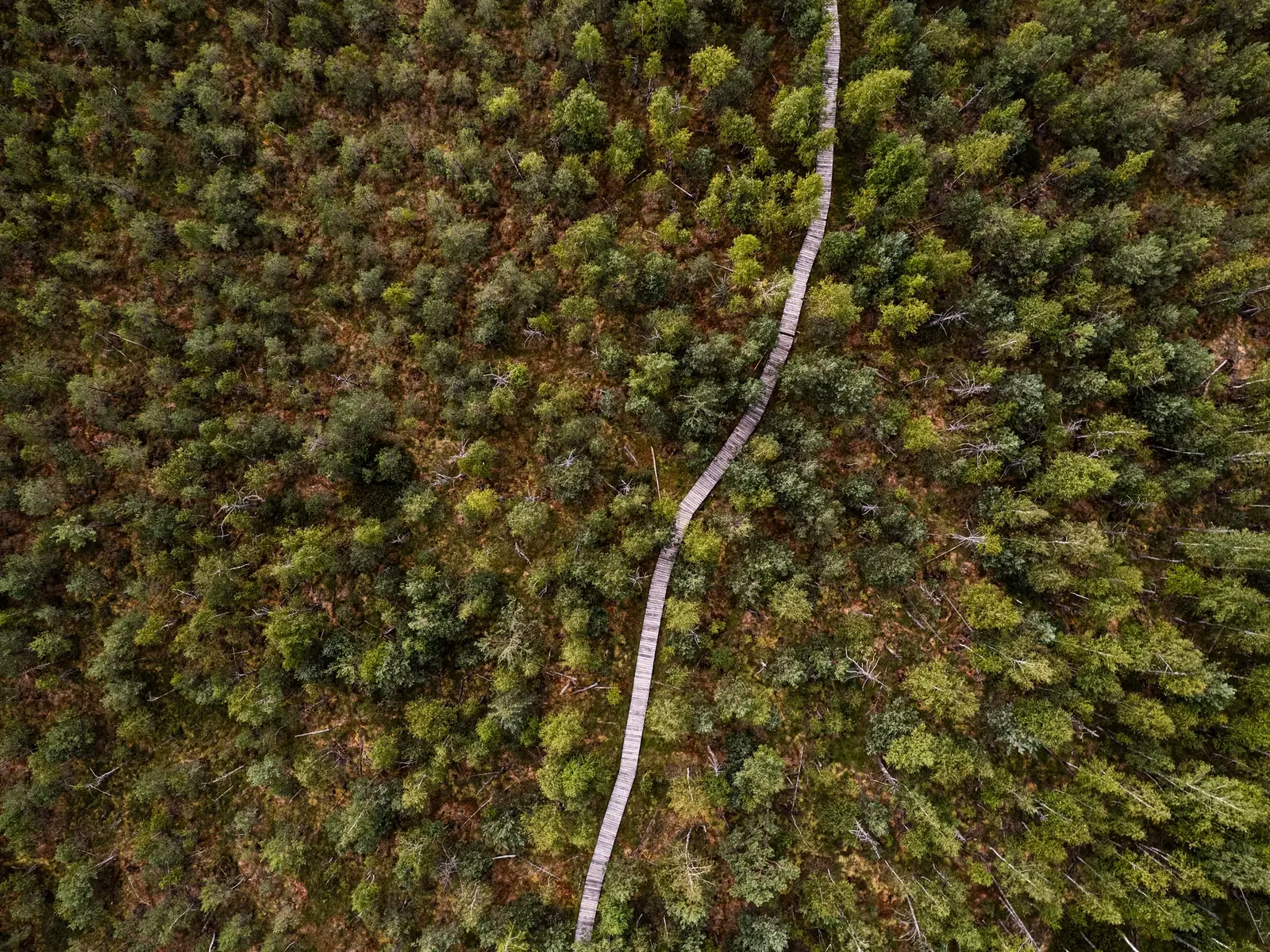
| Boardwalk | Smooth, but narrow, with gaps; slippery when wet | Keep to the middle, give way to others |
| Root-covered footpath | Bumpy and tilting | Lift the front wheels over roots, short stretches only |
| Loose sand or deep mud | Wheels sink | Pull the pram behind you, or turn back |
| Steps, stiles, steep rock | Not pram ground | Choose another route, or use a carrier |
2. Walk to your baby’s rhythm. Plan the walk around feeds and naps, and know where you can stop — a bench, a clearing, the car. If you drive to the trailhead, move your baby from the car seat into the carrycot for the walk: the Lullaby Trust reminds parents that car seats are for travelling, and babies should sleep on a firm, flat surface.
How should you set up and handle the pram on rough ground?
3. Set up the pram before you leave the car park. Check that the brake holds and the wheels turn freely. Lock the swivelling front wheels straight for gravel and forest roads, set the handlebar to a height that keeps your wrists relaxed, and tuck the rain cover into the basket. Check your manual for the basket limit and avoid hanging heavy bags on the handlebar, which can make a pram less stable.
4. Take roots, slopes and boardwalks slowly. On roots, press the handlebar down gently to lift the front wheels over, then let the rear wheels follow. Walk downhill with both hands on the handlebar, and put the brake on every time you stop, even on a gentle slope. On narrow sections, step aside for walkers and cyclists — the forest is shared.
Suspension makes a real difference here: more of each bump is absorbed before it reaches the carrycot. If you would like to understand how, read Pram suspension explained.
Some days, the best destination is simply outside.
How do you keep your baby comfortable in sun, wind and cold?
5. Dress in layers and check your baby, not the thermometer. The forest is shadier, cooler and often damper than the town. Dress your baby in layers you can add or remove, use the wind cover on cold mornings, and feel the chest or the back of the neck: warm is fine, sweaty or clammy means too hot. Take hats and outer layers off when you go back indoors.
Sun reaches the trail in clearings and on open heath. The NHS advises keeping babies under six months out of direct strong sunlight, and in the UK the sun is strongest from 11am to 3pm between March and October. Use the canopy or a clip-on sunshade, and never drape a blanket or muslin over the pram — it traps heat around your baby.
What about ticks in the forest?
6. Stay on the path, and check everyone afterwards. Ticks live in woods and long grass. The NHS suggests keeping to clear paths, covering skin, wearing light colours so ticks are easier to spot, and checking yourself and your children after being outdoors — skin folds, behind the ears, along the hairline. If you find one, remove it slowly with fine-tipped tweezers or a tick tool, gripping close to the skin without squeezing it.
Ask your pharmacist which insect repellents, if any, are suitable for your baby’s age. In parts of central Europe, including southern Germany and Czechia, ticks can also carry tick-borne encephalitis; if you live in or travel to these areas, talk to your doctor about vaccination for the family.
What should you pack — and leave behind?
7. Pack light, but pack well. Water and a snack for you, nappies and a changing mat, a spare layer and a hat for your baby, the rain cover and mosquito net, and a charged phone with an offline map. Tell someone where you are going if the route is remote.
8. Leave the forest as you found it. Keep to marked trails, which protects young plants as well as your ankles. Take everything home, including used nappies, and keep voices soft — the forest has other families in it too.
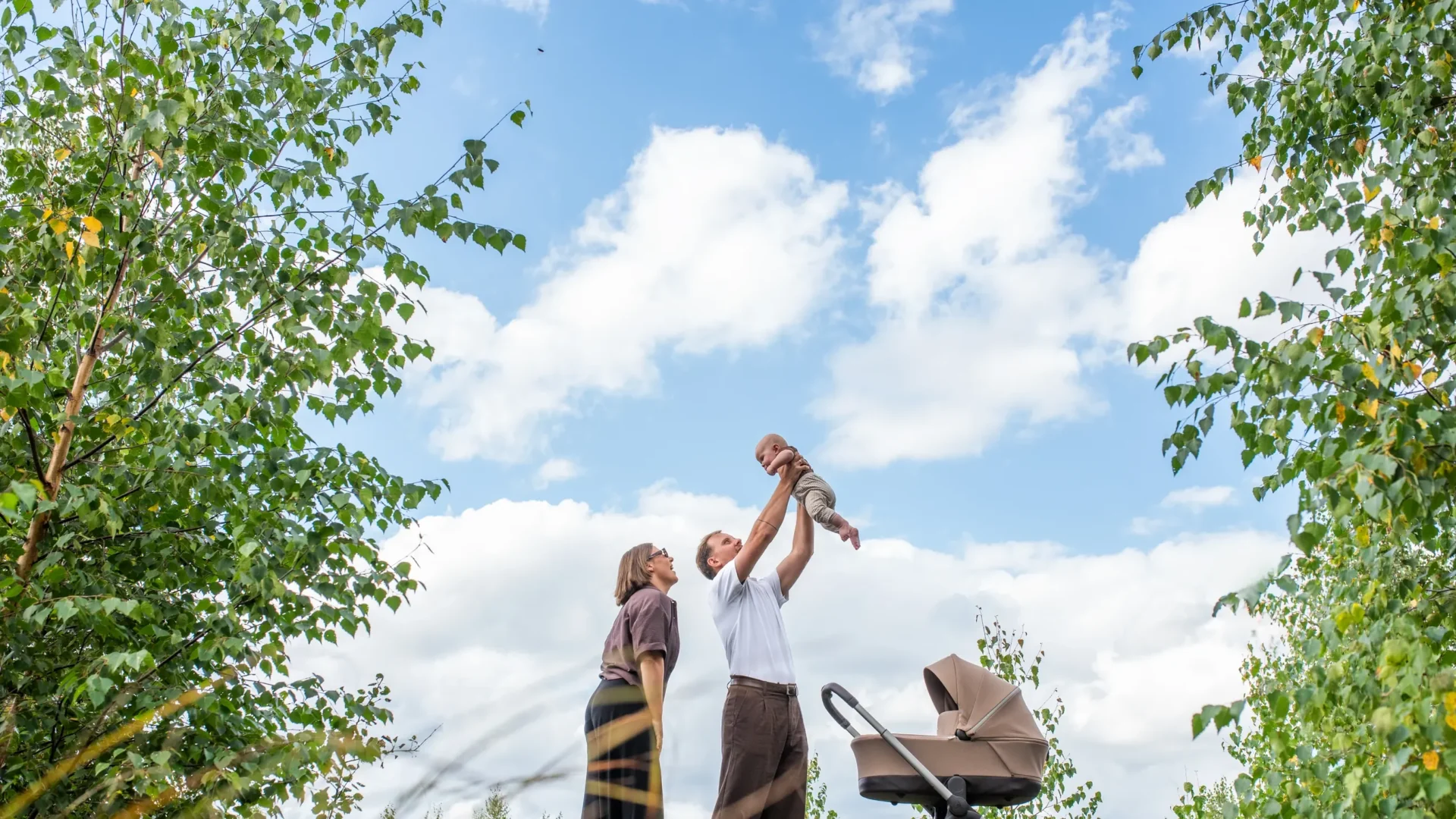
Where Noordi fits
Noordi Fjordi V.2 · made for forest paths
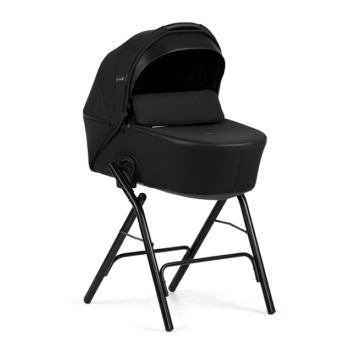
Fjordi V.2 was designed for walks like these. A front-fork shock absorber and independent suspension on each wheel soften roots and gravel before they reach the carrycot, and All-Road™ wheels roll steadily over gravel, sand and snow, with front wheels that lock straight on rough ground. The THERMOCOT™ carrycot has ventilation and a wind cover for changing forest weather, and a rain cover, mosquito net and backpack are included.
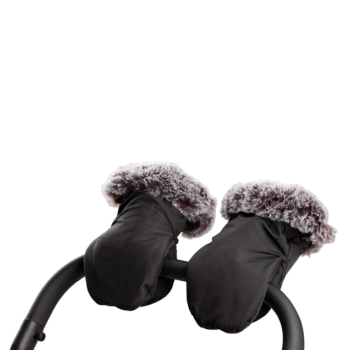
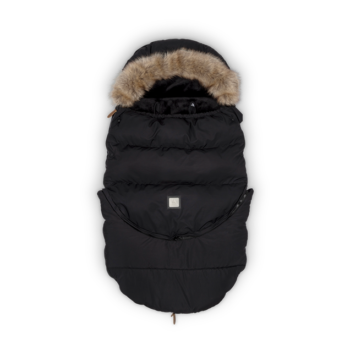
For colder walks, the Winter Sleeping Bag fits the pram and grows from 80 to 105 cm, and Winter Gloves stay on the handlebar. Still deciding which pram suits your paths? See All-terrain pram vs city stroller or compare our models.
Frequently asked questions
How soon can we go on a forest walk with a pram?
There is no fixed rule. Many families start with short, easy walks in the first weeks, with the baby lying flat in the carrycot and dressed for the weather. If you are unsure, ask your midwife or health visitor.
Can any pram go on a forest trail?
Most prams manage firm forest roads and boardwalks. Roots, sand and steep ground call for larger wheels, suspension and front wheels that lock — or a baby carrier.
Pram or baby carrier for a family hike?
A pram suits wider paths and longer walks: your baby can lie flat and you carry less. A carrier suits steps, narrow paths and steep ground. On mixed routes, some families bring both.
How do I check my baby for ticks?
After the walk, look over the whole body, especially skin folds, behind the ears, the scalp and the hairline. Check again the next day, and remove any tick slowly with fine-tipped tweezers.
Can we still go if it rains?
Yes, with the rain cover on and the ventilation open. Take the cover off once the rain stops or when you go indoors. Our guide to rainy-day walks with a baby has more.
Start with a short loop, a flask of something warm and no plans for the afternoon. The forest will still be there next weekend — and so will the path a little further in.
Sources: NHS: Lyme disease, NHS: Sun safety, The Lullaby Trust: cold weather, The Lullaby Trust: safer sleep on holiday, The Lullaby Trust: keeping babies cool, BIÖG: FSME vaccination for children. Checked September 2026.
Made for the way you wander.
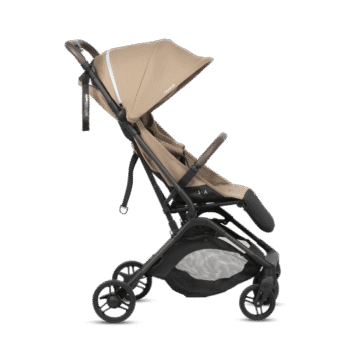
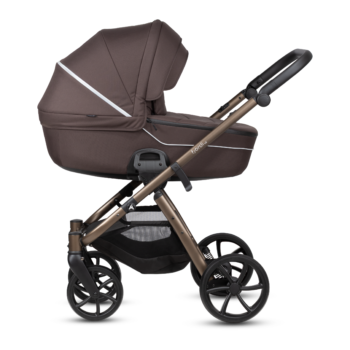
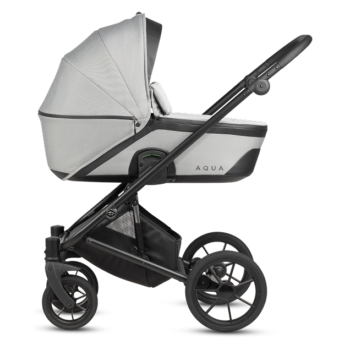
Three strollers, one calm way of getting outside. Find the one that fits your family’s days.
More from the Journal
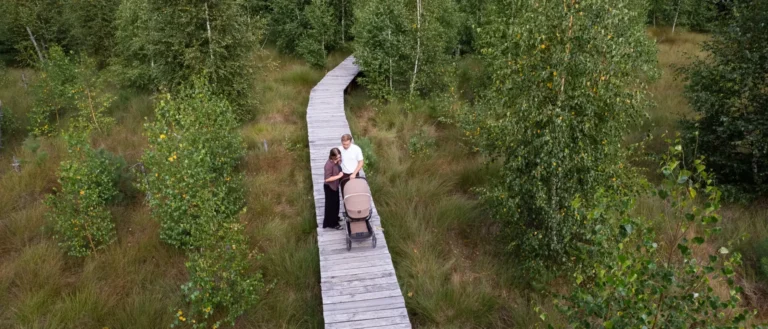
Pram Suspension Explained: Why It Matters on Forest Paths and Cobbles
Springs, shock absorbers, wheels and tyres: what pram suspension really does, what research says about vibration on cobbles and gravel, and how to check it before you buy.
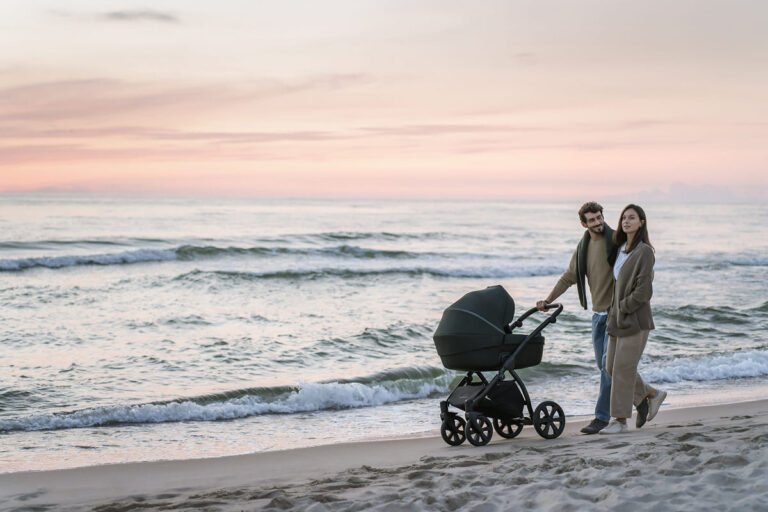
Can You Take a Pram to the Beach? Sand, Wind and Sun
Sand, wind and sun: how to take a pram to the beach calmly, and why the shade matters more than the wheels.
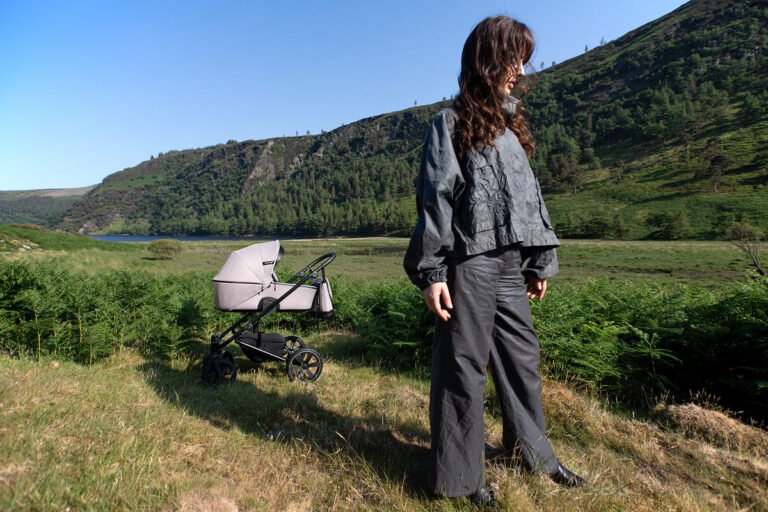
All-Terrain Pram vs City Stroller: Which Do You Actually Need?
Wheels, suspension, weight and fold: a calm way to choose between an all-terrain pram and a city stroller, starting from the paths you walk every week.