
Noordi Journal · 8 October 2026 · 3 min read
Short answer: Look for larger wheels with soft tyres, suspension at more than one point and a flat, well-padded carrycot. A 2026 TU Delft study measured stroller vibration of about 0.4 m/s² on tarmac and up to 5.0 m/s² on cobblestones, so the surface matters more than most parents expect. Slowing down and choosing the smoother side of the street help too.
Prague’s Old Town, Edinburgh’s closes, the lanes of Kaunas: cobbles are beautiful to walk on and noisy to push over. If your daily route has stone setts, the pram you choose — and how you push it — makes a real difference to the ride inside.
What did the research measure?
Researchers at TU Delft fitted infant dummies of 0, 3 and 9 months into five strollers and pushed them over six surfaces at an average walking speed of 5.3 km/h. On tarmac the strollers averaged about 0.4 m/s² of vibration; on cobblestones it rose to as much as 5.0 m/s². The highest levels fell into the range an ISO whole-body vibration standard describes as “extremely uncomfortable” for adults. The authors suggest avoiding long stretches on surfaces rougher than tarmac.
Worth knowing: the study measured comfort exposure on dummies. It does not show that cobbles harm babies — it shows how much more a pram shakes on them, and why wheels and suspension matter.
Which pram features help on cobbles?
| Feature | Why it helps on cobbles |
|---|---|
| Larger wheels | Roll over the gaps between stones instead of dropping into them |
| Soft or cushioned tyres | Absorb the small, fast bumps that suspension springs miss |
| Suspension at several points | Front and rear, or every wheel, so jolts are softened before they reach the frame |
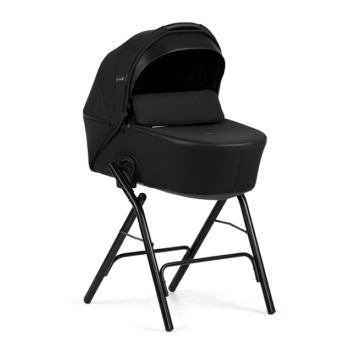
| Flat carrycot with a good mattress | Spreads the baby’s weight and damps vibration |
| Sturdy frame | Less rattle and flex as you push |

Five ways to make old-town walks calmer
- Slow down a little on the roughest stretches — vibration grows with speed.
- Look for the smoother line: kerbside slabs, a cycle lane edge or a tram-stop platform.
- Keep tyres and suspension in good order; clean grit out of wheel bearings.
- For a sleeping newborn, plan a route with more tarmac and parks.
- Use a carrycot rather than a reclined seat for long walks in the first months.
Which Noordi suits cobbled streets?
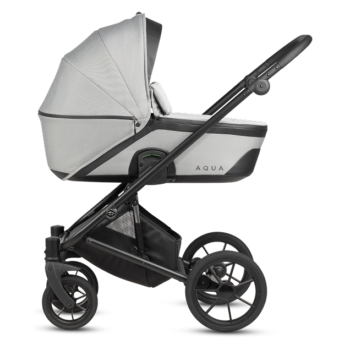
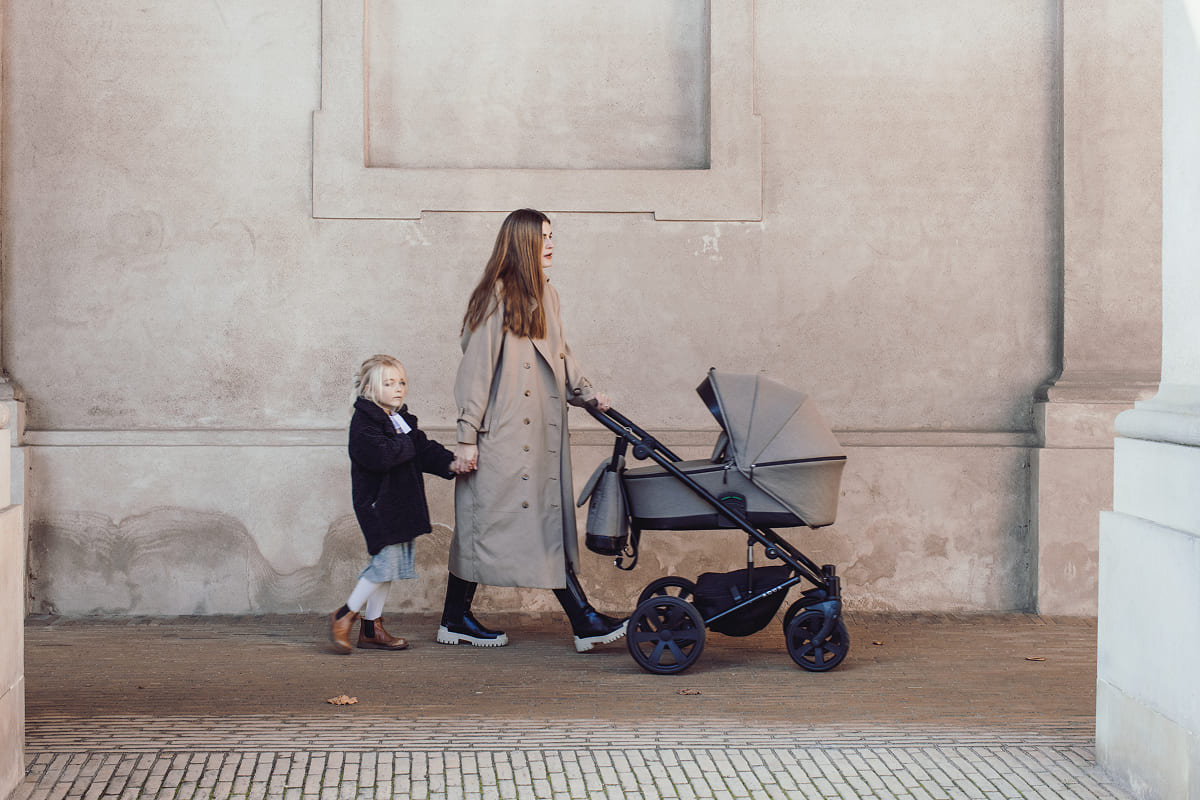
Aqua V.2 was designed for town: 12″ rear wheels with soft tyres, rear-wheel springs and mid-frame shock absorbers, and a memory mattress over a THERMOCOT™ pad. Fjordi V.2 adds suspension at every wheel and a front-fork shock absorber, which helps on cobbles and on gravel alike.
Noordi Aqua V.2 · 2-in-1 for town and park
Large soft-tyre wheels, double suspension and a carrycot that keeps a steady climate. Made in Kaunas, from birth to 22 kg.
Read also: The Scandinavian pram: what makes it Nordic, and how to choose one
Frequently asked questions
Are cobblestones bad for babies in prams?
Research shows prams vibrate far more on cobbles than on tarmac, but it does not show harm. Choosing good wheels and suspension and avoiding long rough stretches keeps the ride calmer.
What wheels are best for cobblestones?
Larger wheels with soft or cushioned tyres roll over gaps between stones more smoothly than small hard wheels.
Does suspension help on cobbles?
Yes. Suspension at more than one point softens jolts before they reach the carrycot or seat.
Is a carrycot better than a seat on rough streets?
For young babies, yes: a flat carrycot with a good mattress spreads their weight and damps vibration.
Which Noordi is best for city cobbles?
Aqua V.2 for mainly town use; Fjordi V.2 if your week also includes forest paths and gravel.
Cobbles are part of the charm of old towns. With the right wheels and a slower pace, they can be part of a calm walk too.
Sources: Dell’Orto, Moore et al., TU Delft, Ergonomics (2026), engrXiv preprint. Checked October 2026.
Made for the way you wander.
Three strollers, one calm way of getting outside. Find the one that fits your family’s days.
More from the Journal

Pram Suspension Explained: Why It Matters on Forest Paths and Cobbles
Springs, shock absorbers, wheels and tyres: what pram suspension really does, what research says about vibration on cobbles and gravel, and how to check it before you buy.

All-Terrain Pram vs City Stroller: Which Do You Actually Need?
Wheels, suspension, weight and fold: a calm way to choose between an all-terrain pram and a city stroller, starting from the paths you walk every week.

How to Choose Your First Pram: A Calm 10-Point Checklist
Ten calm questions to ask before buying your first pram, from lie-flat comfort and everyday terrain to weight, fold, car seats and the EN 1888 standard.