
Noordi Journal · 8 October 2026 · 7 min read
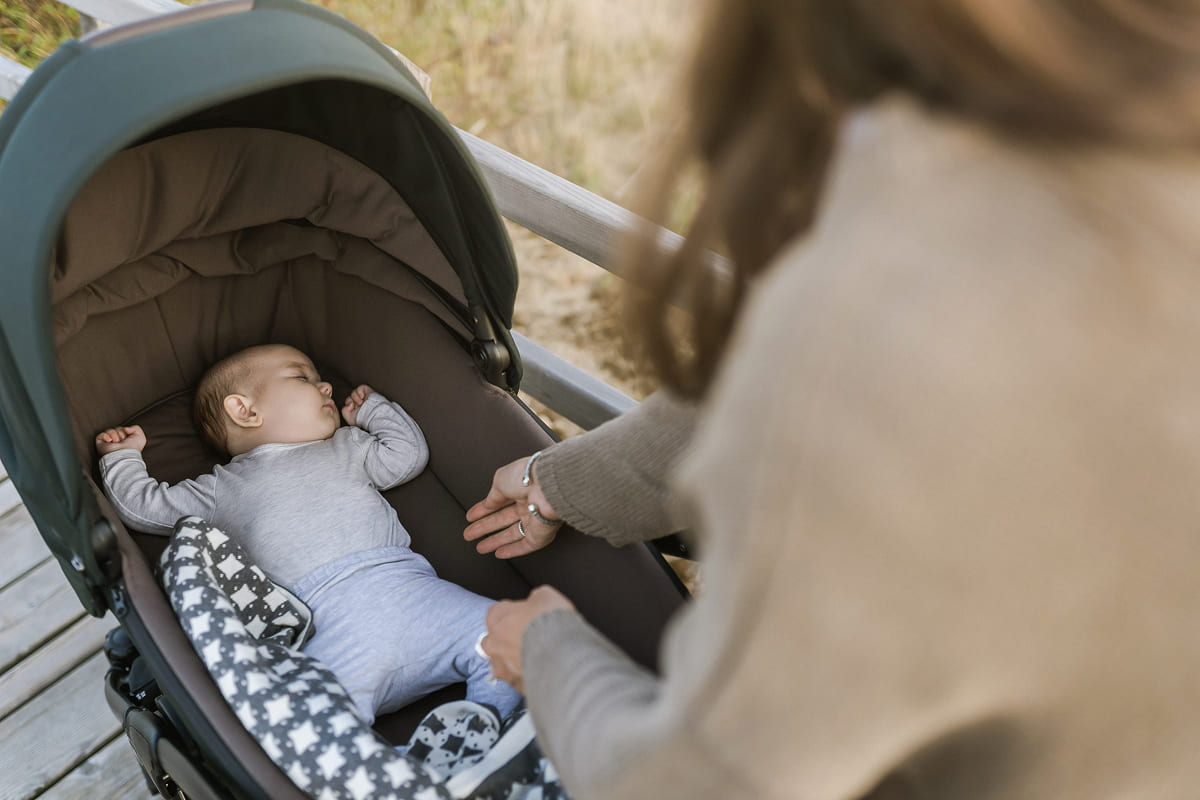
Short answer: A baby’s body is still being built, so a pram should support it. In the first months that means lying flat on a firm base with the head in line with the body and a gap between chin and chest, even warmth without overheating and as few jolts as possible. Move to the seat unit once your baby sits steadily without help, usually from around six months, and use car seats for travelling rather than sleep. Noordi Field Notes 2026 gathers this into six short chapters.
Every pram we make starts with one question: is it good for the child? Field Notes is our answer, written for parents who scan rather than read. Here is the full guide in text — four principles and six chapters, from the first walk to the first steps.
Four principles behind every Noordi
- A healthy spine: flat, firm lying first, then supported sitting.
- Free breathing: head and chest never folded forward.
- A calm nervous system: fewer jolts and vibrations on every path.
- The right temperature: not too cold, never overheated.
1. The growing body
The first three months are often called the fourth trimester: a baby is born early in their development and keeps growing fast outside the womb. The brain roughly doubles in size in the first year, and the spine starts out as one soft C-shaped curve. A newborn needs a pram that lets them lie flat, move, breathe freely, stay evenly warm and ride with few jolts.
| Stage | What happens | What it means for the pram |
|---|---|---|
| Birth | The spine is one soft C-curve | Lie flat on a firm base |
| About 3 months | The neck curve forms as baby lifts the head during tummy time | Daily tummy time when awake |
| About 6–12 months | The lower back curve forms with crawling, sitting and standing | Use the seat only when baby sits alone |
| Walking | The spine reaches its full S-shape | Let them walk whenever they want |
| Age | Milestones | In the pram |
|---|---|---|
| 0–3 months | Faces, voices, strong contrasts | Carrycot, lying flat |
| 3–6 months | Grasping, rolling, steady head | Room to kick and stretch |
| 6–9 months | Sits without help | Time to move to the seat |
| 9–12 months | Crawling, standing, first words | Facing the world, or facing you |
| 1–2 years | Walking, climbing, copying | Half walk, half ride |
| 2–3 years | Running ahead, asking why | A place to rest between adventures |
2. Lying flat, breathing freely
Lying flat is the healthiest position until your baby can sit unaided. A firm, flat base supports the spine without pressure points, room to kick builds muscle, and an open chest lets the lungs fill fully.
Why “chin up” matters: a newborn’s head is heavy — about a quarter of their length — and tips forward easily, the neck muscles cannot yet lift it back, and the airway is narrow and soft. Chin-to-chest positions can make breathing harder, so avoid semi-sitting or slumped positions before your baby can sit alone.
Quick check on every walk: can you see a gap between chin and chest? Good. Keep the carrycot free of pillows, toys and thick blankets near the face, and lift your baby out on longer walks for cuddles, feeding and tummy time.
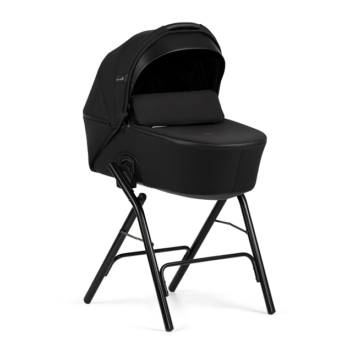
For temperature, dress in layers and check warmth on the neck rather than the hands. On Fjordi V.2, the THERMOCOT™ carrycot shell is designed to keep the climate steadier — warmer on frosty mornings, fresher in summer sun — with ION-SILVER™ inner materials. Read more in insulated carrycots explained.

3. A calm ride
A baby’s spine, muscles and nervous system are still developing, so every bump on the path reaches a growing body. We aim to keep shaking as small as possible: on Fjordi V.2 each wheel has its own suspension, so one bump does not tilt the whole chassis and the carrycot stays level, and large All-Road™ wheels roll over roots, gravel and cobbles. Less shaking means less strain on the spine and neck, calmer senses and naps that continue on rough paths.
4. Sitting up, safely
Three signs your baby is ready for the seat unit: they sit alone steadily without cushions or your hands (usually from around six months), hold their head up easily even when the pram moves, and want to see the world rather than doze in the carrycot. Use the upright position for watching and talking, a reclined one for slow, drowsy walks and the flattest one for a proper nap — and adjust the footrest so knees and hips never hang.
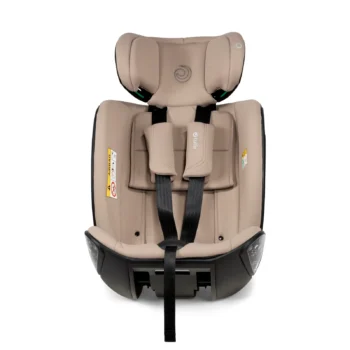
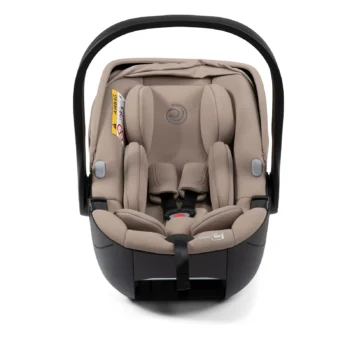
Car seats are for travel, not for sleep. They protect in a crash, but for rest a baby needs to lie flat. Keep to about two hours in one go at most, then take a break; on arrival move a sleeping baby to the carrycot or cot; travel rear-facing for longer; keep the harness snug with no thick coat underneath; and never place a car seat on a bed or sofa. More in our guide to the 2-hour car seat rule.
5. Outside every day
- Daylight helps babies find their rhythm of day and night.
- Senses: wind, light, sounds and smells bring new information every minute.
- Movement: older children walk, climb and explore on the way.
- Calm: a slow walk is often the quietest hour of the day — for parents too.
Simple habits: go out daily in any weather, dressed for it; remember the pram is for the journey, not the whole day — lift your child out, play and move; and let them walk as soon and as long as they want.
6. Safety you can trust
Every Noordi is tested to EN 1888, and our lab programme goes further than the standard requires:
| Test | EN 1888 | Noordi lab |
|---|---|---|
| Uneven surface | 144 km at 15 kg, or 48 km at 22 kg | 520 km at 28 kg |
| Kerb lift | 10,000× at 15 kg, or 3,300× at 22 kg | 10,000× at 28 kg |
| Inclined plane | 10 + 10× at 22 kg | 20 + 20× at 22 kg |
| Non-stop vibration | — | 72 h with 24 kg in the carrycot |
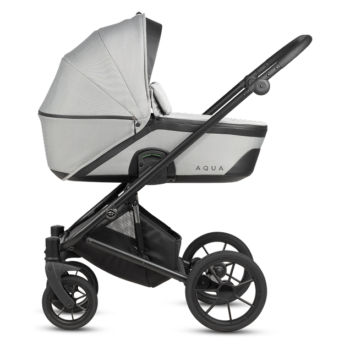
Fjordi V.2 and Aqua V.2 are made under one roof in Kaunas, Lithuania, where prams have been produced since 1993: design and lab, aluminium frames, fabrics, and assembly with a final check of every pram by hand. Prams are built to be repaired — with spare parts and a two-year warranty — and to be passed on to a sibling, a friend or a new family.
Questions about posture, use or your Noordi?
We are here for every walk. UK: Buggy Clinic, info@buggyclinic.com. Lithuania and northern Europe: support@tututis.lt. Rest of Europe: support@tututis.eu.
Frequently asked questions
How long should a baby lie flat in a pram?
Until they can sit steadily without help, usually from around six months. Until then, a flat, firm carrycot is the healthiest position.
Why is chin-to-chest position risky for newborns?
A newborn’s heavy head, weak neck muscles and soft, narrow airway mean a folded-forward position can make breathing harder. Keep the head in line with the body.
When can my baby use the pram seat unit?
When they sit alone steadily, hold their head up easily and want to see the world — usually from around six months.
How long can a baby stay in a car seat?
Guidance suggests no more than about two hours in one go, then a break; on arrival, move a sleeping baby to a flat surface.
How are Noordi prams tested?
To EN 1888, plus a lab programme that goes further: for example 520 km on uneven ground with 28 kg, and 72 hours of non-stop vibration with 24 kg in the carrycot.
More time outside, together — that is what every chapter comes back to.
Sources: The Lullaby Trust: premature babies (PDF), The Lullaby Trust: car seats, EVS: EN 1888-1:2018, EVS: EN 1888-2:2018. Checked October 2026.
Made for the way you wander.
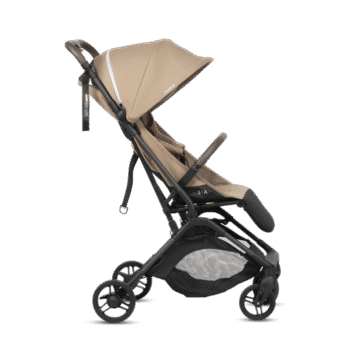
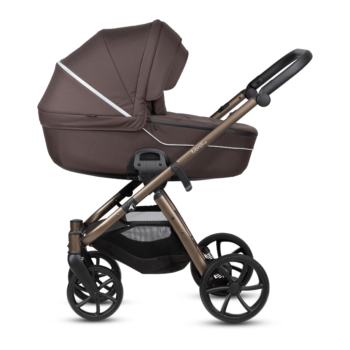
Three strollers, one calm way of getting outside. Find the one that fits your family’s days.
More from the Journal

The 2-Hour Car Seat Rule Explained: How Long Can a Baby Stay in a Car Seat?
Where the “2-hour rule” comes from, what newer research found, extra care for premature babies, and why a flat carrycot is better for walks.

When Can a Baby Move From the Carrycot to the Seat Unit?
Most babies are ready for the pram seat unit once they sit steadily on their own, often around six months. Here are the signs, the WHO data and a gentle way to switch.

Insulated Carrycots Explained: How THERMOCOT™ Keeps a Baby Warm Without Overheating
What keeps a carrycot warm on a cold morning and fresh on a sunny afternoon: insulation, ventilation and the mattress — and how THERMOCOT™ works.