
Noordi Journal · 28 September 2026 · 6 min read

Short answer: A 2-in-1 pram gives you one chassis with two tops: a carrycot for the newborn months and a seat unit for later. A 3-in-1, often called a travel system, adds an infant car seat that clicks onto the same chassis. If you drive often, that third piece can make short trips simpler; if you mostly walk, a 2-in-1 is usually enough, and many can take a car seat later with adapters.
The words 2-in-1, 3-in-1 and travel system appear on almost every pram listing, and they are not always used the same way. This guide explains what each set usually contains, who really benefits from the extra piece, and one gentle safety point about car seats that is worth knowing before you choose.
What is a 2-in-1 pram?
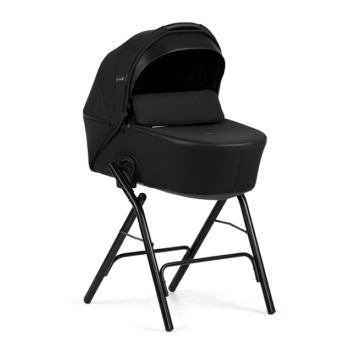
A 2-in-1 pram is a chassis with a carrycot and a seat unit that swap on the same frame. The carrycot lets your baby lie flat from birth; the seat unit takes over once your child can sit up steadily and wants to see the world. Because both tops share the wheels and suspension, the ride stays familiar as your child grows.
For many families this is the whole pram story: a carrycot for the first months, then a seat for years of walks.
What does a 3-in-1 travel system add?
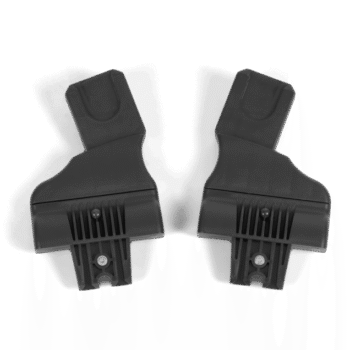
A 3-in-1 adds an infant car seat, sometimes called a baby carrier or car capsule, plus the adapters that let it click onto the pram chassis. You can lift the seat out of the car and onto the wheels without unbuckling your baby.
Names vary between brands and shops. The NHS, for example, uses “3-in-1 travel system” to describe a carrycot and chassis that convert into a pushchair. So rather than trusting the label, look at what is actually in the box.
| 2-in-1 pram | 3-in-1 / travel system | |
|---|---|---|
| Usually included | Chassis, carrycot, seat unit | Chassis, carrycot, seat unit, infant car seat, adapters |
| From birth | Lying flat in the carrycot | Carrycot for walks; car seat for the car |
| Short car trips | Lift baby from car seat to carrycot | Click the car seat straight onto the chassis |
| Space at home | Two tops to store | Two tops plus a car seat |
| Later | Car seat and adapters can often be added | Already complete |
Who is a travel system really for?
A travel system earns its place when the car is part of most days. It suits you if several of these sound familiar:
- You drive to the shops, the nursery or family most days
- Your trips are short hops: car, a quick errand, car again
- You want to move a sleeping baby without waking them
- You live somewhere where walking from home is not always practical
If you mostly walk from the front door, take public transport or use the car only at weekends, a 2-in-1 is often the calmer choice. You carry less, store less, and the carrycot is where your baby rests best on a longer walk.
How long can a baby stay in a car seat on the pram?
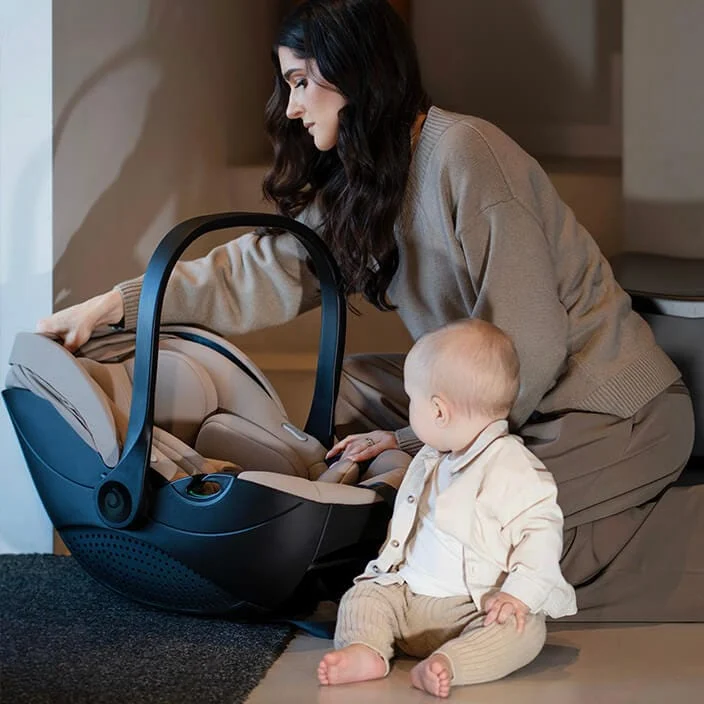
You will often hear of a “two-hour rule”. The Lullaby Trust notes that there is no published evidence setting an exact time limit, but it is clear on the essentials: young babies may have breathing difficulties if they are upright in a car seat for a long time, so take regular breaks on long drives and, once you arrive, take your baby out and let them sleep on a firm, flat surface.
For a travel system, that means the car seat on the chassis is for the short hop between car and door, not for the long walk in the park. For that, switch to the carrycot. Always follow the time guidance in your car seat’s own manual.
The car brings you closer. The walk is where the day slows down.
What should I know about the car seat itself?
In Europe, new infant car seats are approved under i-Size (UN R129). As the German motoring club ADAC summarises, children under 15 months must not travel forward-facing, and staying rear-facing for longer gives better protection. i-Size seats are chosen by your child’s height rather than weight alone. The NHS adds that a rear-facing infant seat belongs on the back seat, or on the front passenger seat only if there is no active airbag.
Whichever seat you choose, fit it exactly as the manual describes and check it fits your car. We go deeper in i-Size car seats explained.

Can I start with a 2-in-1 and add the car seat later?
Often, yes, and it can be the most relaxed path. Choose the pram for your walks first, then decide on the car seat once you know how much you really drive. Check two things before you buy: that adapters exist for your pram and the seat you want, and that the seat suits your car. It is also worth reading our calm checklist for choosing a first pram.
Where Noordi fits
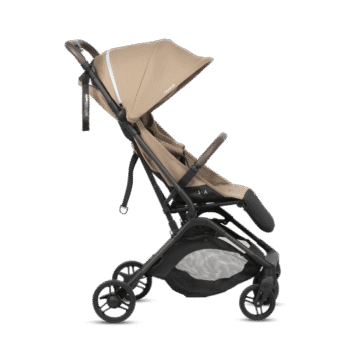
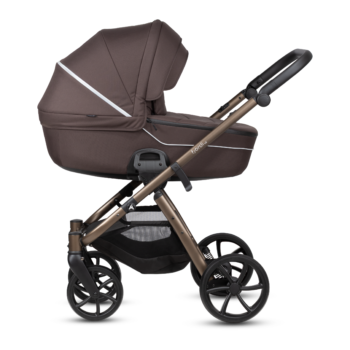
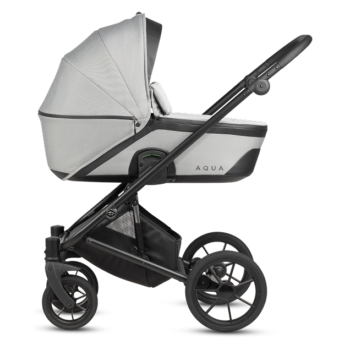
Our Fjordi V.2 and Aqua V.2 are 2-in-1 prams that become a travel system when you are ready. Our lightweight Sia does not take a car seat, so if a travel system matters to you, it is not the one to choose for that role.
Noordi Fjordi V.2 · Aqua V.2
Both come with a carrycot (81 × 37 cm inside) for the first months and a reversible seat unit up to 22 kg. Fjordi takes a car seat with adapters; Aqua has memory adapters, so the carrycot, the seat or a car seat click straight in. Both are made in Kaunas, Lithuania.
Noordi Beno car seat
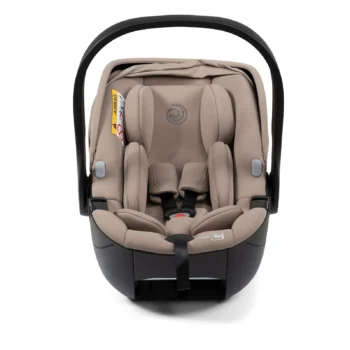
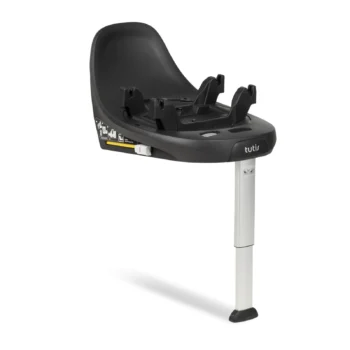
An i-Size (ECE R129) infant car seat, created together with Tutis, for babies from 40 to 87 cm and up to 13 kg. It turns 180° on the ISOFIX base and clicks onto Fjordi V.2 or Aqua V.2 with car seat adapters, so the trip from car to path can carry on quietly.
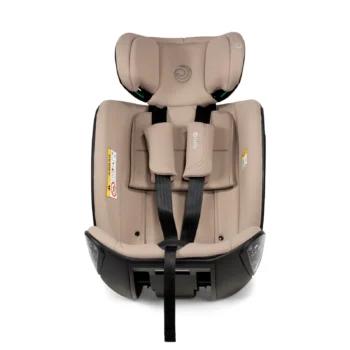
The Isofix Base also holds the Beno 360, an i-Size seat that turns 360° and grows with your child up to 150 cm. Find the car seat adapters here.

Frequently asked questions
Is a 3-in-1 better than a 2-in-1?
Not in itself. A 3-in-1 is more convenient if you drive often; a 2-in-1 is simpler if you mostly walk. Both can be the right choice.
Can my baby sleep in the car seat on the pram?
Car seats are for travel. The Lullaby Trust advises taking your baby out when you arrive and letting them sleep on a firm, flat surface, such as a carrycot.
Can I add a car seat to a 2-in-1 later?
Usually, if adapters are made for your pram. Check which car seats they fit before you buy.
Which car seat fits Fjordi V.2 and Aqua V.2?
The Noordi Beno i-Size infant seat clicks onto both with car seat adapters. For other seats, ask our team before buying.
Does the Sia stroller work as a travel system?
No. Sia is not compatible with car seats. It is made for light travel and compact city life instead.
Whether you choose two pieces or three, the aim is the same: a start to the day that feels easy, and a walk where your baby can rest and you can breathe. The rest will find its place.
Sources: The Lullaby Trust — Car seats, The Lullaby Trust — Car seat factsheet, ADAC — Babyschalen, NHS — What you’ll need for your baby. Checked September 2026.
Made for the way you wander.
Three strollers, one calm way of getting outside. Find the one that fits your family’s days.
More from the Journal
i-Size (R129) Car Seats Explained for New Parents
i-Size, R129, R44, ISOFIX – what the labels on car seat boxes mean, and how to choose and fit a seat calmly for the first ride home.

When Can a Baby Move From the Carrycot to the Seat Unit?
Most babies are ready for the pram seat unit once they sit steadily on their own, often around six months. Here are the signs, the WHO data and a gentle way to switch.

How to Choose Your First Pram: A Calm 10-Point Checklist
Ten calm questions to ask before buying your first pram, from lie-flat comfort and everyday terrain to weight, fold, car seats and the EN 1888 standard.