Noordi Journal · 30 October 2026 · 5 min read
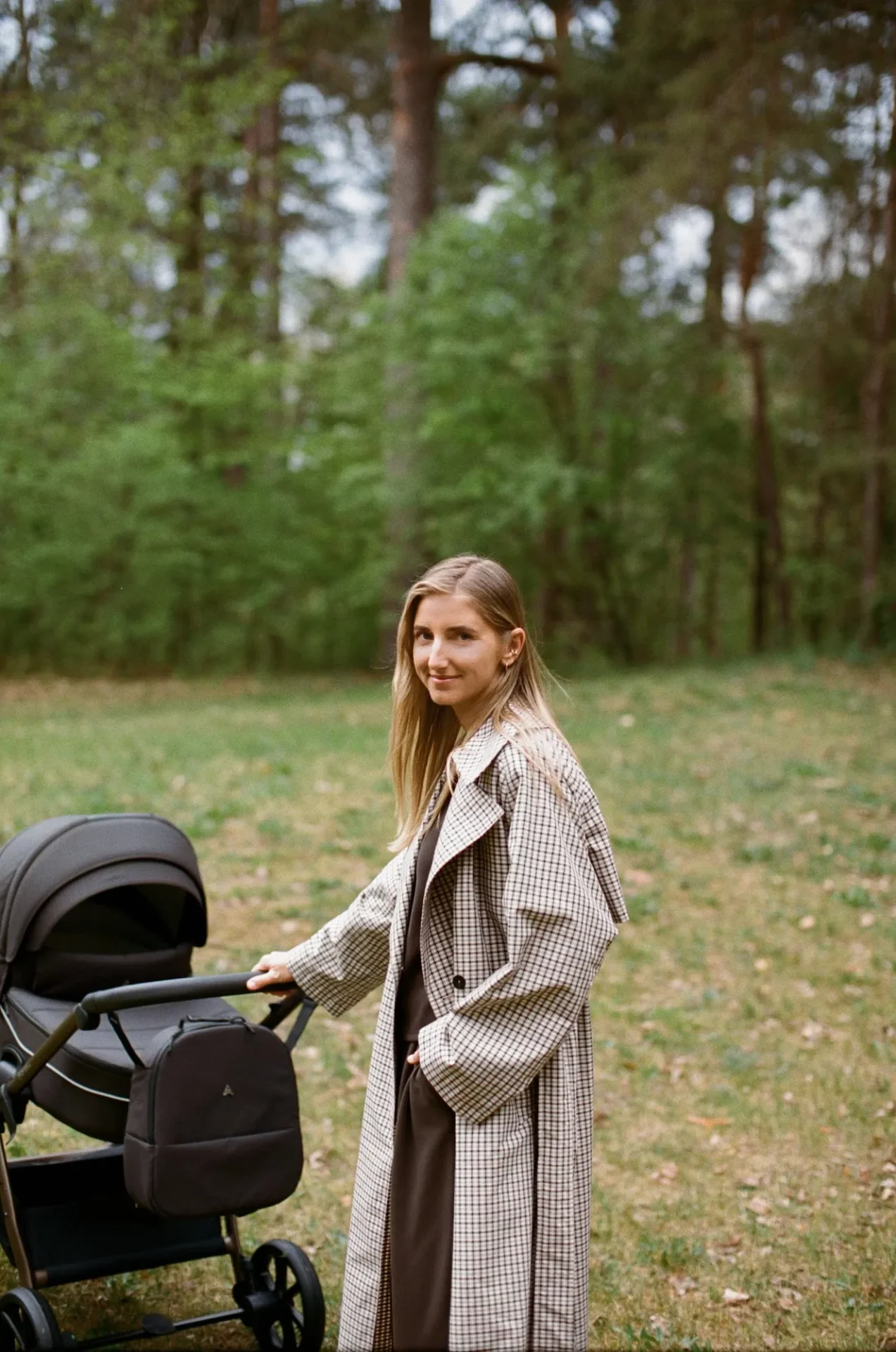
Short answer: A comfortable pram lets you walk upright, with relaxed shoulders and slightly bent elbows. Set the handlebar to your height, keep heavy things in the basket, and lock the front wheels straight on rough ground.
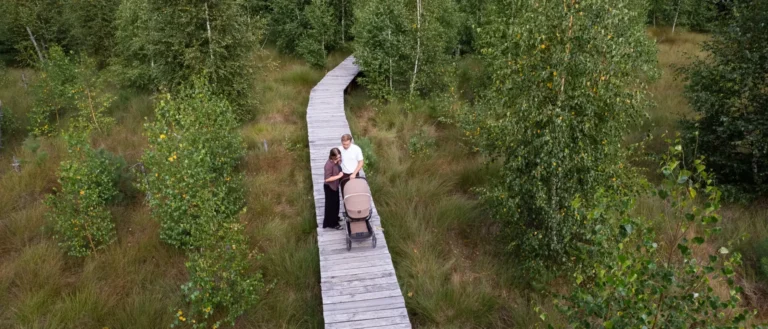
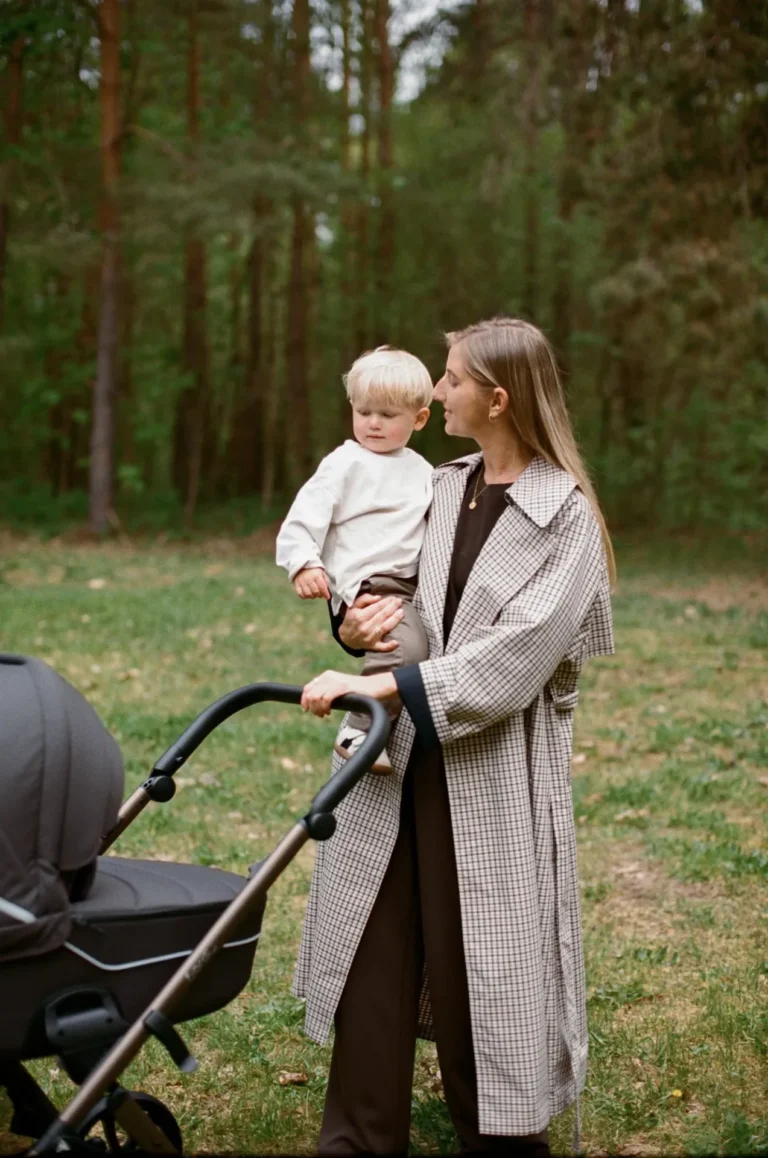
We talk a lot about how a pram feels for the baby inside. But the person pushing walks every step too: sometimes an hour a day, most days of the year, for years. Sore wrists, a stiff back or a pram that pulls to one side can turn a good walk into a chore. Comfort for the parent is part of a calm walk for the child.
Start with the handlebar height
The right height is personal. Stand behind the pram with your arms relaxed: your hands should rest on the handlebar with your elbows slightly bent, roughly at waist height. Too low and you stoop; too high and your shoulders creep up towards your ears. If two parents of different heights share the pram, an adjustable handlebar is worth more than almost any other feature.
A quick posture check for your next walk:
- Stand close enough to walk naturally, without kicking the rear axle.
- Hold the handlebar lightly with both hands; don’t lean your weight on it.
- Keep your back upright and your shoulders down.
- Let the pace come from your legs, not your arms.
- On a downhill, slow down and keep a hand near the brake.
Steering: why some prams feel lighter
Weight is only part of the story. Good suspension and larger wheels mean you aren’t fighting every bump, and swivelling front wheels make tight corners and shop aisles easy. On gravel, sand or snow, locking the front wheels straight stops them wobbling, so the pram keeps its line instead of wandering.
| Where you walk | Front wheels | Why |
|---|---|---|
| Pavements, shops, cafés | Swivelling | Tight turns with one hand |
| Gravel, forest paths, snow | Locked straight | Steadier line, less wobble |
| Kerbs | Either | Press the handlebar gently to lift the front wheels |
Where to carry things
Bags hung on the handlebar change how the pram balances and pull on your arms with every step. Keep heavier things in the basket, low and between the wheels, and use only the holders the pram was designed with.
How Fjordi V.2 and Sia handle it
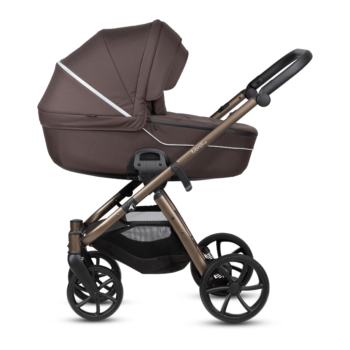
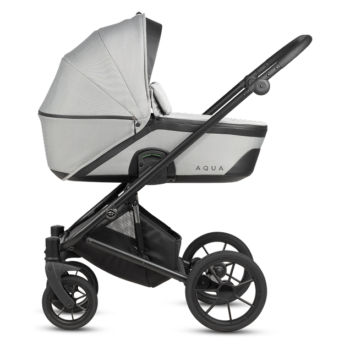
On Fjordi V.2, the eco-leather handlebar adjusts to the height that suits you, resists scratches and wipes clean. The front wheels swivel 360° or lock straight for rough ground, independent suspension and a shock-absorbing front fork soften the path, and the ONE-CLICK brake locks both rear wheels with one press. The open basket is easy to reach from every side.
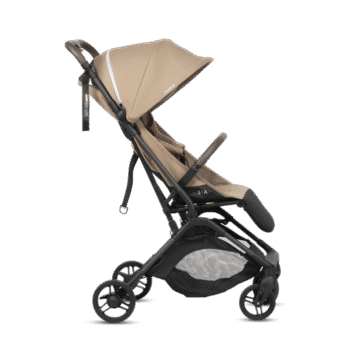
Sia is the light one: 5.9 kg, a one-hand fold and front and rear suspension, so lifting it into a car boot or onto a train is kinder to your back.
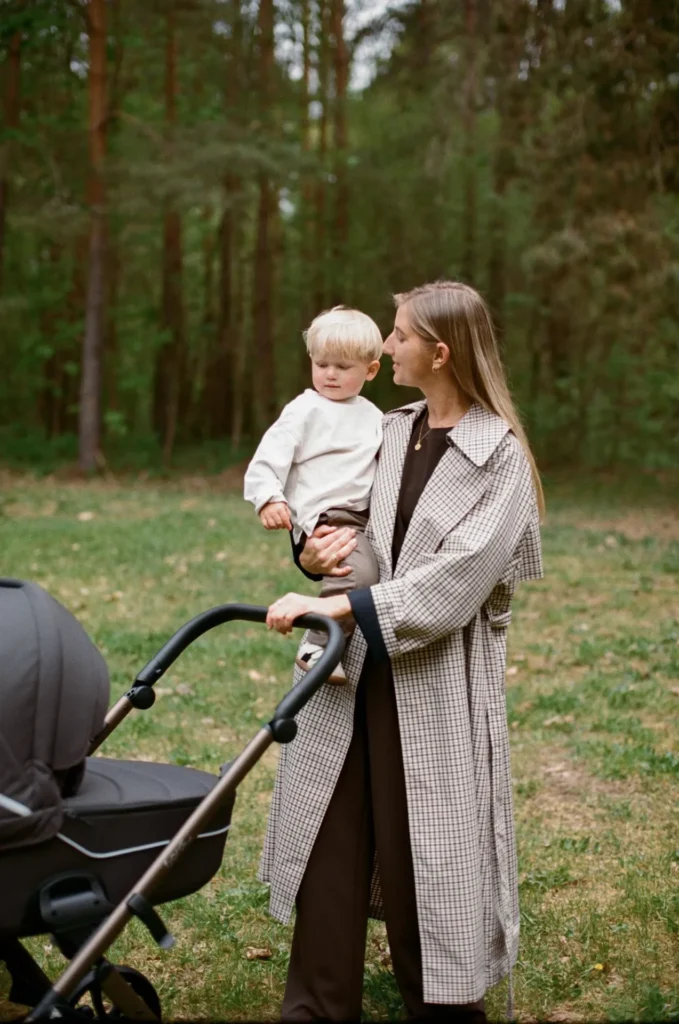
Fjordi V.2 · 2-in-1 all-terrain
For forest paths, coastlines and cobbles
Our all-terrain pram for long walks on uneven ground.
- Independent suspension and a shock-absorbing front fork
- THERMOCOT insulated carrycot, inner 81 × 37 cm
- Reversible seat, lies flat to 100 cm, up to 22 kg
- One-click fold, about 11 kg with carrycot
€815 · 3-in-1 €893
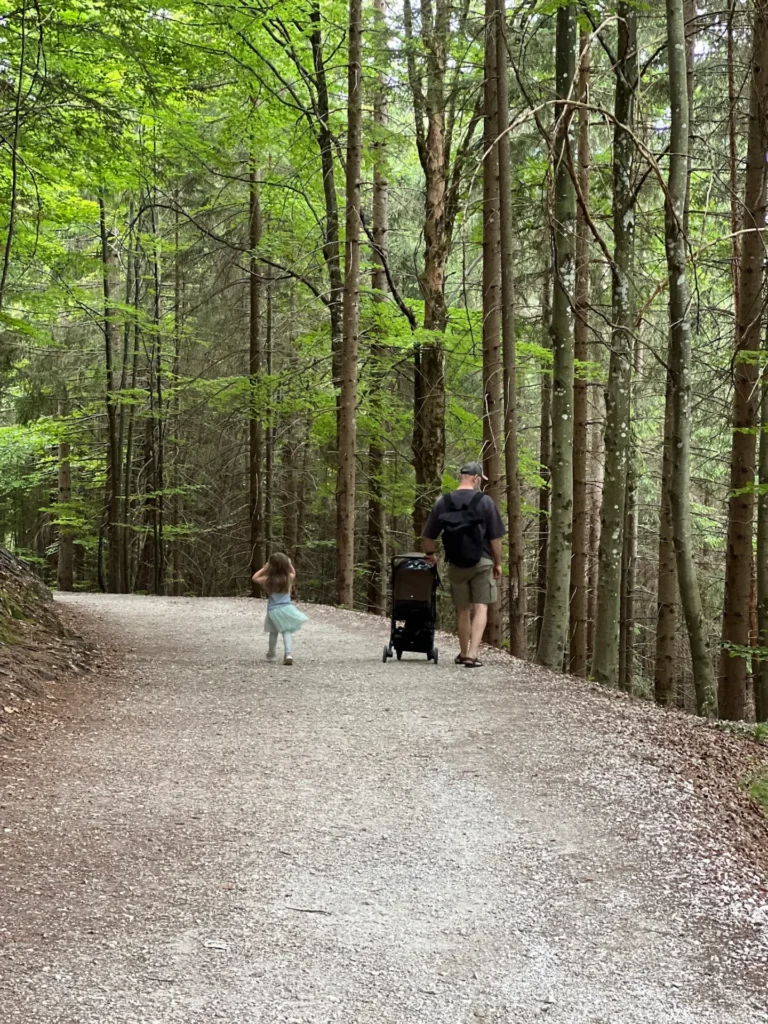
Sia · compact from birth
The light one for trains, cafés and travel
A 5.9 kg stroller that folds with one hand.
- Carbon frame, 5.9 kg
- Folds to 62.5 × 48.5 × 27 cm
- From birth to 4 years (22 kg), 80 cm bed
- Leg cover and travel bag included
€269
Before you buy, push the pram yourself. Our five-minute comfort test includes a one-handed push and a doormat.
Frequently asked questions
What is the right handlebar height for a pram?
Roughly waist height, with your elbows slightly bent and your shoulders relaxed. If two people push the pram, choose an adjustable handlebar.
Why does my back ache after pushing a pram?
Often because the handlebar is too low, you lean on it, or heavy bags hang from it. Adjust the height, walk upright and keep weight in the basket. If pain persists, talk to a physiotherapist.
Should the front wheels be locked or swivelling?
Swivelling on smooth ground for easy turns; locked straight on gravel, forest paths or snow for a steadier line.
Is the Fjordi V.2 handlebar adjustable?
Yes. The eco-leather handlebar adjusts in height and is anti-scratch and easy to wipe.
Which Noordi is easiest to lift?
Sia, at 5.9 kg with a one-hand fold. Fjordi V.2 weighs about 11 kg with the carrycot, and its chassis 7.8 kg.
Made for the way you wander.
Easy on the baby. Easy on the one who pushes.
More from the Journal