
Noordi Journal · 30 October 2026 · 5 min read

Short answer: A well-made pram can last well beyond one child. The frame usually outlasts the parts that meet the ground and the weather, wheels and fabrics, which can be cared for or replaced. Before a second child, check the fold, brake, harness and carrycot mattress, and follow the age and weight limits in the manual.
Many families hope their pram will see a second child, sometimes a third. It is one of the quiet ways to make a big purchase count, and to keep one more pram out of the bin. Whether it happens depends on how the pram was built, how it was used, and a few minutes of care along the way.
What wears, and what lasts
| Part | What happens over time | How to keep it going |
|---|---|---|
| Frame and joints | Built to last; grit can make joints loose or stiff | Keep clean and dry, listen for rattles |
| Wheels | Tread wears on rough ground | Clean off sand; replace when worn |
| Fabrics | Sun fades colour, rain and washing soften | Dry with the canopy open; follow care labels |
| Brake and fold | Grit makes them stiff | Wipe and check regularly |
| Harness and buckles | Strap edges can fray | Check before each new child |
How we build for more than one child
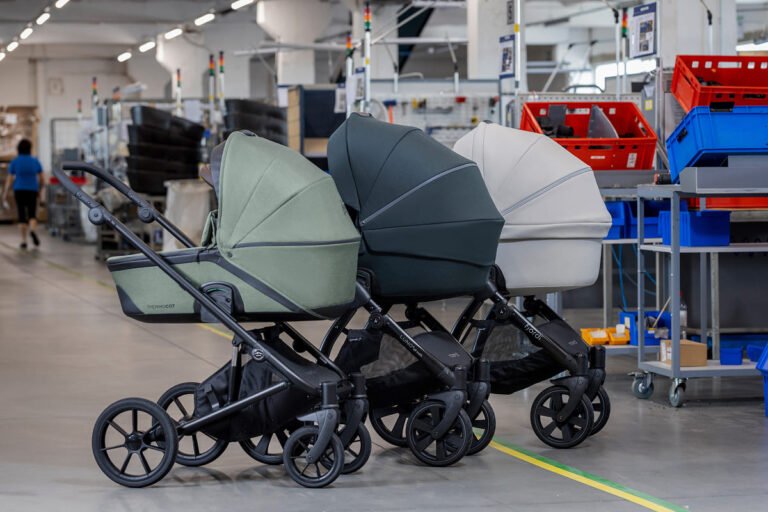
At our factory in Kaunas, Fjordi V.2 frames begin as aluminium that is cut, bent, robot-welded, painted and riveted on site, then sewn and assembled on the floors above. In our own lab, prams go through a 72-hour vibration test with a 24 kg load, the kind of shaking that compresses years of pavements and paths into a few days. Every pram is tested to the European standard EN 1888. Read more about our pram lab.
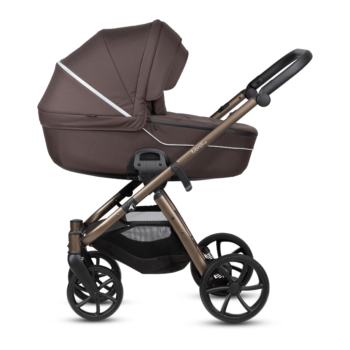
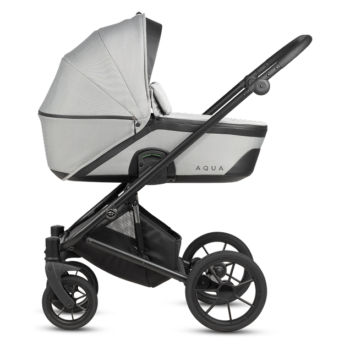
Fjordi V.2 is also made to grow with a child: the carrycot from birth, then the reversible seat that lies flat to 100 cm and is certified to 22 kg. One pram, from the first walk to the toddler years, and then, with a little care, the next first walk.
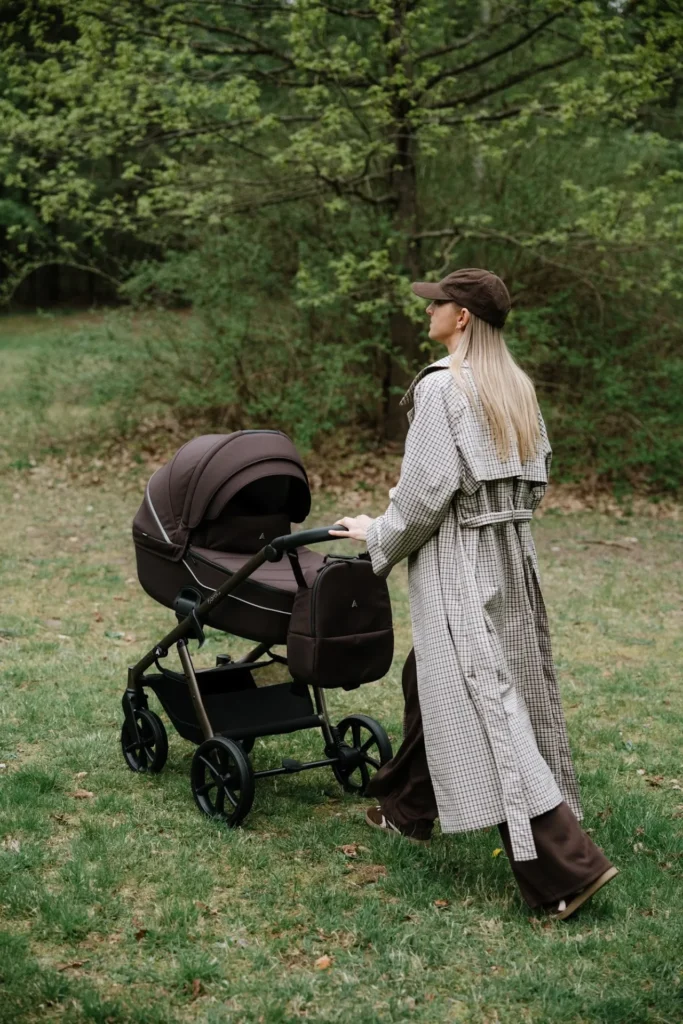
Fjordi V.2 · 2-in-1 all-terrain
For forest paths, coastlines and cobbles
Our all-terrain pram for long walks on uneven ground.
- Independent suspension and a shock-absorbing front fork
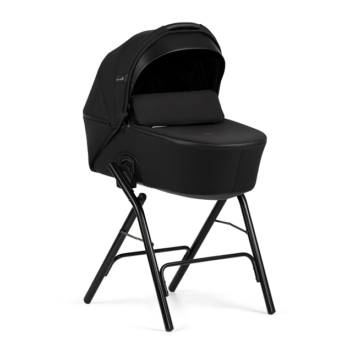
- THERMOCOT insulated carrycot, inner 81 × 37 cm
- Reversible seat, lies flat to 100 cm, up to 22 kg
- One-click fold, about 11 kg with carrycot
€815 · 3-in-1 €893
Before a second child: a short checklist
- Fold and unfold it a few times. It should lock firmly with a clear click.
- Press the brake and push. Both rear wheels should hold.
- Check every harness strap and buckle for fraying or cracks.
- Look at the carrycot mattress: it should be flat, firm, clean and dry, with no dents or damage.
- Push it over a doormat and listen. A new rattle points to a part worth checking.
- Read the age and weight limits in the manual again.
If something needs attention, a single part usually solves it. Send a service request with photos and the serial number from the frame label; Noordi keeps spare parts for years. Buying or passing on a used pram? Read second-hand vs new pram first.
Care that adds years
Most of a pram’s long life comes from small things: drying it after rain, rinsing sand off after the beach, storing it unfolded somewhere dry between children. Our guide on how to clean a pram covers the rest.
Frequently asked questions
How long does a pram last?
There is no fixed number. A well-built pram that is kept clean and dry and serviced when needed can often serve more than one child. Wheels and fabrics wear first and can usually be cared for or replaced.
Can I use the same pram for my second child?
Often, yes. Check the fold, brake, harness and carrycot mattress first, and make sure you follow the age and weight limits in the manual.
Should I replace the carrycot mattress for a second baby?
Check it carefully: it must be flat, firm, clean and dry, with no dents or damage. If you are unsure, ask the service team about a replacement for your model.
How is Fjordi V.2 tested for durability?
In Noordi’s own lab with a 72-hour vibration test at 24 kg, and to the European standard EN 1888.
Up to what weight can Fjordi V.2 be used?
The seat unit is certified to 22 kg.
Made for the way you wander.
For the first walk, and for the next one too.
More from the Journal