
Noordi Journal · 8 October 2026 · 3 min read
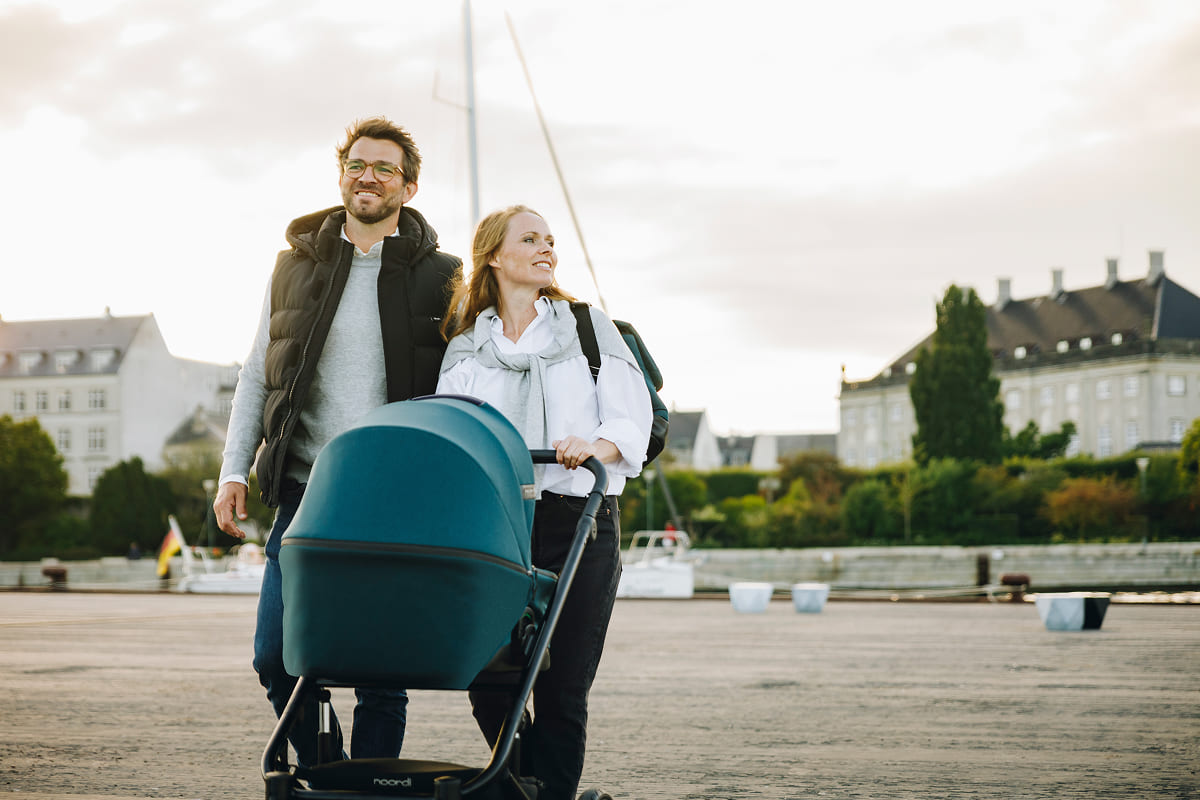
Short answer: For tall parents, two things matter most: a handlebar you can raise so your elbows stay slightly bent and your back straight, and enough stride room so your feet do not hit the rear axle or basket. The handlebar number on a spec sheet helps, but a two-minute walking test tells you more. If two parents of different heights share the pram, an adjustable handlebar is essential.
If you are 185 cm or taller, many prams feel built for someone else: you stoop over a low handle, shorten your stride or clip the rear wheels with every step. A few checks before buying make daily walks far more comfortable.
What handlebar height is comfortable?
A good rule of thumb: stand upright, let your arms hang, then bend your elbows slightly. The handlebar should meet your hands roughly at that point — around waist to hip height. Too low and you bend forward; too high and your shoulders lift. Because people differ in arm length as much as in height, use your own body rather than a height chart.
Stride room: the problem nobody mentions
Tall people take longer steps, and a short chassis puts the rear axle right where your feet land. Look at the distance between the handlebar and the rear wheels, whether the basket sticks out behind, and whether the brake pedal sits in your path.
| Check | What to look for |
|---|---|
| Handlebar range | Adjustable, with a top position that reaches your hands with elbows slightly bent |
| Chassis length | Enough distance from handle to rear axle for your normal stride |
| Rear axle and basket | Nothing sticking out behind the wheels at shin height |
| Brake pedal | Easy to reach but not in your walking line |
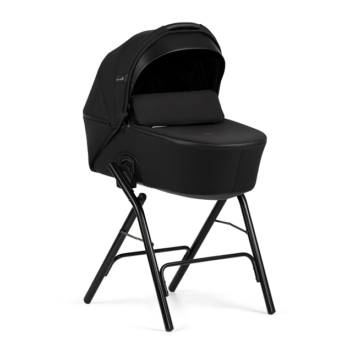
| Carrycot height | A higher carrycot means less bending to lift your baby in and out |

The two-minute test in the shop
- Set the handlebar to its highest position.
- Walk 20 normal steps — not careful ones — on a flat floor.
- Walk again, pushing with one hand, as you would while holding a coffee or a phone.
- Lift the carrycot in and out three times.
- Then let your shorter partner do the same with the handlebar lowered.
Noordi prams and tall parents
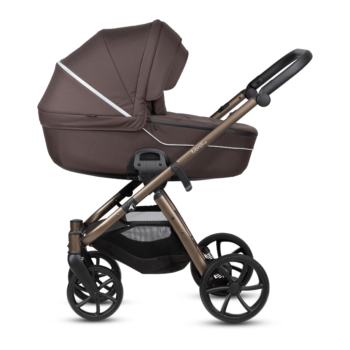
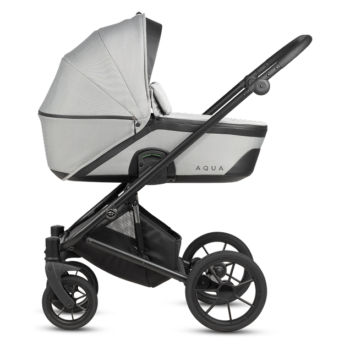
Fjordi V.2 has an adjustable eco-leather handlebar and a chassis 97 cm long and 106 cm high overall; Aqua V.2 has a chassis of 97 × 60 × 103 cm with an anti-scratch handle. Because comfort depends on your own arms and stride, the best way to judge is to push one: our partner shops are listed on the find us page, and you can return a Noordi within 14 days if it is unused.
Try before you decide
See Fjordi V.2, Aqua V.2 and Sia in a partner shop near you, or order online with free EU delivery and 14-day returns.
Frequently asked questions
What is the best pram for tall parents?
One with an adjustable handlebar that reaches your hands with elbows slightly bent, and enough distance between handle and rear axle for your stride. Test it by walking normally.
How high should a pram handlebar be?
Roughly at waist to hip height, so your elbows are slightly bent and your back stays straight.
Why do I kick the back of my pram?
The rear axle or basket sits within your stride. A longer chassis or a higher handlebar position usually helps.
Is the Noordi handlebar adjustable?
Yes, Fjordi V.2 has an adjustable eco-leather handlebar.
How can two parents of different heights share a pram?
Choose an adjustable handlebar and make adjusting it part of handing over the pram.
A pram you can push upright is a pram you will happily push further.
Sources: Noordi Fjordi V.2 specifications, Noordi Aqua V.2 specifications. Checked October 2026.
Made for the way you wander.
Three strollers, one calm way of getting outside. Find the one that fits your family’s days.
More from the Journal

How to Choose Your First Pram: A Calm 10-Point Checklist
Ten calm questions to ask before buying your first pram, from lie-flat comfort and everyday terrain to weight, fold, car seats and the EN 1888 standard.

All-Terrain Pram vs City Stroller: Which Do You Actually Need?
Wheels, suspension, weight and fold: a calm way to choose between an all-terrain pram and a city stroller, starting from the paths you walk every week.

Second-Hand or New Pram? What to Check Before You Buy
A second-hand pram can be a good choice – if you know what to check. Brakes, frame, locks, harness, recalls and the manual, plus when new is simply calmer.