Noordi Journal · 30 October 2026 · 5 min read
Short answer: It can be, if it is made for it. Look for a flat or near-flat recline, a bed long enough to lie stretched out, suspension and good weather cover. For long daily walks on rough paths and outdoor naps in the cold, a pram with a carrycot is still the calmer choice.
A light stroller makes so much easier: the train, the car boot, the third-floor flat without a lift. The question most parents ask is simple. Will my newborn be comfortable in it, or am I trading comfort for convenience? The honest answer: it depends on the stroller, and on how you will use it.
What “from birth” should really mean
A stroller labelled from birth has to let a newborn lie flat or nearly flat, well supported along the whole back. In the first months the spine is still developing and babies can’t hold up their heads, so sitting upright is not an option. A seat that only reclines halfway is a stroller for later, whatever the box says.
Five things to check in the shop
| Check | Why it matters for a newborn | On Sia |
|---|---|---|
| Recline | A flat or near-flat position supports the back and neck | Near-flat recline, from birth |
| Bed length | Room to lie stretched out, with space to grow | 80 cm bed |
| Suspension | Takes the edge off kerbs and paving | Front and rear suspension |
| Wheels | Puncture-free wheels keep rolling evenly | 7.5″ puncture-free wheels |
| Weather | Wind and drizzle stay out | Canopy and leg cover |
Fabric matters too. Press the backrest with your hand: it should feel supportive, not saggy, so your baby doesn’t fold into a curve. And try the harness buckle with one hand. You will be doing that many times a day.
Where a light stroller shines, and where it doesn’t
Light strollers are made for short and medium walks on reasonable ground: city pavements, station platforms, park paths, café stops. That is where a low weight and a quick fold earn their place, and where your back notices the difference every time you lift.
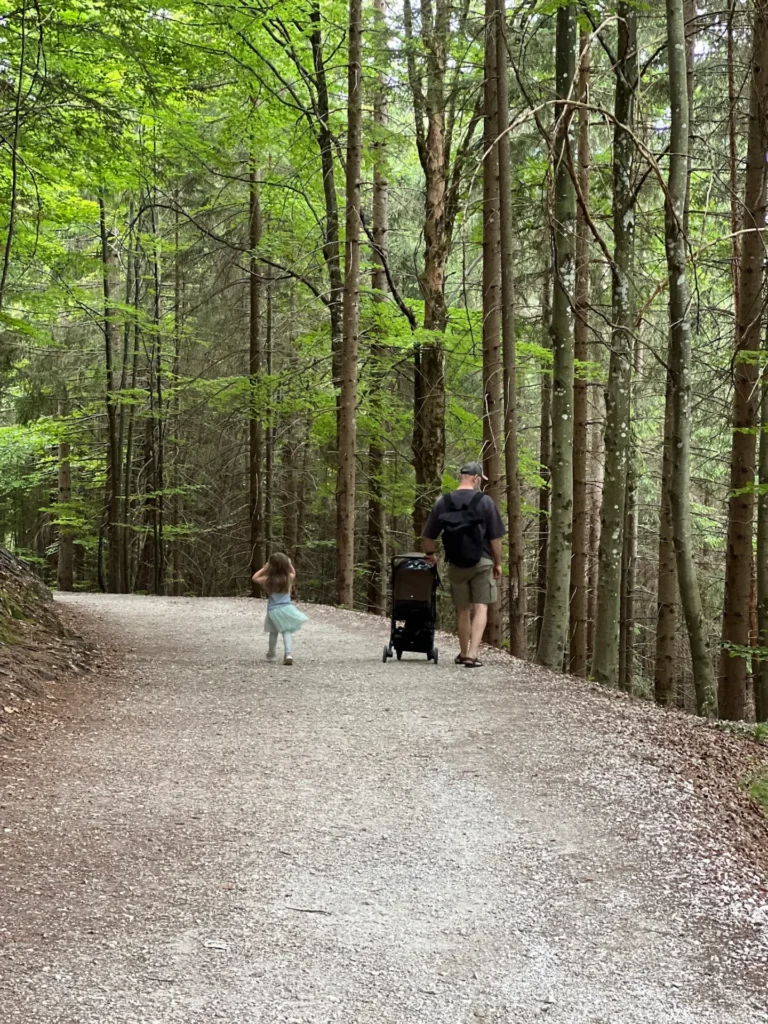
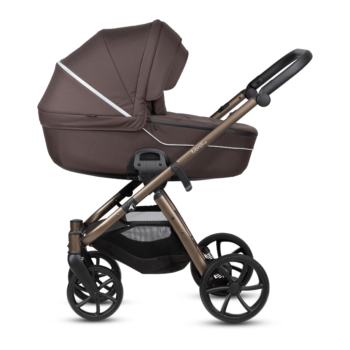
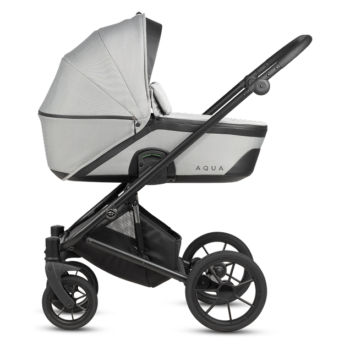
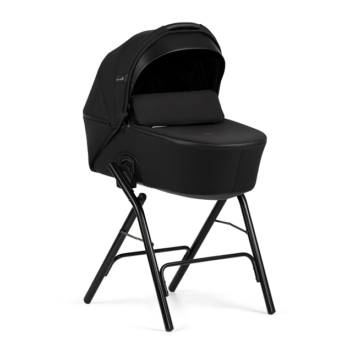
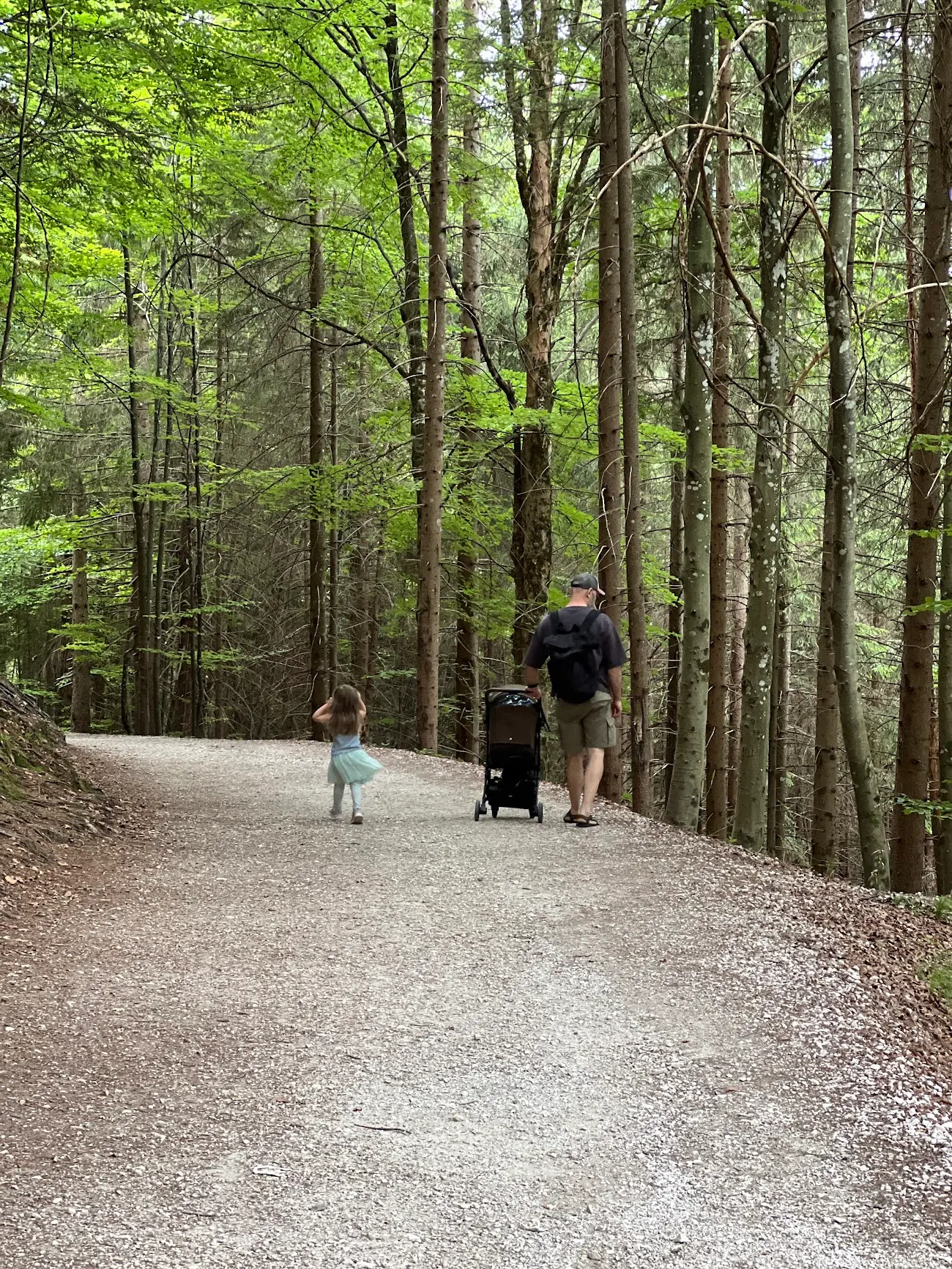
For long daily walks on forest paths, gravel or old cobbles, and for naps outdoors in cold weather, a pram with a deep carrycot and larger wheels gives a calmer ride. Many families simply use both: a carrycot pram for everyday walks and a compact stroller for travel. More on that in pram and travel stroller: do you need both?.
Sia: light, and made for the first months too
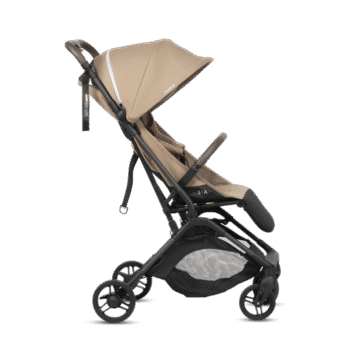
Sia weighs 5.9 kg with a carbon frame and folds with one hand to 62.5 × 48.5 × 27 cm. It can be used from birth to 4 years (22 kg), with a near-flat recline, an 80 cm bed, front and rear suspension and 7.5″ puncture-free wheels. A leg cover and a travel bag are included, and it is tested to the European pram standard EN 1888.
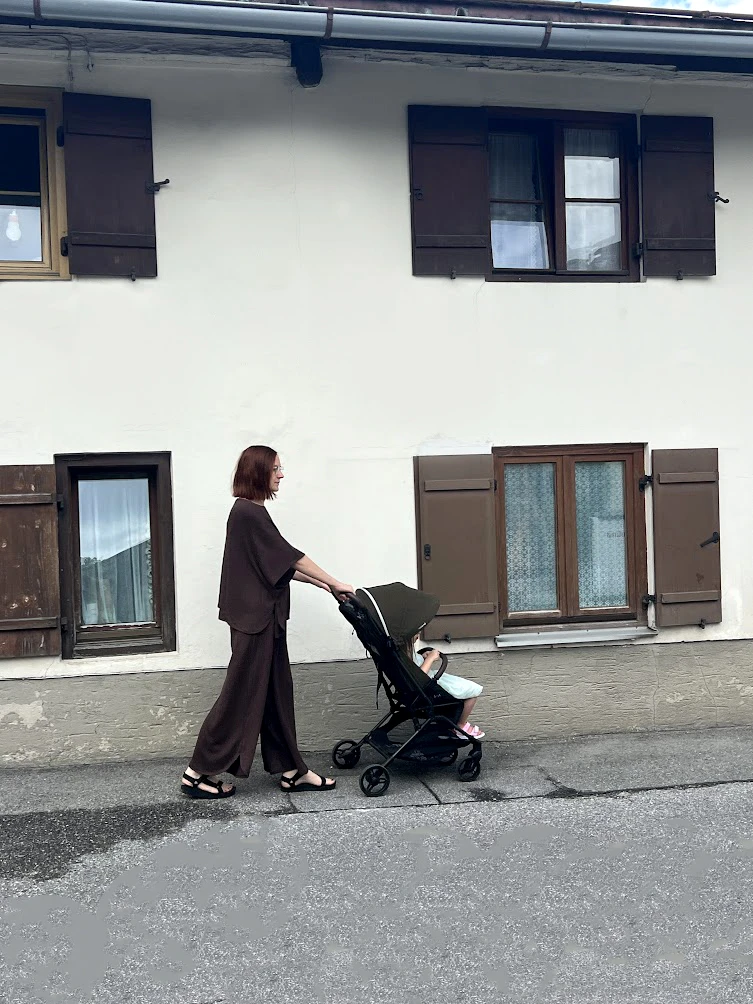
Sia · compact from birth
The light one for trains, cafés and travel
A 5.9 kg stroller that folds with one hand.
- Carbon frame, 5.9 kg
- Folds to 62.5 × 48.5 × 27 cm
- From birth to 4 years (22 kg), 80 cm bed
- Leg cover and travel bag included
€269
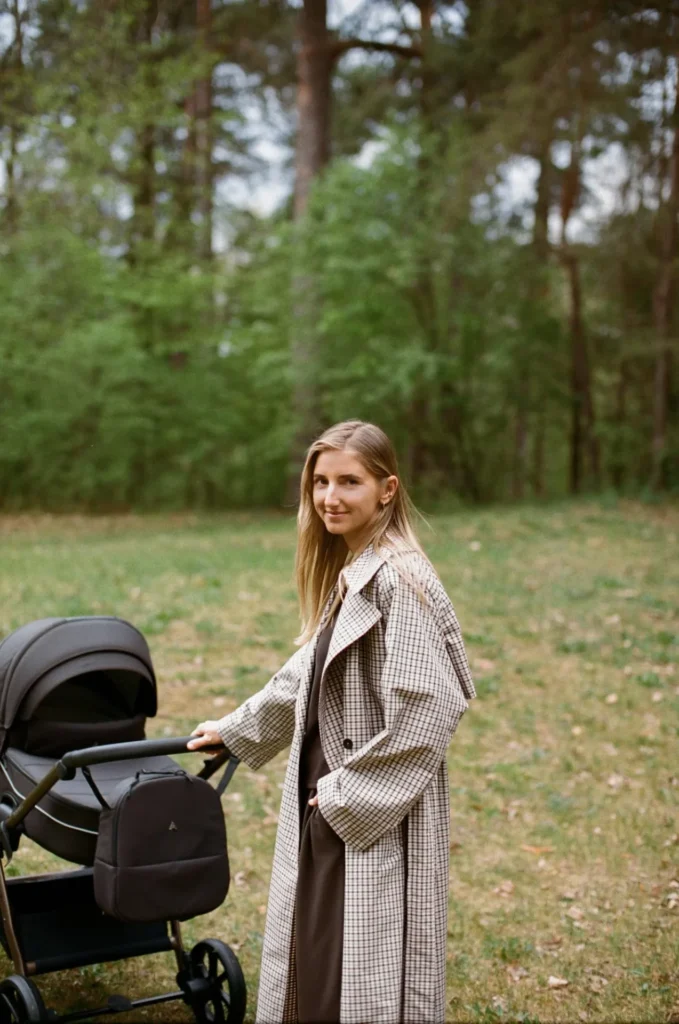
Fjordi V.2 · 2-in-1 all-terrain
For forest paths, coastlines and cobbles
Our all-terrain pram for long walks on uneven ground.
- Independent suspension and a shock-absorbing front fork
- THERMOCOT insulated carrycot, inner 81 × 37 cm
- Reversible seat, lies flat to 100 cm, up to 22 kg
- One-click fold, about 11 kg with carrycot
€815 · 3-in-1 €893
Still deciding? Our guide to lightweight strollers from birth under 6 kg goes deeper into weights and folds.
Frequently asked questions
Can a newborn use a lightweight stroller?
Yes, if the stroller is designed for use from birth: a flat or near-flat recline, good back support and a bed long enough to lie stretched out. Check the age range in the manual.
Is a carrycot more comfortable than a stroller for a newborn?
For long walks and outdoor naps, usually yes: a carrycot gives a fully flat, sheltered space. A near-flat stroller works well for shorter trips, travel and the city.
How heavy is Sia?
Sia weighs 5.9 kg and folds with one hand to 62.5 × 48.5 × 27 cm.
From what age can Sia be used?
From birth up to 4 years, or 22 kg.
Does Sia have suspension?
Yes, front and rear suspension, with 7.5-inch puncture-free wheels.
Made for the way you wander.
Light enough for the train. Calm enough for the first months.
More from the Journal