Noordi Journal · 23 October 2026 · 5 min read
Short answer: Before a Noordi pram goes into production, its prototypes spend 72 hours non-stop on a vibration table with 24 kg in the carrycot. The test shows how frames, joints and fittings hold up to years of bumps in a few days. Together with suspension testing in Kaunas and the European standard EN 1888, it is how we make sure a Fjordi stays calm and solid on the path.
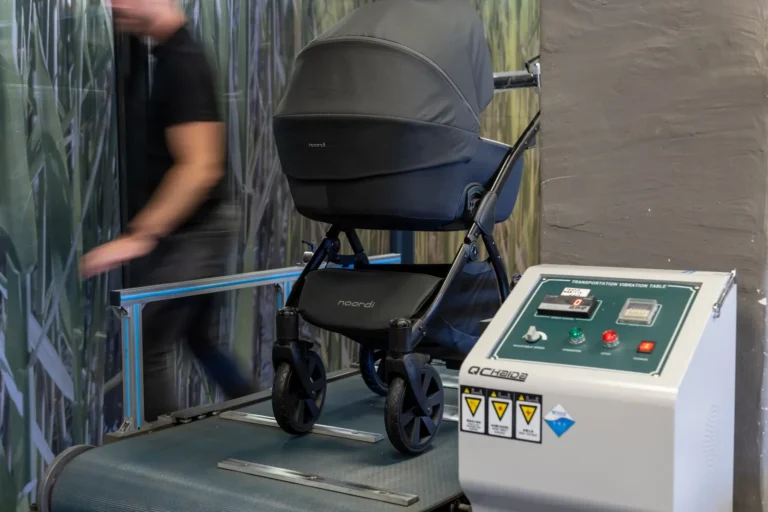
Most people never see the noisiest room in a pram factory. In ours, it is the lab. A pram stands on a shaking platform, carrying a weight where the baby would lie, and it does not stop for three days and three nights. It is not a glamorous test. It is one of the most honest ones we have.
What happens on a vibration table
A vibration table is a platform that shakes a pram continuously, over and over, the way rough ground does on a walk. Instead of waiting years to see how a pram ages on cobbles, gravel and forest roots, the test packs that wear into a short, intense period. Afterwards, engineers look at what changed: joints, rivets, welds, the fold, the fittings that hold the carrycot.
Every Noordi begins with our engineers. Frames, folds and suspension are modelled in 3D, prototypes are built, and those prototypes go on the table: 72 hours non-stop, with 24 kg in the carrycot.
Why 72 hours and 24 kg
Seventy-two hours means three full days and nights without a pause. There is no gentle walk in that time, no stop at a café, no evening in the hallway. That is the point: a weak joint or a loose fitting shows itself long before a family would ever meet it.
The weight matters too. 24 kg is more than the 22 kg the Fjordi V.2 seat is certified for, so the frame is tested with a margin rather than at the edge. A pram that stays solid under that load and that much shaking is a pram that can be pushed every day for years.
Where the test fits in the making of a Fjordi
- Design and 3D engineering. Frame, fold and suspension are modelled before anything is cut.
- Prototypes. The first frames are built and assembled.
- 72 hours on the vibration table with 24 kg in the carrycot.
- Suspension testing by Tututis Engineering Lab in Kaunas.
- EN 1888. Every pram is tested to the European safety standard for prams and pushchairs.
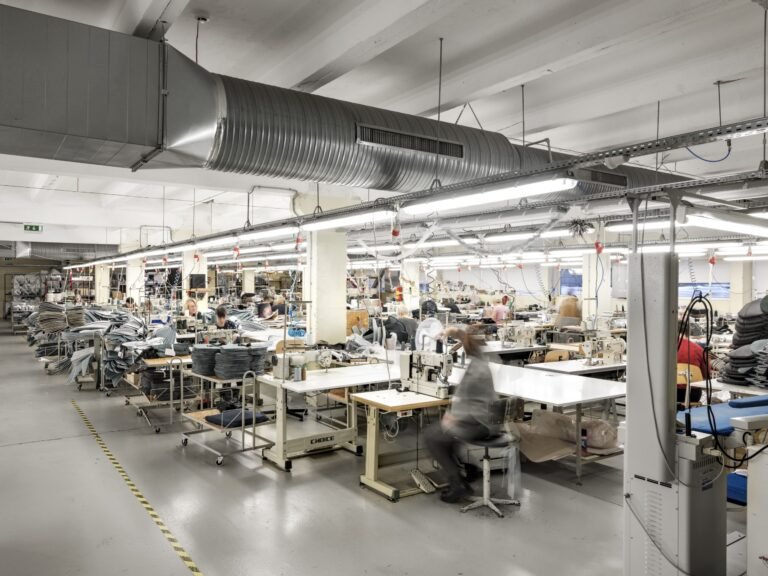
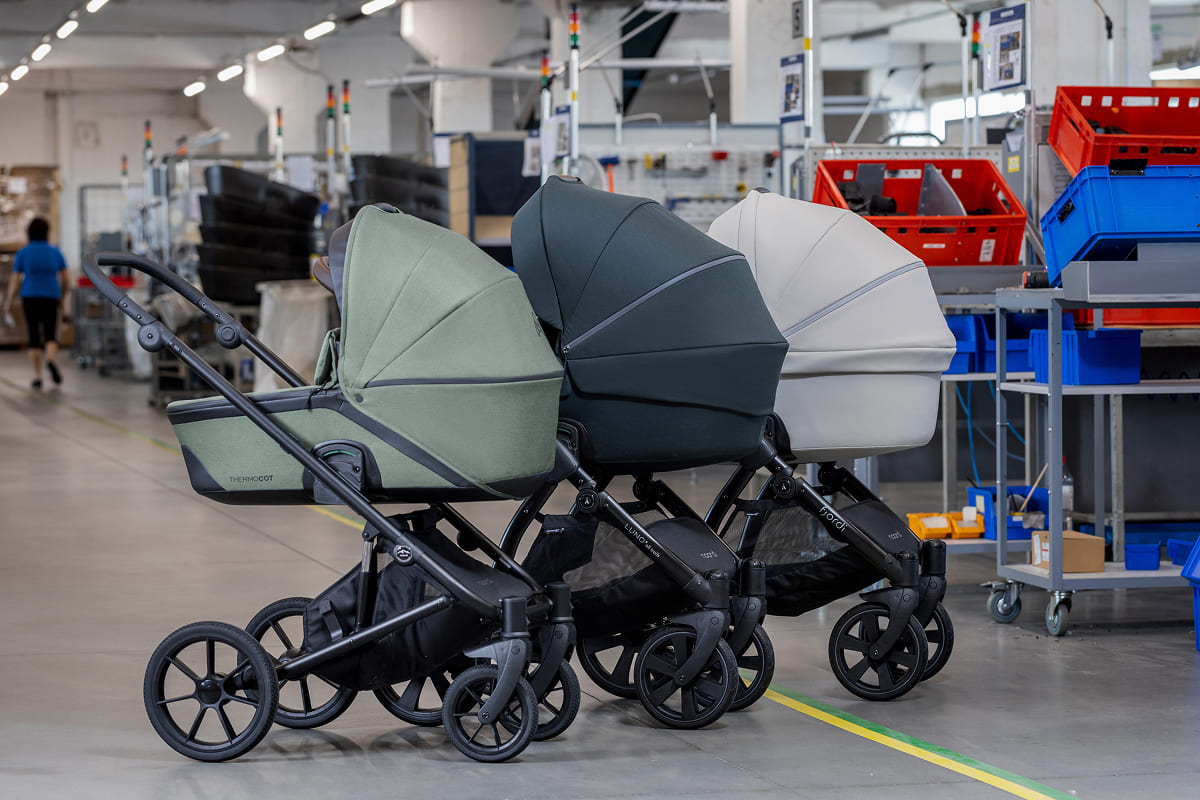
- Production in Kaunas. Aluminium tubes are cut, bent, welded by robots, painted and riveted; fabrics are sewn one floor up.
- Hand checks. Before packing, each pram’s fold, brakes, harness and seams are checked.
You can follow the whole path in how a Noordi pram is made.
What it means on your walk
You will never see the vibration table, but you will feel what it is there for. A frame that stays tight is a frame that stays quiet: no ticking fold, no rattling fitting when the path turns to roots. On Fjordi V.2, a shock-absorbing front fork and independent suspension soften the bumps, and the frame behind them is built to keep doing that, season after season.
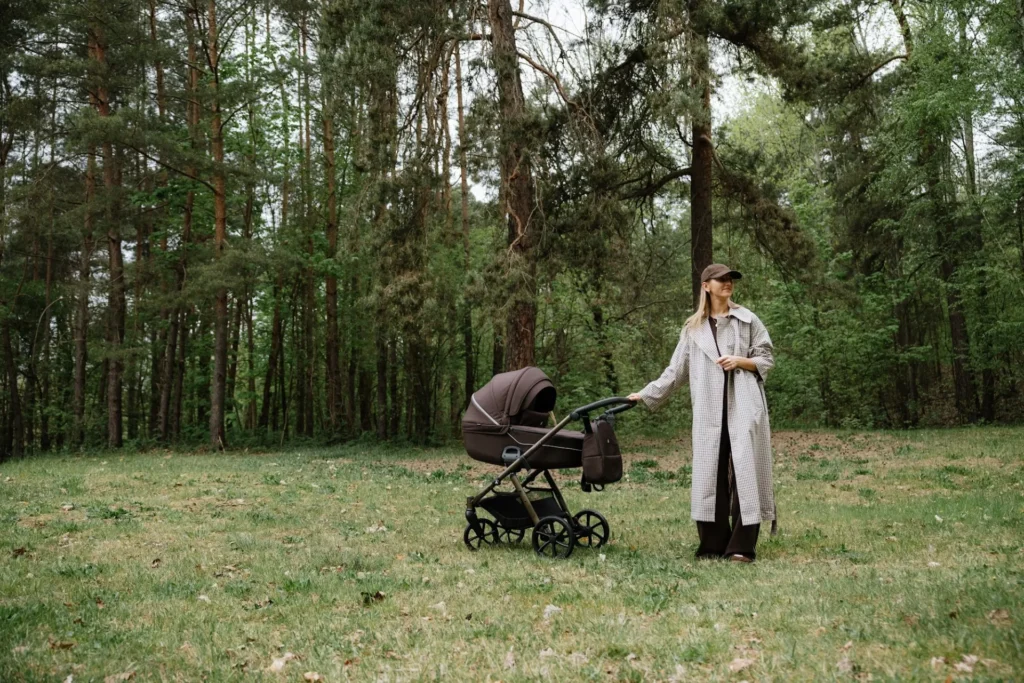
Fjordi V.2 · 2-in-1 all-terrain
For forest paths, coastlines and cobbles
Our all-terrain pram for long walks on uneven ground.
- Independent suspension and a shock-absorbing front fork
- THERMOCOT insulated carrycot, inner 81 × 37 cm
- Reversible seat, lies flat to 100 cm, up to 22 kg
- One-click fold, about 11 kg with carrycot
€815 · 3-in-1 €893
EN 1888 and what the standard covers
EN 1888 is the European safety standard for prams and pushchairs. Part 1 covers children up to 15 kg; part 2 covers pushchairs for children over 15 kg and up to 22 kg. It sets requirements for things like brakes, stability, harnesses and the strength of the frame. Our own vibration test sits on top of that baseline. EN 1888 explained.
And if something does go wrong, every Noordi comes with a 2-year warranty. How pram warranty and repairs work.
Read also: Repair, not replace: how Noordi service and spare parts work · One pram, two children: how long a good pram really lasts
Frequently asked questions
What is a pram vibration test?
A test in which a pram stands on a shaking platform for a long time, carrying a weight, to show how the frame, joints and fittings hold up to the bumps of everyday walks.
How is Fjordi V.2 tested?
Prototypes spend 72 hours non-stop on a vibration table with 24 kg in the carrycot, the suspension is tested by Tututis Engineering Lab in Kaunas, and every pram is tested to EN 1888. Each pram’s fold, brakes, harness and seams are checked by hand before packing.
What is EN 1888?
The European safety standard for prams and pushchairs. EN 1888-1 covers children up to 15 kg, and EN 1888-2 covers pushchairs for children over 15 kg and up to 22 kg.
Where is the Noordi lab?
In Kaunas, Lithuania, under the same roof as the factory where Fjordi V.2 is made: frames, sewing and assembly.
What warranty do Noordi prams have?
Every Noordi pram comes with a 2-year warranty, and you can return it within 14 days.
Made for the way you wander.
Three days of shaking in the lab, for years of calm walks after.
More from the Journal